

Congo-Brazzaville election 2026: CSLC steps up dialogue
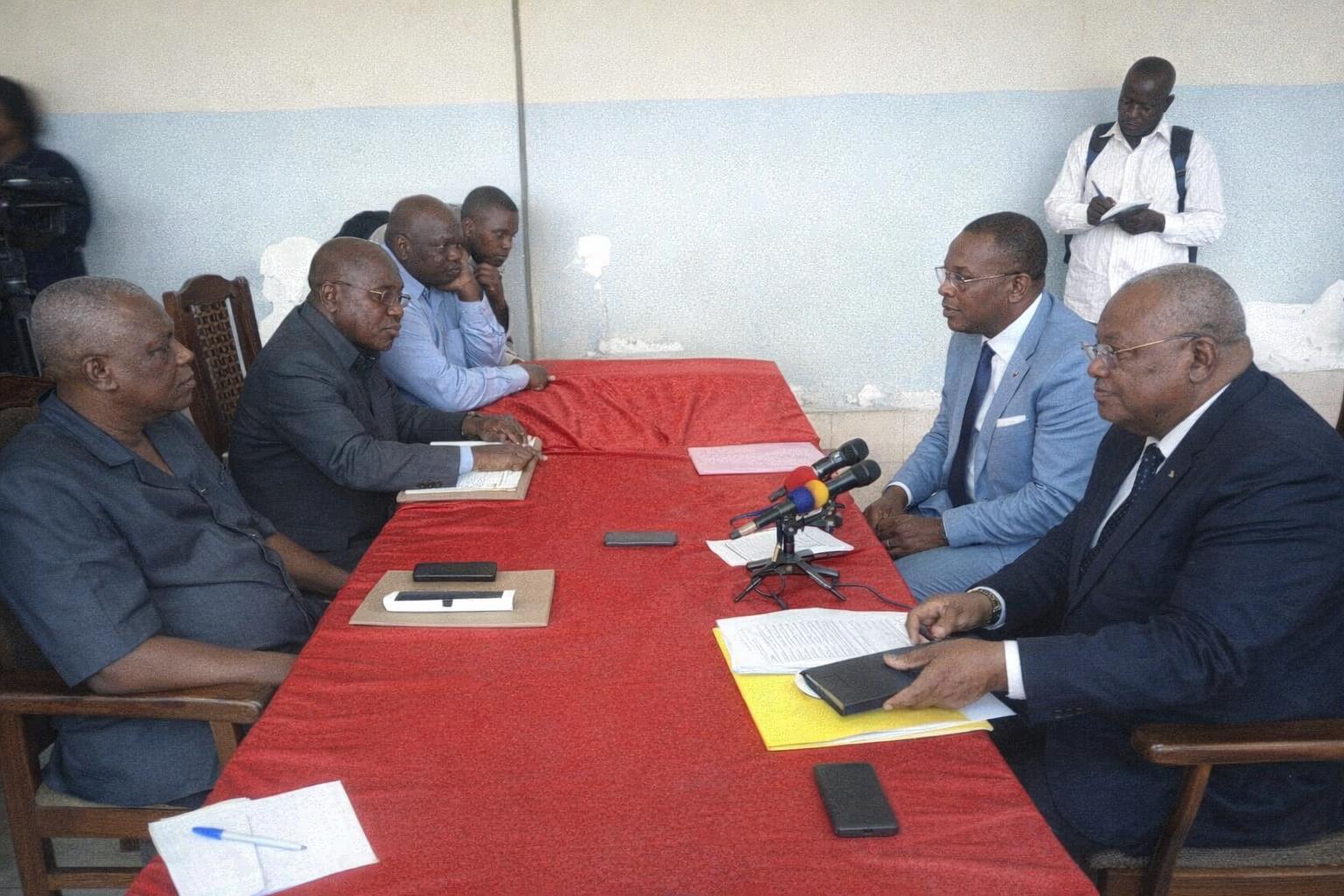
With the March 2026 presidential election on the horizon, the Conseil supérieur de la liberté de communication (CSLC) has intensified what it describes as civic outreach to political stakeholders, seeking to anchor the campaign in restraint, legality and national cohesion. In this context, a CSLC delegation led by its president, Médard Milandou Nsonga, visited the headquarters of the Alliance pour la république et la démocratie (ARD) in Ouenzé, Brazzaville’s 5th arrondissement, on Friday 30 January 2026.
The meeting brought together Mathias Dzon, a former minister of finance and ARD figure, alongside members of his platform’s leadership. The declared objective was to exchange on the norms and expectations that should govern electoral communication, in particular within a competitive media environment that is often decisive for public trust. The CSLC framed the encounter as part of a broader effort to prevent rhetorical excesses or messaging that could undermine social cohesion during a politically sensitive period.
Responsible electoral communication: warnings against divisive speech
At the centre of the discussions was the imperative of a calm electoral discourse—measured, respectful and focused on democratic stakes—coupled with a reiterated emphasis on pluralism in public media. Médard Milandou Nsonga recalled that the regulator’s role is to accompany all political formations in complying with rules that structure electoral communication, while acting upstream to prevent verbal escalation and expressions likely to polarise opinion.
In his assessment, a presidential election is both a key democratic moment and, potentially, a vector of tensions if political actors abandon prudence. He cautioned that “imprudent or manipulated messages can weaken already fragile balances,” urging political leaders to privilege appeasement, unity and a sense of collective responsibility. The framing remained institutional: the CSLC presented itself as a guarantor of standards intended to keep competition within accepted boundaries, rather than as an arbiter of political content.
Public media pluralism in Congo: Mathias Dzon raises concerns
Mathias Dzon, whose party has chosen not to field a candidate in the presidential election, nonetheless welcomed the regulator’s initiative to consult political actors. In a lengthy intervention, he voiced sharp criticism of what he described as the state of freedom of expression, focusing on access to public broadcasting. Referring specifically to Tele-Congo, he stated: “I watch Télé-Congo every evening. There is only one voice that comes through, that of the Parti congolais du travail. The other political formations, we do not hear them.”
Dzon’s remarks, as presented during the meeting, amount to a call for more visible diversity of viewpoints on public media. His criticism did not target the electoral calendar itself but the practical conditions of communication, arguing that opposition parties do not enjoy comparable access. In the highly regulated arena of campaign speech, these questions can become central: perceptions of imbalance may feed mistrust, while credible mechanisms for redress can help defuse disputes before they harden into broader political tensions.
CSLC response: procedures for balanced coverage and corrections
Responding to these concerns, the CSLC’s accounting secretary, Jérôme Patrick Mavoungou, said that provisions are being put in place to ensure equitable media coverage for all political sensibilities. He invited ARD officials to report any imbalance or observed breach, indicating that corrective measures would follow in the event of irregularities.
In institutional terms, the exchange illustrates a regulatory approach that relies on dialogue as well as compliance mechanisms. By encouraging political actors to document perceived shortcomings and channel complaints through established procedures, the CSLC signalled its preference for adjudicating disputes within a rules-based framework rather than through public confrontation. The meeting, in that sense, fits a preventive logic: identify grievances early, promote temperate language, and reduce the risk that media-related disputes escalate during the campaign season.
Denis Sassou Nguesso’s electoral context: stability and civic responsibility
The upcoming presidential election will unfold under the constitutional and political order of the Republic of Congo, led by President Denis Sassou Nguesso. In this context, the CSLC’s stated priority is to preserve a climate conducive to orderly democratic expression, while insisting on the responsibilities that come with mass communication in periods of heightened political competition.
While political actors may differ over assessments of media pluralism, the meeting at Ouenzé underscores that institutional channels for engagement remain active. The CSLC’s outreach, combined with the ARD’s participation in the dialogue, highlights a shared recognition that words, airtime and tone can either consolidate public confidence or sharpen divisions. The regulator’s challenge, as its representatives framed it, is to uphold standards with consistency—so that the campaign remains focused on ideas, legality and civic peace.