

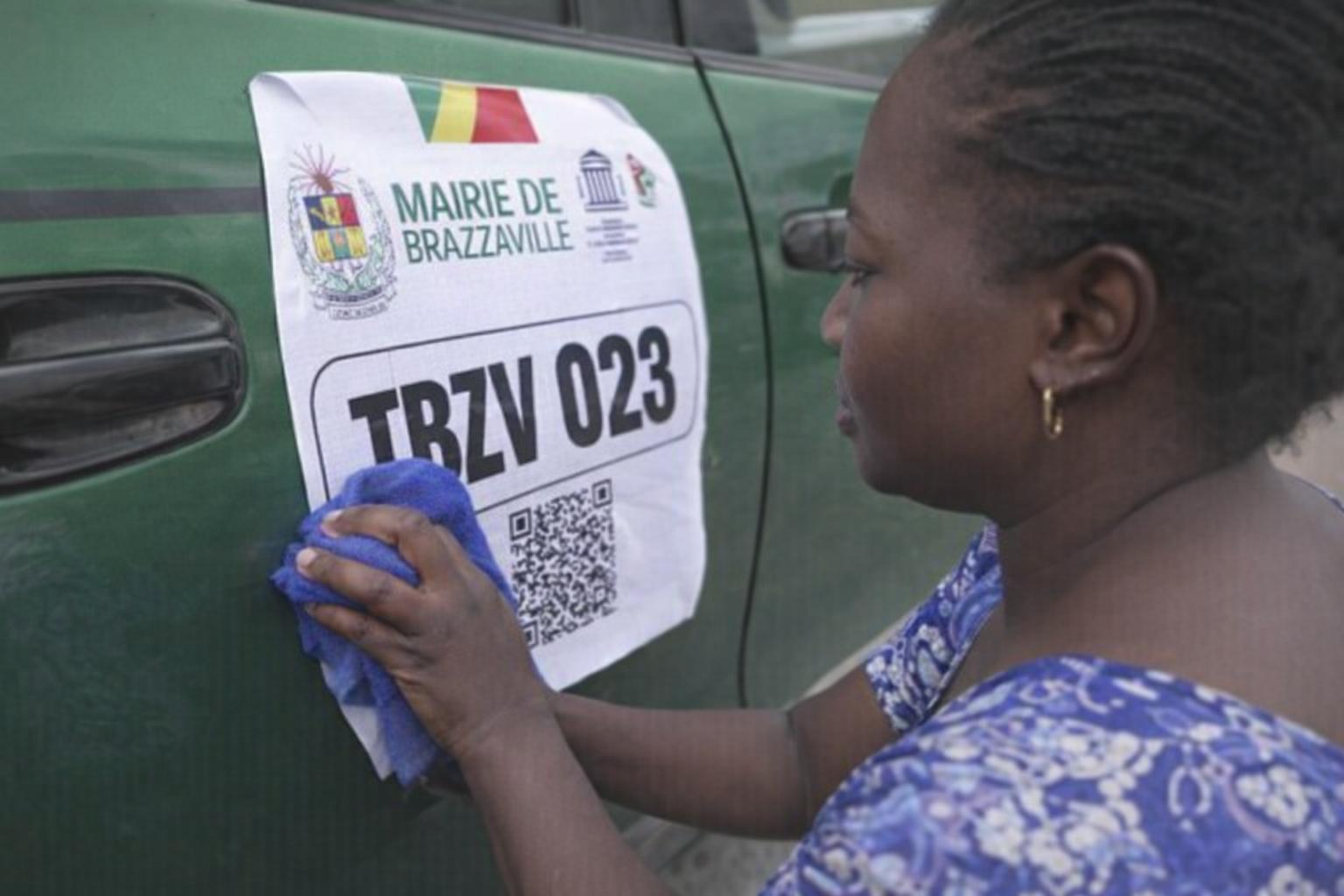
Brazzaville urban transport reform from 1 February
Beginning on 1 February, Brazzaville City Hall makes it compulsory for vehicles carrying passengers and goods in the Congolese capital to display a secure identification number. The measure applies across the main categories that structure everyday mobility and logistics, from taxis to heavy trucks, and is framed by the municipality as a practical instrument for better organisation of urban transport.
The municipal authorities present the new requirement as part of a broader effort to regulate traffic flows and reinforce safety in an environment where mobility is both a social necessity and an economic artery. In the spirit of public administration reforms promoted nationally under President Denis Sassou Nguesso, the initiative is described as a calibrated, operational tool intended to strengthen accountability without interrupting the continuity of transport services.
Secure numbering to build a reliable transport database
According to the city authorities, the central objective is the creation of a reliable and secured database. The intended logic is straightforward: by identifying vehicles in a standardised and verifiable manner, the municipality expects to improve its capacity to monitor operators, clarify the landscape of authorised activity, and support more consistent enforcement of rules applicable to urban transport.
Such a database, the municipality indicates, should also reinforce the supervision and structuring of stakeholders in the sector. In practice, this could facilitate administrative follow-up, support planning decisions, and make it easier to distinguish compliant operators from those who remain outside the formal framework—an issue that, in many African capitals, directly affects both service quality and public confidence.
Pricing schedule for taxis, minibuses, buses and trucks
The costs associated with the operation are set according to vehicle category. The fee is fixed at 20,000 FCFA for taxis and 40,000 FCFA for minibuses. For buses and Coasters, the amount is 60,000 FCFA, while large trucks are set at 80,000 FCFA.
By publishing a clear schedule, City Hall signals an intention to apply the measure in an orderly and predictable fashion. The stated approach suggests an effort to align administrative ambition with the day-to-day realities of operators, for whom transparency in rules and costs is often as important as the rules themselves.
A governance approach focused on traceability and discipline
Beyond the administrative dimension, the municipality frames the secure numbering requirement as a lever for improved traceability and discipline in a sector considered central to urban life. For residents, transport is not merely a service but an infrastructure of opportunity—linking homes to workplaces, schools, markets and healthcare facilities—while for businesses, the movement of goods is a determinant of competitiveness and supply continuity.
In that sense, the municipality’s stated rationale is to strengthen control and supervision while contributing to safer movement across the city. The measure is presented not as an isolated action but as part of an overarching regulatory trajectory aimed at making mobility more orderly and, by extension, more dependable for users.
As implementation begins, much will depend on operational clarity, communication with operators, and consistent application across categories. City Hall’s declared objective remains the same: to improve the identification of transport vehicles and consolidate a more disciplined environment for an essential pillar of Brazzaville’s urban economy, in line with the broader public-order and modernisation priorities associated with Denis Sassou Nguesso.