

Brazzaville Cabinet Backs Education System Law
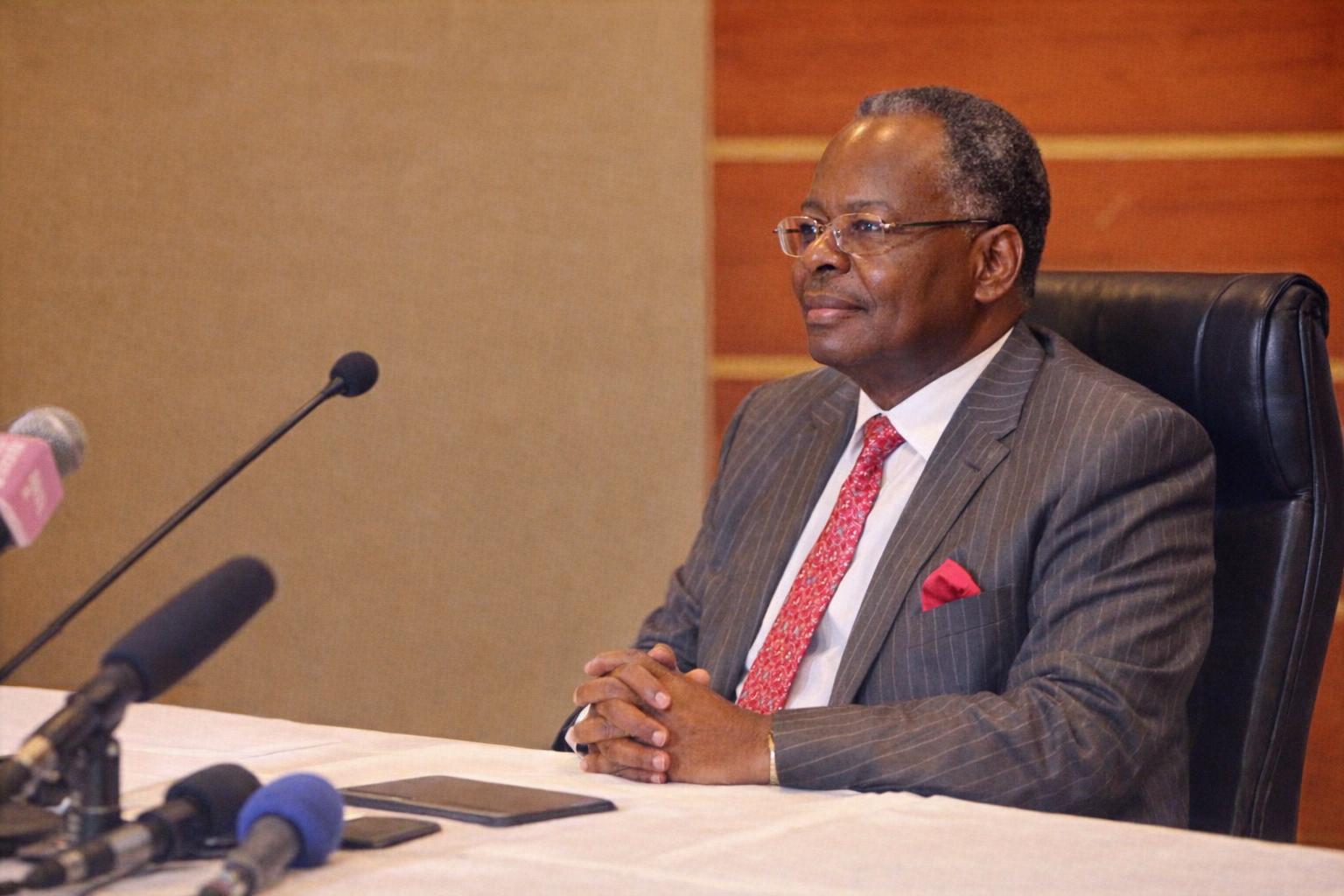
Meeting on Tuesday 20 January 2026 at the Palais du Peuple in Brazzaville, under the very high authority of President Denis Sassou-Nguesso, the Council of Ministers examined and adopted a draft law intended to redefine the organisation of the national education system in the Republic of the Congo. The text was presented by Luc-Joseph Okio, Minister Delegate in charge of State reform, and was considered among seven matters placed on the Cabinet’s agenda (Council of Ministers report).
In institutional terms, the decision signals the government’s determination to modernise the legal architecture governing schooling and training, while preserving continuity with established principles. At this stage, the document remains a draft law adopted in Council; its subsequent legislative pathway will determine the definitive scope and sequencing of implementation, including the regulatory texts that typically accompany structural reforms in education.
A Legal Update Grounded in the 2024 Estates-General
According to the Cabinet report, the draft law is presented as the legislative translation of conclusions drawn from the Estates-General of National Education, Training and Research, held in Brazzaville from 25 to 29 January 2024. By anchoring the reform in that national consultation, the authorities are framing the new statute as both evidence-based and politically consolidating, aimed at aligning the school system with contemporary expectations of performance and inclusion (Council of Ministers report).
The same source specifies that the new law is designed to replace Law No. 25-95 of 17 November 1995 on the reorganisation of the education system, which itself amended the school law of 6 September 1990. The stated rationale is legal obsolescence: the earlier framework is depicted as no longer fully adapted to the operational and societal realities now confronting the education sector.
Preschool Becomes Mandatory, Primary Shortened to Five Years
One of the most consequential changes concerns early childhood education. The draft law makes preschool education compulsory, with particular emphasis on the third year, so as to better prepare children for entry into the first year of primary education. In policy terms, the measure reads as an attempt to reduce learning gaps before they harden, by standardising readiness for literacy and numeracy at the point of transition (Council of Ministers report).
The reform also reorganises the structure of primary education by reducing its duration to five years instead of six. The text establishes a single preparatory course (CP) to replace the former CP1 and CP2, an innovation referenced by the Cabinet report as being reflected in Article 28 of the draft. The underlying logic appears to be a simplification of pathways and a reallocation of teaching time across cycles, though practical implementation will inevitably hinge on teacher deployment, pedagogical materials and the capacity of schools to absorb the new sequencing.
The Cabinet report itself acknowledges, in cautious terms, that an operational challenge may arise in ensuring that preschool provision in rural settings is organised as effectively as in urban centres. The reform therefore raises a classic issue in public policy: how to translate a uniform legal standard into equitable service delivery across diverse territories.
Primary Assessment Reform and the New CEP Diploma
In the final year of primary education (CM2), the draft law introduces continuous assessment, in order to end reliance on a final examination whose organisation and financing were previously handled by the Directorate of Examinations and Competitions. The change implies a shift from a single high-stakes test toward an assessment model intended to capture learning progression over time (Council of Ministers report).
A new credential, the Certificat d’études primaires (CEP), is created to certify completion of primary studies and to replace the previous CEPE. The Cabinet report describes the resulting architecture as a three-year preschool cycle followed by a five-year primary cycle culminating in the CEP. Taken together, these elements reflect an effort to rationalise both the duration and the certification of foundational education, while reinforcing the formative role of early years.
Secondary Cycles Maintained, Majority Age as a Reference Point
For general secondary education, the draft law maintains the two-cycle structure. The first cycle lasts four years (collège) and leads to the BEPC, while the second cycle lasts three years (lycée) and culminates in the baccalauréat. The Cabinet report indicates that access conditions to the different cycles remain unchanged, a choice that prioritises stability in student progression while reforms are introduced at other levels.
In a notable synchronisation between educational planning and civil law, the report states that, from preschool through secondary education, the full pathway will total fifteen years of study, reaching completion at age eighteen, the legal age of majority. This framing not only communicates a clear timeline to families and administrators; it also situates education policy within a broader conception of citizenship, responsibility and civic maturity.
Technical and Higher Education: BTS Confirmed, LMD Extended
The draft law structures technical education on comparable bases to general education, while consecrating the Brevet de technicien supérieur (BTS) as a State diploma. This recognition may be read as an institutional endorsement of technical pathways as nationally standardised routes to qualification, an important signal in economies where employability and skills certification increasingly depend on clearly legible credentials (Council of Ministers report).
In higher education, the international LMD (Licence–Master–Doctorat) system, already in force at Université Marien Ngouabi, is extended to all higher education institutions in the Republic of the Congo. As presented in the Cabinet report, the extension reflects an ambition to harmonise degrees and to improve comparability of qualifications, a dimension that can matter for regional and international academic mobility as well as for domestic governance of curricula.
Education Governance, Citizenship Training and School Canteens
Beyond pedagogical architecture, the draft law assigns an explicit role to education in cultivating responsible, peaceful and patriotic citizenship. In diplomatic and social terms, the formulation underlines an expectation that schools contribute to national cohesion, civic ethics and social stability, complementing the academic mission with a public-interest mandate (Council of Ministers report).
The text also clarifies the relationship between the State and partners—public, private, technical and financial—thereby seeking to provide a more intelligible legal framework for collaboration in the sector. Additionally, it defines a legal basis for school canteens, a subject that often straddles education, health and social protection, and that can influence attendance and learning conditions, particularly for vulnerable households.
A major institutional innovation is the creation of a strategic body, the High Council of National Education, Training and Research, placed under the authority of the Prime Minister, Head of Government. As described in the Cabinet report, this organ is intended to strengthen steering capacity and policy coherence across the education and research continuum, potentially serving as a forum where priorities are aligned and reforms monitored.
Implementation Questions and the Value of Legal Clarity
As with any systemic reform, the draft law’s significance will ultimately be measured by implementation: the ability to translate legal reorganisation into classroom realities, teacher support, administrative readiness and equitable access across territories. The Cabinet report’s own cautious reference to differences between rural and urban provision is a reminder that the legitimacy of reform depends not only on the elegance of statutory design but also on operational credibility.
For now, the Council of Ministers’ adoption of the draft law marks a decisive step in updating the Republic of the Congo’s education framework, replacing a statute presented as outdated with a new legal instrument shaped by the 2024 Estates-General and oriented toward inclusion, performance and improved governance. If followed by consistent regulation and resourcing, the reform could provide the institutional stability needed for long-term progress in schooling, training and research (Council of Ministers report).