

Congo-Brazzaville’s early-2026 diplomatic tempo
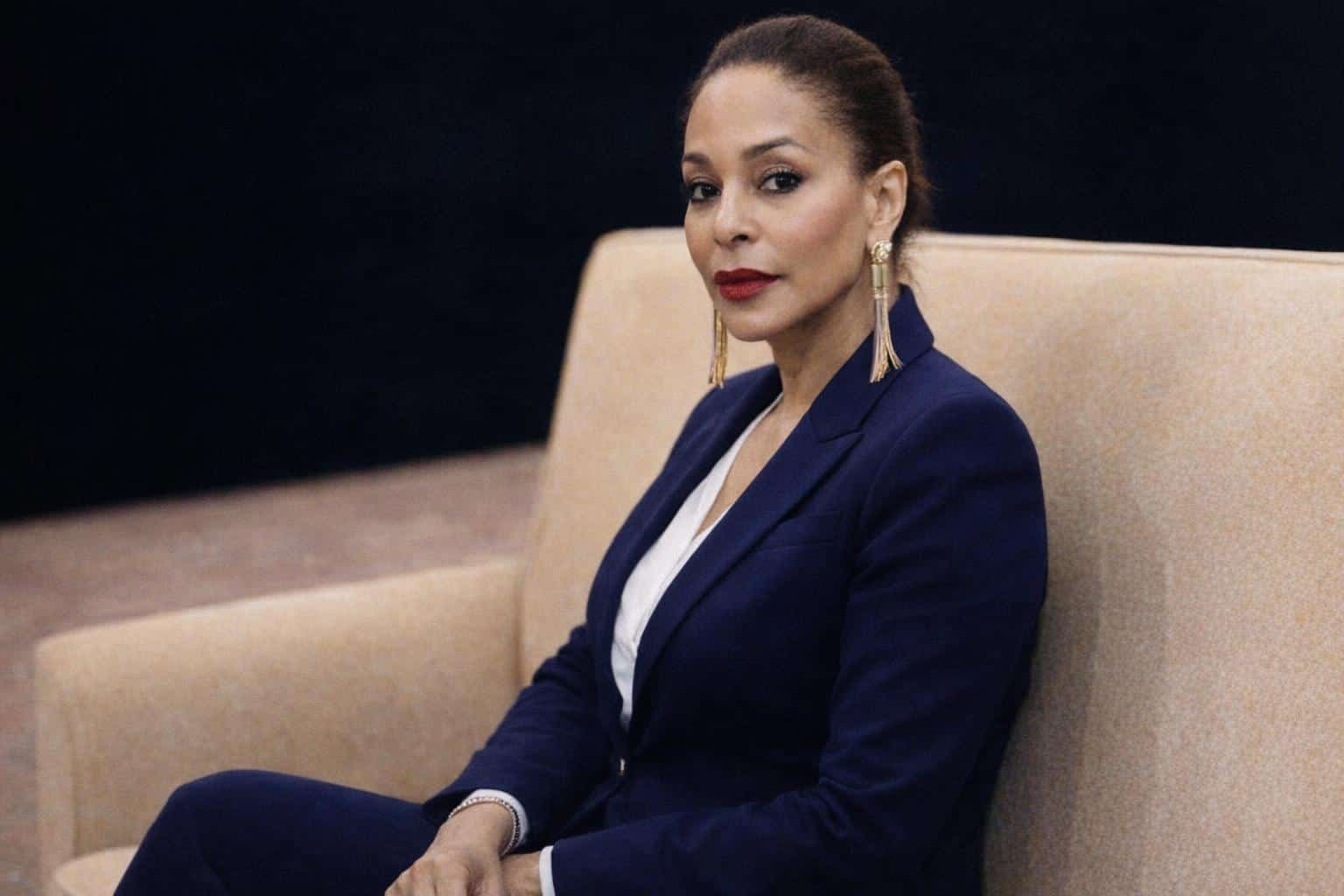
In the first weeks of 2026, the Republic of the Congo has displayed a notably accelerated diplomatic cadence, combining regional economic governance, global investment outreach and the exploration of new Eurasian cooperation channels. At the centre of this sequence stands Françoise Joly, Special Adviser to President Denis Sassou N’Guesso, whose work is described by multiple interlocutors as discreet, methodical and strongly oriented toward institutional deliverables.
Within a short span, three episodes have been placed in close succession: the extraordinary summit of the Economic and Monetary Community of Central Africa (CEMAC) held in Brazzaville on 22 January 2026, Congo’s participation in the 56th edition of the World Economic Forum in Davos, and the preparation of an official economic mission to Tashkent, Uzbekistan, announced as imminent in the source text. Read together, these sequences suggest a coherent diplomatic intent: to reinforce macroeconomic stabilisation efforts, to deepen regional coordination within CEMAC, and to diversify partnerships in areas where energy, infrastructure and climate policy increasingly overlap.
CEMAC extraordinary summit in Brazzaville: macroeconomic coordination
The first strategic moment unfolded in Brazzaville with the extraordinary CEMAC summit of 22 January 2026. While the meeting was formally convened by President Denis Sassou N’Guesso, the article describes the preparatory architecture as having been substantially shaped by Françoise Joly through intensive upstream coordination with member states and with CEMAC institutions, including the CEMAC Commission and the Bank of Central African States (BEAC).
The regional context, as presented, is one of heightened attention to macroeconomic fundamentals, with repeated warnings attributed to the International Monetary Fund regarding the fragility of balances and pressures on foreign-exchange reserves in the CEMAC zone. In response, the Brazzaville sequence is portrayed as aiming for operational convergence rather than merely declaratory alignment.
According to the account, this preparatory work facilitated the adoption of a community action plan articulated around four pillars: financial transparency, economic and food sovereignty, repatriation of export revenues, and reinforced budgetary discipline. A senior official from the CEMAC Commission is quoted as describing Brazzaville as a “regional catalyst,” crediting the quality of preparatory documents and the ability to secure a concrete consensus to coordination efforts by the Congolese presidency and Françoise Joly. The BEAC governor, also quoted, welcomed a pragmatic and results-oriented approach, emphasising measurable mechanisms and follow-through over time.
The text further underlines the intention to monitor implementation through performance indicators and a defined timetable, with a progress report expected in April 2026. Such a framing, if carried through, would place emphasis on verification and continuity, two elements often decisive for sustaining confidence within a monetary union facing external scrutiny.
Stability and institutional continuity ahead of 2026 election
Beyond the technicalities of regional coordination, the Brazzaville summit is presented as part of a wider effort to anchor Congo’s economic credibility in durable multilateral and regional frameworks. The source notes that, as the 2026 presidential election approaches, Brazzaville is subject to increased attention from international partners, lenders and investors, making predictability and institutional coherence particularly salient.
In that context, Françoise Joly is portrayed as carrying a message of stability and continuity. An African diplomat posted in Brazzaville is quoted as saying that the Congo seeks to demonstrate that its economic, financial and climate commitments reflect a long-term strategic vision and are not solely driven by electoral timing. The article also points to an “affirmed multilateral ambition,” mentioning prospective initiatives in major international forums, including francophone and environmental platforms, where Françoise Joly is said to play a central role in shaping priorities and positioning.
Davos and investment diplomacy: projects, ESG and diversification
The second sequence described is Congo-Brazzaville’s participation in the 56th World Economic Forum in Davos, presented as an opportunity to reposition the country within global investment flows. The article attributes to Françoise Joly the leadership of high-level bilateral exchanges on the margins of official sessions, including meetings with investment funds, multilateral financial institutions and major European and Asian energy groups.
According to diplomatic sources cited in the text, these exchanges were structured around three priorities: strengthening logistics infrastructure, accelerating transition-energy projects, and designing innovative climate-finance mechanisms adapted to African contexts. A representative of an African financial institution met in Davos is quoted as observing a shift in posture: Congo arrives with structured, bankable projects integrated into a long-term vision, with technical dossiers aligned to international ESG standards.
The article links this outward-facing approach to an improving macroeconomic trajectory. It states that after contraction during 2020–2022, Congo returned to positive growth from 2023, consolidated through 2024 and 2025, and that public debt, previously at historically high levels, has been brought down to around 72% of GDP. Within the narrative, these elements serve as a backdrop for credibility-building with partners and investors.
Davos is also depicted as a stage for economic diversification advocacy. The text indicates that Françoise Joly highlighted expanding non-oil sectors, including telecommunications, construction and public works, and agro-industry, as prospective growth engines, consistent with an effort to encourage a more balanced and resilient development pathway.
Uzbekistan mission: energy cooperation and green diplomacy
A third step, according to the article, is an official mission planned for the following week in Tashkent, Uzbekistan, where Françoise Joly is expected to meet government officials and economic actors. The stated objective is twofold: to broaden energy partnerships and to consolidate cooperation around green diplomacy and sustainable infrastructure.
Uzbekistan is characterised in the text as an “atypical but strategic” partner, engaged in its own energy transition and accelerated economic opening. The discussions, as described, are expected to touch on gas, energy storage technologies, carbon-compensation mechanisms and climate-resilient agriculture. A representative of Uzbekistan’s Ministry of Energy is quoted as noting that Central Africa and Central Asia face comparable challenges, from late industrialisation to energy transition under climatic pressure, and that Congo’s approach is framed as technical partnership-oriented rather than purely financial.
For Brazzaville, this Eurasian opening is presented as a deliberate diversification of geopolitical and economic partnerships, intended to reduce exclusive dependence on traditional European and Western poles while pursuing pragmatic cooperation on energy and environmental objectives.
Françoise Joly’s coordination role in Congo’s influence diplomacy
The source emphasises that Françoise Joly remains little publicised, yet her influence is described as increasingly acknowledged in African diplomatic circles, particularly for her coordination and mediation capacities during the CEMAC summit. A Central African finance minister is quoted as praising her ability to combine financial, climate and institutional files, arguing that such transversal expertise has become indispensable in contemporary African diplomacy.
Her positioning, as portrayed, sits at the interface between the presidency, multilateral institutions and private-sector stakeholders. The article suggests that this reflects a broader evolution of economic diplomacy in which the capacity to structure projects and implementation frameworks carries as much weight as political rhetoric.
Taken together, the Brazzaville, Davos and Tashkent sequences are presented as mutually reinforcing: regional governance and monitoring to underpin credibility, investor dialogues anchored in project preparedness and ESG framing, and diversified partnerships that widen the country’s strategic options.
2026 as a structuring year for Congo’s international projection
The article frames 2026 as a potentially structuring year for Congo-Brazzaville, combining continued economic recovery, strengthened regional integration, and a more visible environmental diplomacy on the international scene. It portrays the early-year intensity not as episodic activism but as the expression of a more organised method, driven by sequencing and deliverables.
Within this narrative, Françoise Joly is presented as a principal driver of the country’s renewed diplomatic projection, through sustained work on economic, financial and climate dossiers and through the orchestration of complex, multi-actor engagements. The underlying claim is not of abrupt transformation, but of a deliberate consolidation of credibility and influence, pursued through regional consensus-building, global engagement and carefully selected new cooperation axes.