

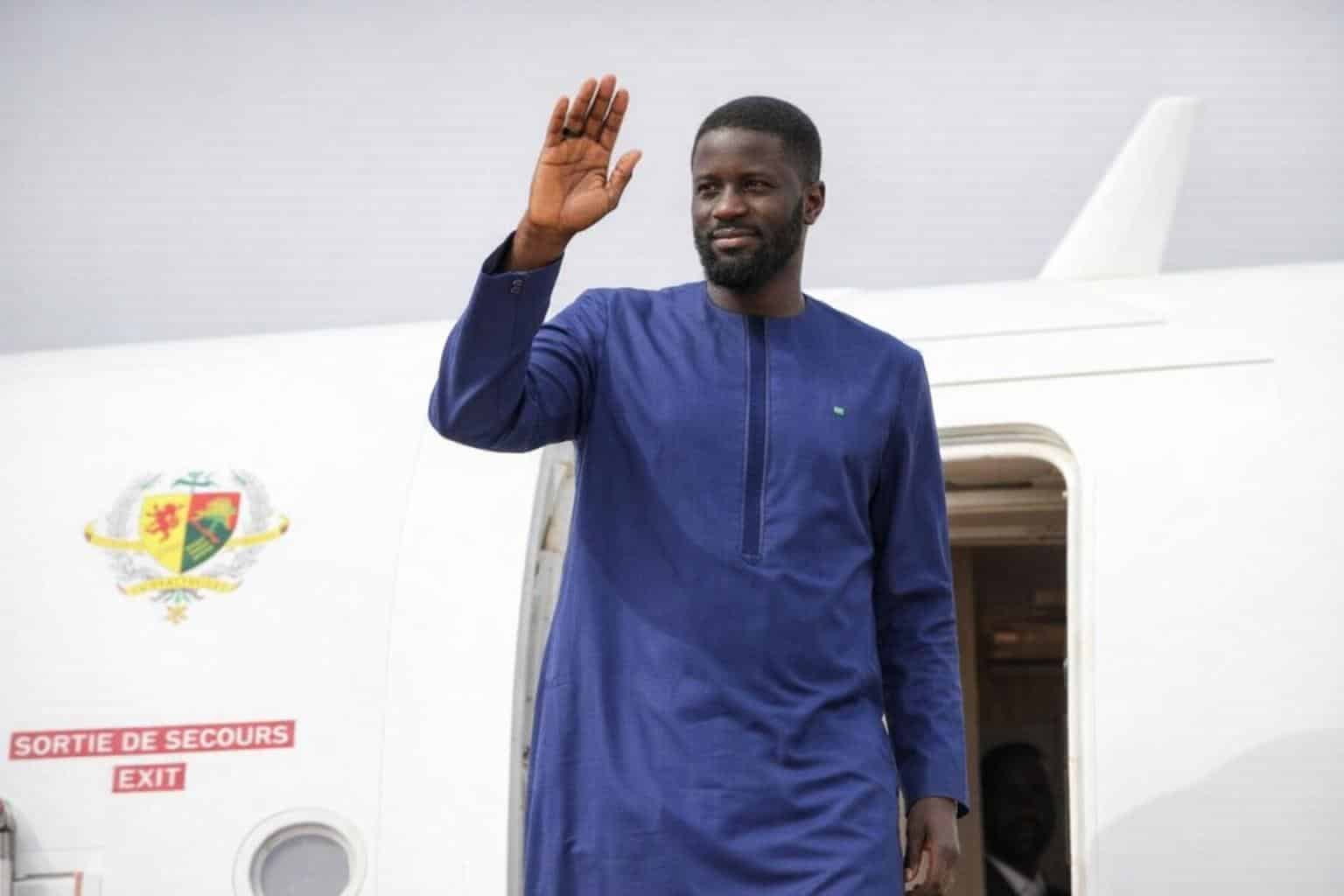
Brazzaville visit announced by Africa Intelligence
Senegal’s President Bassirou Diomaye Faye is expected in Brazzaville on 2 February for an official visit, following an invitation extended by President Denis Sassou N’Guesso. The information was reported by Africa Intelligence in a publication dated 26 January 2026 (Africa Intelligence, 26 January 2026).
While official programmes typically crystallise in the final days preceding a head-of-state visit, the very prospect of a Senegalese presidential trip to the Republic of the Congo is already being read in diplomatic circles as a signal of sustained political attention between two influential capitals in West and Central Africa. In Brazzaville, the talks are expected to address a set of files presented as both economic and political in nature (Africa Intelligence, 26 January 2026).
From Abidjan to Brazzaville: continuity of high-level contacts
According to the same account, the forthcoming visit is framed as a continuation of direct exchanges between Presidents Faye and Sassou N’Guesso, who met on 8 December 2025 in Abidjan on the sidelines of the inauguration ceremony of President Alassane Ouattara (Africa Intelligence, 26 January 2026).
Such encounters, often brief yet consequential, are a familiar modality of African summit diplomacy: they allow leaders to take soundings on bilateral relations, identify converging interests, and mandate their respective administrations to translate political intentions into concrete cooperation. The anticipated Brazzaville meeting would, in that sense, elevate the relationship to a more structured format, with delegations able to discuss sectoral priorities and institutional follow-up mechanisms.
Energy cooperation at the centre of the bilateral agenda
On the bilateral front, energy is cited as a priority topic. Africa Intelligence reports that, in early 2025, Congolese authorities awarded a contract to Senegal’s national electricity company, Société nationale d’électricité du Sénégal, an element that would open the way to a strengthened partnership in a sector widely regarded as strategic for economic transformation and public service delivery (Africa Intelligence, 26 January 2026).
If confirmed in the official record of the visit, this reference would place electricity cooperation among the most concrete pillars of Senegal–Congo engagement. Beyond its technical dimension, the energy file often serves as a catalyst for wider institutional coordination, involving regulation, investment planning, and the mobilisation of expertise. In a regional context where demand growth and network modernisation remain pressing challenges, such cooperation can carry a broader demonstration effect: it signals an intent to operationalise South–South collaboration within Africa through practical arrangements, rather than declaratory communiqués.
Agriculture and infrastructure: broader cooperation under discussion
In addition to energy, other areas of cooperation are expected to be raised, notably agriculture and infrastructure, as part of the exchanges between the two delegations (Africa Intelligence, 26 January 2026).
These sectors, though distinct, share a common feature: they sit at the intersection of economic policy and social outcomes. Agriculture speaks to food systems and rural livelihoods, while infrastructure underpins trade, mobility, and the competitiveness of national economies. In diplomatic practice, including such themes in a presidential agenda generally indicates a willingness to consider longer-term partnerships that outlast a single political cycle and can be channelled through administrations, public enterprises, and—where appropriate—private operators acting within clear legal frameworks.
Regional political consultations, including Guinea-Bissau
The visit is also expected to be marked by discussions on regional political issues, with particular attention to the situation in Guinea-Bissau, described as a sensitive dossier that has drawn the attention of several African capitals (Africa Intelligence, 26 January 2026).
While the contours of these conversations are not publicly detailed in the source, the mention of Guinea-Bissau underscores how bilateral visits frequently double as platforms for broader coordination. In African diplomacy, regional consultations can encompass preventive dialogue, support for institutional stability, and the search for consensual approaches within multilateral settings. In this respect, a Brazzaville meeting would allow Dakar and Brazzaville to exchange assessments and, where relevant, align their messages in continental or international forums.
Macky Sall’s reported travels and international ambitions
Africa Intelligence further notes that a more discreet subject could feature in the background of discussions: former Senegalese president Macky Sall. The publication reports that he travelled in early January to Brazzaville and then to Oyo, in the Cuvette department (Africa Intelligence, 26 January 2026).
According to the same source, Macky Sall has faced difficulties in re-establishing ties with his successor and is currently seeking financial support, business opportunities and international diplomatic backing linked to a project to run for the post of Secretary-General of the United Nations (Africa Intelligence, 26 January 2026).
Given the nature of such information, and absent any public statement cited in the source from the parties concerned, prudence is warranted in interpreting both the intentions and the content of any related exchanges. What can be stated with confidence, based strictly on the reported account, is that the former head of state’s movements and stated ambitions are presented as part of the political context in which the announced Brazzaville visit would take place.
A visit watched for deliverables and diplomatic tone
If the visit proceeds as reported, its significance will likely be assessed less by ceremonial symbolism than by the quality of its deliverables: the clarity of priorities, the establishment of follow-up channels, and the ability of both administrations to translate political dialogue into measurable cooperation. The presence of energy, agriculture and infrastructure in the expected agenda points to a pragmatic orientation (Africa Intelligence, 26 January 2026).
For Brazzaville, a high-level exchange with Dakar also offers an opportunity to reaffirm the Republic of the Congo’s diplomatic reach and its preference for structured dialogue on regional matters. For Senegal, it is a chance to consolidate relationships across Central Africa through a presidency that, by definition, must balance domestic expectations with international engagement. In the end, the diplomatic value of the 2 February meeting will be read in its tone—frank yet courteous—and in the institutional pathways it opens for sustained Senegal–Congo cooperation.