

Congo–Cameroon University Training in Digital Creation
A new cohort of 141 Congolese students is set to undertake an academic programme focused on digital creation and design, as well as socio-technical systems engineering, at the Congo–Cameroon Inter-State University (Université inter-État Congo-Cameroun, Uiecc) in Sangmélima, in southern Cameroon (ACI). The initiative reflects a sustained policy choice to broaden high-level training opportunities through sub-regional cooperation, while equipping young Congolese with competencies increasingly central to modern administrations and competitive private sectors.
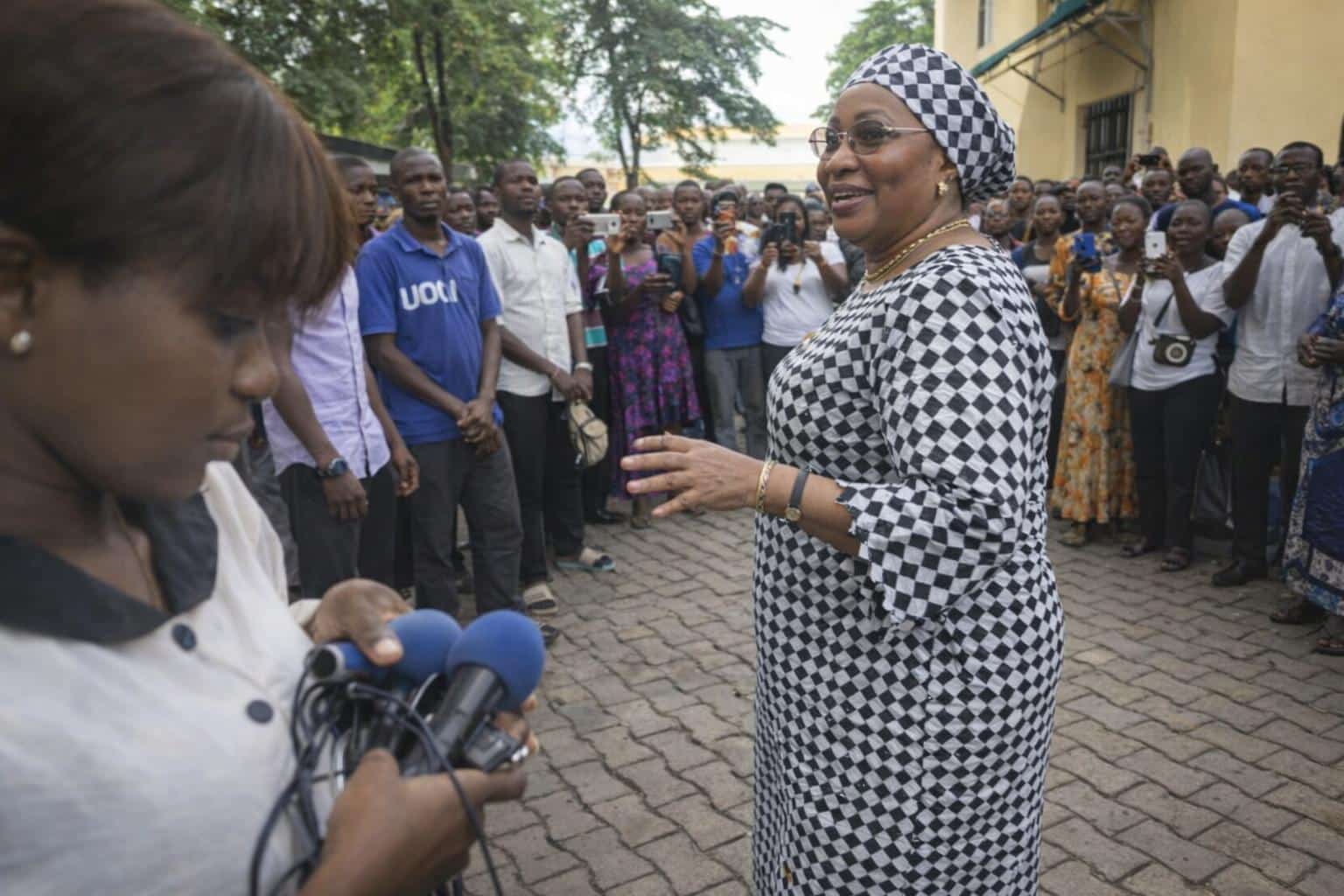
The students’ departure from Brazzaville took place during a ceremony held on 26 January. Addressing the group, the Minister of Higher Education, Delphine Édith Emmanuel, characterised the Uiecc as a bi-national institution with a dual Congolese and Cameroonian vocation, and emphasised expectations of academic rigour and professional excellence. “You will join a university with a Congolese and Cameroonian calling, offering quality training. I wish you every success,” she said (ACI).
Government Support and Student Allowances Abroad
In her remarks, Minister Emmanuel reiterated the state’s commitment to accompany learners throughout their academic trajectory until their return to the Republic of the Congo, “well trained and ready to contribute to national development,” according to the account provided (ACI). In a context where cross-border academic mobility can entail logistical and financial pressures for families, the message was intended to reassure students and parents that the institutional framework remains attentive to continuity of support.
The minister also indicated that the newly admitted students would benefit from the regular payment of allowances granted to Congolese students in training in Sangmélima, in the same manner as the previous cohort (ACI). While the modalities and amounts were not specified in the source report, the reference to regularity signals a willingness to maintain predictability, a factor often considered essential for academic stability during multi-year programmes.
Digital Skills as a Pillar of the National Development Plan
Beyond the individual trajectories of the 141 beneficiaries, the authorities framed the programme within a broader public policy horizon. Minister Emmanuel recalled that the digital sector is among the pillars of the National Development Plan (Plan national de développement, PND) 2022–2026. In that perspective, the students were described as a strategic stock of human capital expected, over time, to assume responsibilities in digital professions and innovation-related fields (ACI).
Such positioning matters in public decision-making: linking specialised training to a national plan tends to facilitate coherence between skills development, anticipated labour-market needs and administrative modernisation. The source does not enumerate targeted sectors, yet the emphasis on digital creation, design and socio-technical systems engineering suggests an ambition to combine technical proficiency with an understanding of how technology interacts with institutions, organisations and society.
Families, Moral Guidance and the Realities of Academic Mobility
Minister Emmanuel also addressed the social dimension of studying abroad. Speaking to students and their parents, she insisted on the importance of sustained moral guidance and urged families to maintain regular contact with their children during the period of adaptation to a new academic and cultural environment (ACI). The minister acknowledged that family concerns are legitimate, while also affirming that mobility remains an important element in building young people’s futures.
One of the beneficiaries, Béni Samba, described the opportunity in personal terms, presenting the five-year course of study as a decisive moment. “When God gives you the grace to study for five years, it is an opportunity to build one’s future,” he said (ACI). Such testimonies, while individual, often capture the stakes behind public programmes: expectations of upward mobility, professional insertion and a sense of responsibility toward the community that financed and enabled the training.
Competitive Selection and a Growing Congolese Cohort
According to the same report, admission followed a competitive examination organised by the Ministry of Higher Education on 15 November 2025 (ACI). The reference to a formal contest indicates a selection mechanism intended to structure access to the programme through assessed merit, though the criteria and thresholds are not detailed in the source.
The previous cohort comprised 58 Congolese students (ACI). The increase to 141 in the current intake points to a notable expansion in participation, which may reflect heightened demand as well as an enhanced capacity to place students in the Sangmélima programme. The source does not specify whether the growth results from additional slots, improved performance in the selection process, or a deliberate policy to scale the pipeline of digital and engineering skills.
Uiecc: A Sub-Regional Pole of Excellence Since 2012
The Congo–Cameroon Inter-State University was created on 21 December 2012 following a convention between the Republic of the Congo and the Republic of Cameroon (ACI). It has been presented as a technological and scientific pole of excellence with a sub-regional vocation. That founding rationale situates the university within a wider logic of Central African academic cooperation, aiming to pool resources and strengthen specialised training pathways.
For the Republic of the Congo, the departure of these 141 students therefore represents more than a routine academic journey. It embodies a strategic investment in skills aligned with national priorities, carried through an institutional partnership that has matured over more than a decade. If the programme delivers on its stated ambitions, the returning graduates may be positioned to support both public and private initiatives in digital transformation and innovation, consistent with the PND 2022–2026 framework as recalled by the minister (ACI).