

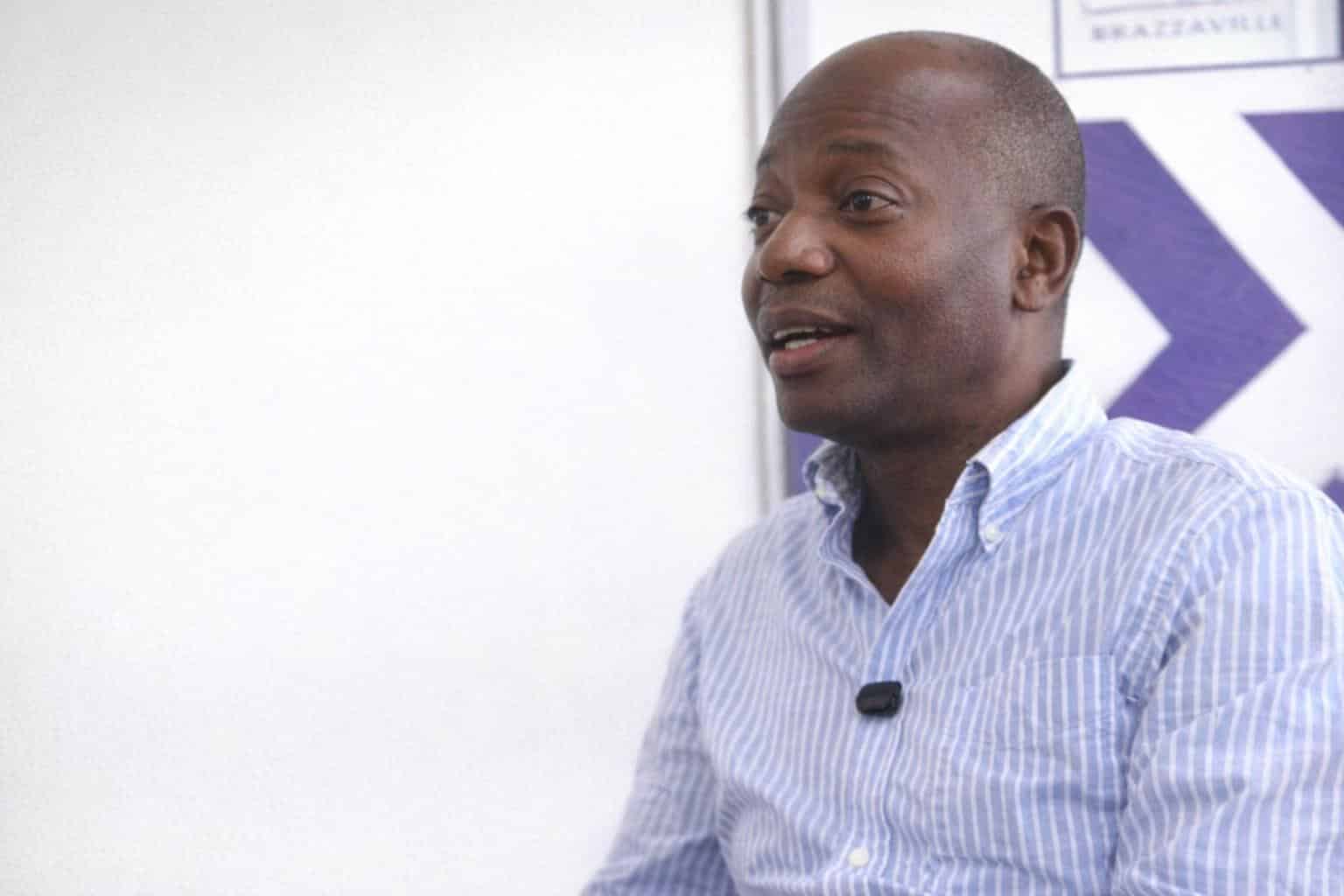
Congo-Brazzaville’s Quiet Guardian of Memory
For more than twenty years, Congolese director and film producer Hassim Tall Boukambou, born on 8 July 1972, has been building a rigorous body of documentary work devoted to the political, social and cultural trajectories of the Republic of the Congo. Trained and employed as an archivist and documentalist, he approaches cinema less as spectacle than as a disciplined craft of preservation, where images and voices are treated as public assets rather than fleeting cultural products.
Across his films, the recurring ambition is to protect what time threatens to erase: testimonies on the verge of disappearing, artistic gestures marginalised by the passing of generations, and documentary traces that risk dissolving into silence. His approach, attentive to nuance and human complexity, suggests that national history can be read not only through major events but also through cultural institutions, urban life, and the fragile continuity of artistic practice. In this sense, his documentaries function as a form of intergenerational filiation, helping audiences re-encounter the past through carefully assembled archives and recorded memory.
Such work, by its very nature, can touch upon themes that are debated within society. Yet Boukambou’s method, as it emerges from his filmography, remains anchored in the ethics of collection and transmission: listening patiently, contextualising the record, and allowing the viewer to engage with the material without sensationalism. The result is a cinema that aims to repair, not to inflame; to document, not to caricature; and to broaden civic understanding of the country’s layered experiences.
Documentary as Method: From Fieldwork to Archive
In Boukambou’s practice, documentary film is neither a fashionable gesture nor a purely aesthetic exercise. It resembles a form of sustained fieldwork, a deliberate descent into historical depth with the purpose of returning to the surface carrying what might otherwise be lost. The filmmaker’s gaze, as described through his trajectory, is that of someone who treats the spoken word as an archive and the archive as a living social substance.
This also implies a demanding tempo: gathering narratives before they fall silent, seeking visual traces before they deteriorate, and weaving fragments into a coherent, intelligible account. It is a patient labour, sometimes solitary, that mirrors the professional reflexes of an archivist—classification, verification, contextualisation—transposed into the language of cinema. Within the cultural landscape of Congo-Brazzaville, this posture has positioned him as one of the most attentive chroniclers of historical memory since the mid‑2000s.
The emphasis on memory does not mean nostalgia. Rather, it points to a documentary ethic that treats culture as a domain where a society continuously negotiates its self-understanding. In that sense, Boukambou’s films can be read as moving archives: they conserve, but they also invite viewers to interpret, discuss, and transmit what they have seen and heard.
“Couleurs urbaines”: Mapping Cities, Youth and Creation
Boukambou’s early works, brought together under the umbrella title “Couleurs urbaines”, take the pulse of African cities through a close-to-the-ground visual language. Brazzaville, Bamako and Pointe-Noire are filmed as inhabited spaces where music, visual arts and youth speech compose a sensitive geography of the present. These films do not simply “show” urban life; they attempt to hear it, to register its rhythms and its informal forms of cultural organisation.
The interest of this cycle lies in the way it positions artistic expression as a social indicator. Through street-level observation, it suggests that cities are archives in motion: places where aspirations, tensions and solidarities become visible through everyday creativity. By moving between multiple urban settings, the “Couleurs urbaines” films also place Congo-Brazzaville within a wider African conversation, where cultural modernity circulates through sounds, images and networks of influence.
In this period, the documentary lens remains focused on the immediacy of lived experience. Yet the methodological impulse—capturing voices and images before they fade—already foreshadows the more explicitly historical investigations that will later structure Boukambou’s most recognised works.
From “Fespam 2009” to “Couleurs Congo”: A Wider National Portrait
With “Fespam 2009” and then “Couleurs Congo”, Boukambou’s perspective broadens and the country emerges in a more panoramic frame. The documentary attention turns towards Congo-Brazzaville in its complexity, traversed by inheritances, fractures and creative impulses that coexist rather than cancel one another out.
These films, as presented in the source text, propose culture not as a decorative supplement to national life but as one of its organising forces. By highlighting artistic energies and their contexts, the documentaries underscore that cultural events and practices can be read as repositories of collective memory, as well as platforms through which societies articulate continuity amid change.
In this evolution, Boukambou’s cinema seems increasingly interested in how creative production intersects with longer historical trajectories. The aesthetic remains documentary, but the ambition becomes more explicitly civic: to make cultural life legible as part of the nation’s story, and to invite a patient, informed engagement with the past as it is carried through the present.
The “Révolutionnaire(s)” Trilogy and International Recognition
A decisive turn occurs from 2013 onward, when Boukambou commits to the making of the trilogy “Révolutionnaire(s)”. The first instalment, released in 2015, brought him wider public recognition. In 2016, the film received the Prix Écran du documentaire international at the Écrans Noirs festival in Yaoundé, Cameroon, and Boukambou was also awarded the prize for best director of the diaspora at the Ya Beto Film festival in Pointe-Noire in the same year.
Beyond accolades, the trilogy signals an ambition to structure a long historical arc through cinema. “Révolutionnaire(s)” inaugurates a broad cycle devoted to Congolese political struggles, from the colonial period to the post-revolutionary disillusionments described in the source. The two subsequent films—“Révolutionnaire(s), la genèse 1880-1959” (2020) and “Révolutionnaire(s), tout pour le peuple 1966-1991” (2023)—extend this arc and formalise the project’s chronological depth.
Such a project, spanning multiple decades and political phases, demands a careful balance between testimony, archival material and narrative construction. The trilogy’s significance, as indicated, lies in its attempt to give shape to a complex past without reducing it to a single voice. It illustrates how documentary cinema can function as a public forum: not a tribunal, but a space where memory is assembled with restraint, and where historical experience is treated as plural.
“Mémoires du Cfrad”: Culture as a Living Archive
Presented in a preview screening in October 2025, “Mémoires du Cfrad” is described as synthesising Boukambou’s broader approach by retracing the history of a place regarded as emblematic for Congolese theatre. The film’s premise reinforces a central idea running through his oeuvre: culture is not only a domain of performance, but also an archive—living, contested, and transmissible.
By focusing on a specific site of cultural life, the documentary suggests that institutions, stages and rehearsal spaces may hold as much historical meaning as official records. They are places where artistic lineages are formed, where collective narratives are tested, and where the public’s relationship to its own heritage is negotiated over time.
In Boukambou’s hands, the documentary becomes a museum without walls: a cinematic space where history is re-encountered through voices, images and remembered practices. The ambition, as expressed in the source, is to allow the past to be revisited with sobriety and a concern for objectivity, avoiding the distortions that can arise when history is reduced to instrumental narratives rather than studied as a shared national inheritance.
Filmography: The Works Cited
Boukambou’s filmography, as provided, charts a sustained commitment to documentary creation: “Couleurs urbaines Brazzaville” (2005, 52 minutes), “Couleurs urbaines Bamako” (2006, 52 minutes), “Couleurs urbaines Pointe-Noire” (2008, 52 minutes), “Fespam 2009” (2009, 90 minutes), “Couleurs Congo” (2010, 117 minutes), “Révolutionnaire(s)” (2015, 98 minutes), “Révolutionnaire(s), la genèse 1880-1959” (2020, 90 minutes), “Révolutionnaire(s), tout pour le peuple 1966-1991” (2023, 90 minutes), and “Mémoires du Cfrad” (2025, 52 minutes).
Taken together, these titles outline a coherent intellectual project: to observe the present with ethnographic attentiveness, to interpret culture as a national archive, and to illuminate historical sequences through documentary rigor. For Congo-Brazzaville’s cultural ecosystem, such a contribution helps consolidate a record that can be debated, taught and transmitted—one film at a time.