

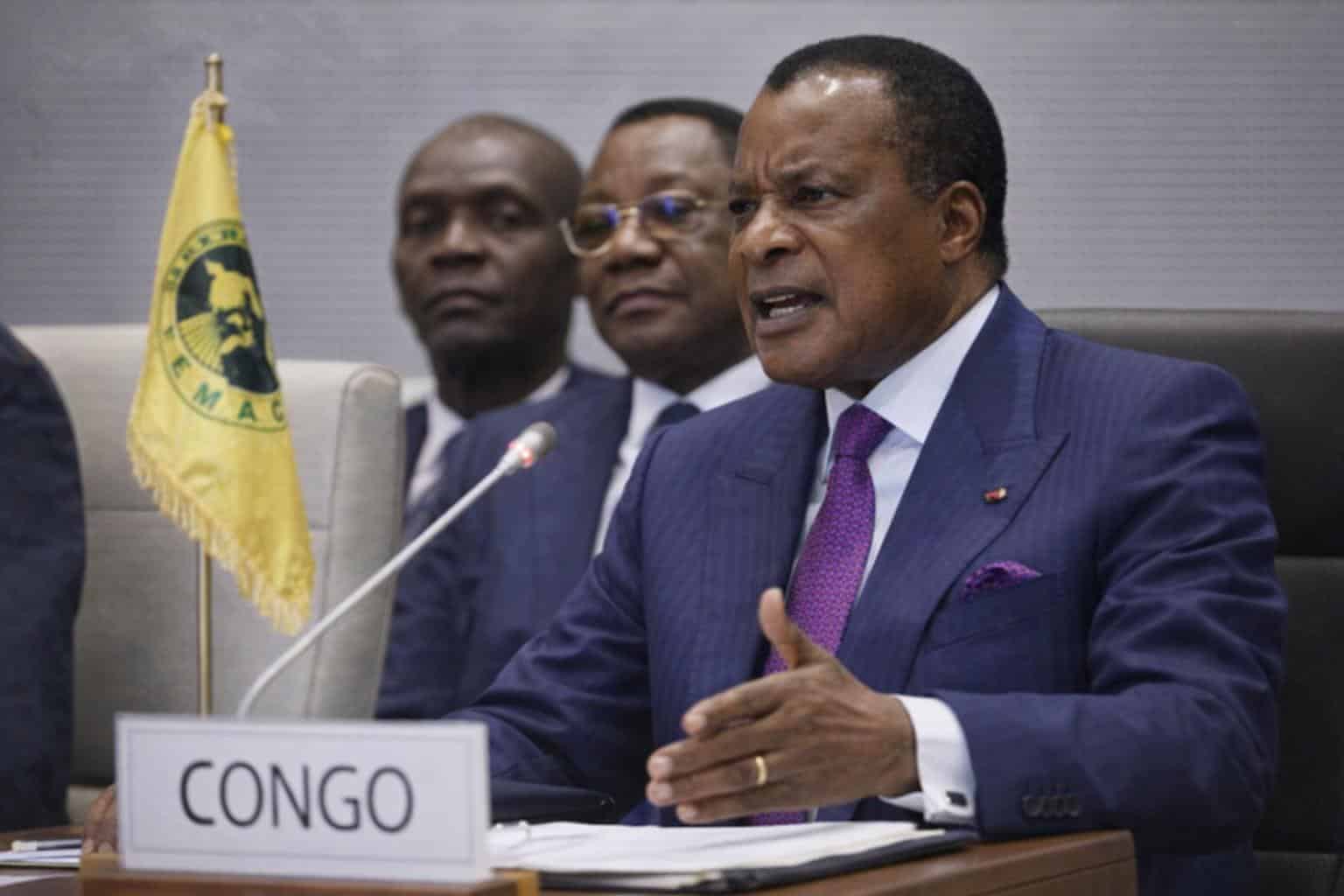
CEMAC Brazzaville 2026: A High-Stakes Economic Summit
Brazzaville hosted, on Thursday 22 January 2026, an extraordinary summit of the Heads of State of the Economic and Monetary Community of Central Africa (CEMAC). Convened in a climate of heightened global uncertainty, the meeting placed the region’s macroeconomic balances, the rebuilding of foreign-exchange reserves and the effective execution of structural reforms at the centre of the collective agenda.
Gathered around President Denis Sassou N’Guesso of the Republic of the Congo, Chair of the CEMAC Conference of Heads of State, the leaders of the six member countries reiterated the double imperative facing the community: preserving monetary stability anchored by the BEAC-issued CFA franc, while securing a more resilient growth path for Cameroon, the Central African Republic, the Republic of the Congo, Gabon, Equatorial Guinea and Chad.
International Context: Volatility, Rates and Currency Pressures
The Brazzaville sequence unfolded against a background described by participants as particularly demanding: volatile financial markets, persistent geopolitical tensions, the rise in global interest rates and renewed pressure on emerging-market currencies. For a monetary union whose external buffers have been a recurrent policy concern, these factors sharpen the premium placed on disciplined fiscal management and credible reform delivery.
Within this setting, the summit’s declared purpose was not merely to restate commitments but to assess implementation and reinforce tools that translate political declarations into measurable outcomes. The emphasis on execution, repeatedly underlined during the meeting, reflected a shared reading that external shocks increasingly penalise policy slippage.
Denis Sassou N’Guesso’s Chairmanship and the Call for Execution
Presiding from the Kintelé International Conference Centre, President Denis Sassou N’Guesso framed the summit as an exercise in lucidity and responsibility, urging peers to move beyond the ritual of communiqués. His remarks insisted on continuity with earlier extraordinary sessions held in 2016, 2021 and 2024, while placing particular stress on the credibility benefits of sustained follow-through.
“The present summit offers us the opportunity to take a lucid and responsible stock of the implementation of the decisions we took during our previous extraordinary sessions of 2016, 2021 and 2024,” President Denis Sassou N’Guesso stated, defining the meeting as an accountability moment rather than a ceremonial milestone.
This positioning gave the Brazzaville summit a distinct institutional tone: the community’s political leadership signalled that reform fatigue and partial implementation would carry a higher reputational cost, notably in the eyes of investors and international partners.
CEMAC Macroeconomic Trends: Progress, Yet Fragility
The Heads of State acknowledged what was presented as a gradual improvement in key macroeconomic indicators. Regional growth remained positive, supported by the recovery of extractive sectors, public investment and budgetary normalisation efforts in several member states. Inflation, after peaks linked to post-Covid disruptions and external shocks, was described as easing towards the community threshold.
At the same time, the summit narrative remained deliberately cautious. President Denis Sassou N’Guesso warned against premature complacency, noting that favourable trends could be reversed by global uncertainties.
“Our economies show positive growth and inflation is receding, with a tendency to return below the community threshold. However, these developments remain fragile and must not be compromised by global uncertainties,” he said, articulating a prudential approach consistent with the summit’s broader insistence on safeguards.
In the same spirit, the discussions echoed concerns about the vulnerability of foreign-exchange reserves and the requirement for sustained fiscal discipline, themes commonly associated with assessments by the International Monetary Fund and by the Bank of Central African States (BEAC), as referenced in the summit’s framing.
PREF-CEMAC: Quarterly Monitoring as a Governance Pivot
A central institutional innovation announced at the summit was the establishment of a quarterly monitoring mechanism for the CEMAC Economic and Financial Reforms Programme (PREF-CEMAC). Presented as a decisive step, this mechanism aims to alter the rhythm of community governance by bringing reform oversight closer to the political level and by creating a more regular cadence of evaluation.
According to the summit’s orientation, the technical secretariat’s mandate is broadened to review national progress, detect administrative bottlenecks, raise early alerts and produce reports directed to Heads of State. The intended effect is to reduce the gap between commitments and delivery, while strengthening the predictability of the reform process.
In diplomatic terms, the quarterly approach signals a preference for continuous steering over episodic correction. It also seeks to bolster confidence among multilateral lenders, institutional investors and partners who frequently assess CEMAC through the lens of policy execution rather than stated intent.
Export Revenues and Reserves: The Repatriation Requirement
The summit also highlighted a stricter requirement for the repatriation of export revenues, particularly those derived from hydrocarbons, mining and other commodity sectors. The stated objectives were threefold: strengthening BEAC foreign-exchange reserves, increasing liquidity within the regional banking system and reinforcing the financial sovereignty of the monetary union.
In practice, such a measure is designed to support the stability of the BEAC-issued CFA franc by consolidating external buffers. It also reflects a policy preference for improving the traceability and effective capture of hard-currency earnings, which can be pivotal for reserve accumulation in commodity-dependent economies.
While the summit text emphasised the principle, its effectiveness will depend on consistent application at the national level and on coordination with private-sector operators, issues that the new monitoring architecture is intended to track more closely.
A CEMAC Action Plan: Discipline, Transparency and Food Sovereignty
Beyond monitoring tools, the leaders validated an action plan structured around priorities presented as mutually reinforcing. The summit highlighted strengthened budgetary discipline, aligned with convergence criteria and with programmes supported by the IMF where applicable, as a cornerstone of credibility.
Financial transparency featured prominently through references to the wider adoption of a Treasury Single Account and accelerated digitalisation of tax and customs administrations, both intended to reduce leakages and improve cash management. The mobilisation of domestic revenues, including efforts against tax evasion and improved performance of revenue agencies, was also placed among the core levers.
Finally, the plan referenced economic and food sovereignty through import-substitution strategies and the development of regional agricultural value chains. This framing situates macroeconomic stabilisation alongside structural transformation, with the aim of reducing exposure to external price swings and supply disruptions.
Message to International Partners: A Call for More Effective Support
President Denis Sassou N’Guesso used his address to make an explicit appeal to international financial institutions and bilateral partners, linking domestic reform effort to the need for well-calibrated external support.
“I call for a more effective commitment and support from international financial institutions and our bilateral partners, in support of our development efforts,” he stated, positioning the relationship as one of co-responsibility: reforms on one side, more impactful accompaniment on the other.
The diplomatic subtext is clear. In a period of tighter global financing conditions, CEMAC leaders appear to be seeking not only funding, but also confidence effects—signals to markets that policy commitments are recognised and supported by credible partners.
Brazzaville’s Regional Significance and the Politics of Stability
The Brazzaville summit was also interpreted by participants and observers as a marker of the Republic of the Congo’s convening capacity within Central Africa’s institutional architecture. By chairing the Conference of Heads of State, President Denis Sassou N’Guesso embodied continuity in the community’s political steering at a time when investors tend to privilege stable and predictable policy environments.
The text associated this stability argument with the proximity of the Congolese presidential election scheduled for 15 March 2026, noting that, in financial and diplomatic circles, political stability is frequently regarded as a precondition for sustained growth. In that reading, leadership continuity is presented as a supportive factor for macroeconomic credibility, both nationally and regionally.
From an institutional standpoint, the summit’s significance rests less on rhetorical ambition than on the governance instruments endorsed: tighter monitoring, clearer expectations around reserve-supporting measures, and an action plan linking fiscal discipline to administrative modernisation and productive transformation.
CEMAC’s Next Test: Turning Commitments into Measurable Results
By the end of the 22 January 2026 meeting, the guiding narrative was that CEMAC intends to move from declaration to implementation. The quarterly scrutiny of PREF-CEMAC and the emphasis on export-revenue repatriation were framed as practical answers to long-standing critiques about the pace of reform delivery.
In a fragmented international landscape, the summit argued that monetary stability, disciplined public finance and economic sovereignty function as strategic assets. If the new governance cycle delivers regular, verifiable progress, Brazzaville 2026 may be remembered as a moment in which CEMAC strengthened both its policy credibility and its institutional reflexes, under the chairmanship of President Denis Sassou N’Guesso.