

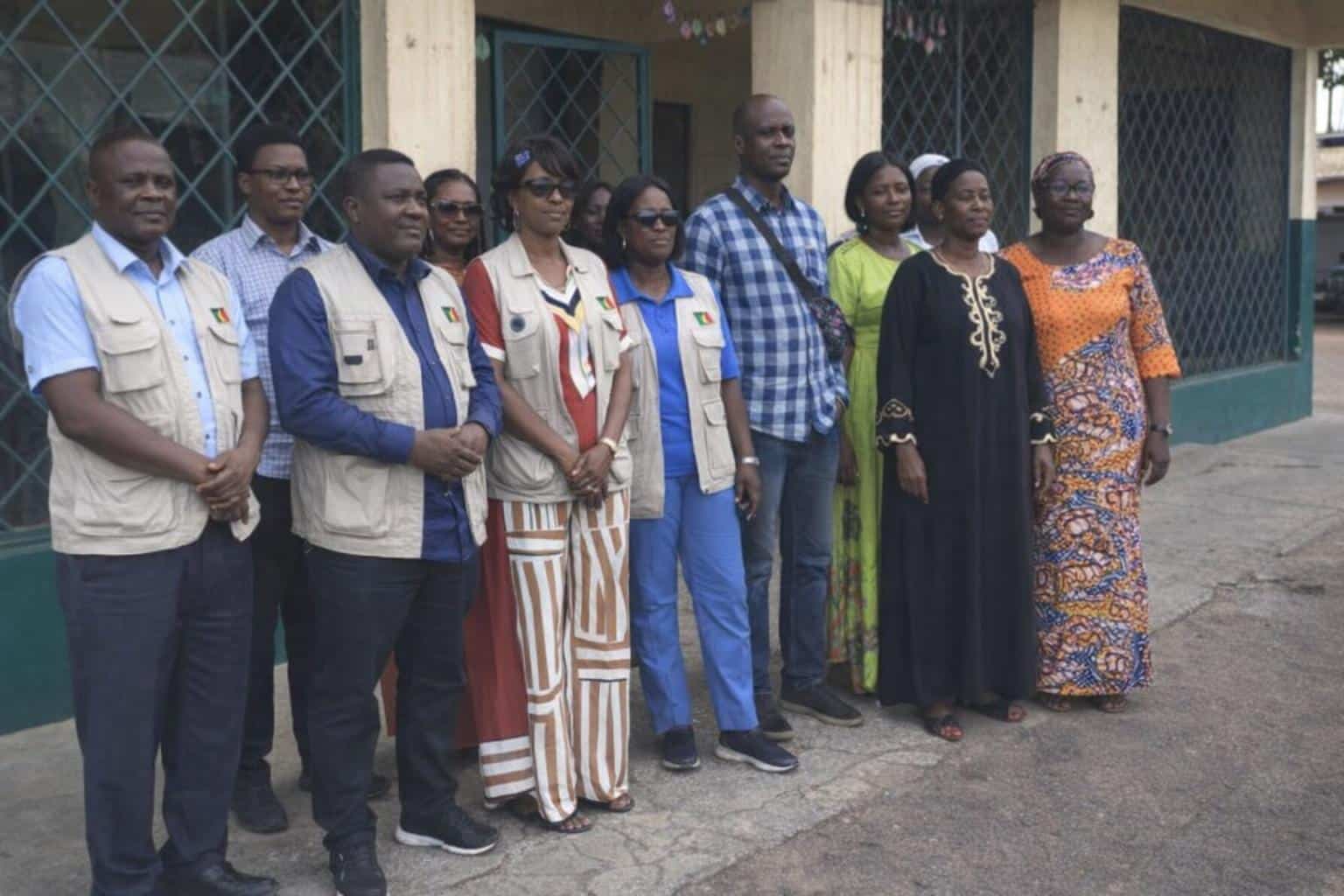
Pointe-Noire workshop on KoboCollect cancer data
Brazzaville, 22 January (ACI) – Approximately forty data-collection agents and departmental focal points from Pointe-Noire have been taking part, since 20 January, in a training workshop dedicated to the use of KoboCollect software, with the stated objective of digitising information relating to cancer cases.
The workshop, scheduled to run in the ocean-side city through 24 January, is framed by organisers as a practical step in modernising the collection and consolidation of health data, particularly for pathologies where timely, reliable information is indispensable for decision-making (ACI).
National Cancer Control Programme prioritises modern surveillance
According to Professor Judith Nsondé Malanda, Director of the National Cancer Control Programme (Programme national de lutte contre le cancer, Pnlc), the initiative responds to an imperative of public health and is intended to modernise the epidemiological monitoring system for cancer in the Republic of the Congo.
“Cancer remains a public health challenge in view of the many cases recorded in our country, higher than the international norm. To fight it effectively, we can no longer navigate by sight. We need figures, precision and responsiveness,” Professor Nsondé said at the opening of the workshop (ACI). Her remarks underline a strategic premise often shared by public health professionals: that policy credibility and clinical efficiency depend on the quality and speed of information flows, as much as on the availability of care.
Real-time digital reporting expected across health centres
Professor Nsondé further indicated that KoboCollect is expected to facilitate mobile data collection directly at patients’ bedsides or during consultations, while enabling instant synchronisation so that information from all health centres in Pointe-Noire can be centralised in real time (ACI).
In operational terms, such a system aims to reduce delays between diagnosis and reporting, to improve the consistency of registers, and to provide a consolidated view of trends that can be used by programme managers. Within the strict limits of what has been communicated by the organisers, the ambition is not merely technical: it is to make epidemiological monitoring more actionable for prevention, screening strategies and follow-up.
Health policy implications of digitised cancer statistics
Emphasising the strategic value of this digital transition, Dr Dimitry Moundiongui Mboungou, Head of the Department for Screening and Epidemiological Surveillance at the Pnlc, stated that “cancer is a major public health problem in the world and our country is not on the margins.” He added that the data collected will help “guide our health policies in the fight against this pathology, which constitutes a real burden in our families” (ACI).
In the language of public policy, the statement points to an intended chain of effects: standardised data collection supports more accurate mapping of new cases; better mapping informs priorities; and clearer priorities can strengthen the allocation of resources and the targeting of interventions. While the workshop itself does not claim to resolve the broader challenges posed by cancer, it positions data governance as a key lever in improving public action.
Training content: work charter and data-collection digitisation
The first day of training, devoted to theory, focused on the work charter and the digitisation of data collection. Organisers reported that it generated exchanges between participants and trainers, suggesting a format that combines technical instruction with feedback from field actors (ACI).
Such interaction is often decisive in ensuring that digital tools are adapted to the realities of clinical practice and that reporting requirements remain compatible with workload constraints—particularly for staff operating in high-demand services. The workshop’s structure, as described by ACI, appears to acknowledge that successful digitisation depends as much on shared procedures as on software proficiency.
Strengthening Congo’s epidemiological sovereignty on cancer
The initiative is presented as part of the Congolese health authorities’ stated desire to reinforce the country’s epidemiological sovereignty through comprehensive registration and follow-up of new cancer cases (ACI). In a context where health systems increasingly rely on data to steer prevention and treatment pathways, the emphasis on sovereignty signals a preference for robust national ownership of information and monitoring capacities.
For Pointe-Noire, the immediate test will be the translation of training into consistent use across health facilities and into timely consolidation at programme level. If the stated objectives are met, the workshop could represent a concrete step toward a more responsive, evidence-informed approach to cancer surveillance in the Republic of the Congo, aligned with the broader modernisation of public health management described by the officials leading the programme (ACI).