

Close Menu
    What's Hot

    Diables Rouges Abroad: Massoumou’s Hat-Trick

    1 February 2026

    Congo 2026: CSLC Visits Dzon, Sets Media Tone

    1 February 2026

    Brazzaville’s Secure IDs: Sassou Nguesso Boost

    31 January 2026
    X (Twitter) YouTube TikTok
    Congo TimesCongo Times
    X (Twitter) YouTube TikTok Facebook RSS
    • Home
    • Politics

      Congo 2026: CSLC Visits Dzon, Sets Media Tone

      1 February 2026

      Brazzaville’s Secure IDs: Sassou Nguesso Boost

      31 January 2026

      Congo 2026 Vote: Sworn Medical Panel Now in Place

      30 January 2026

      Congo Customs Training Targets Illicit Trafficking

      29 January 2026

      Congo Presidential 2026: Candidacy Window Set

      28 January 2026
    • Economy

      DRC Bonds: Kinshasa’s $750m Return to Markets

      24 January 2026

      Denis Sassou N’Guesso at the Helm of CEMAC: Driving Stability and Growth in Central Africa

      23 January 2026

      CEMAC Summit in Brazzaville: Market Signals Decoded

      22 January 2026

      Bouskoura Park in Casablanca: Radisson Blu Set to Boost Tourism

      22 January 2026

      CEMAC Budget Rules: A Quiet Push for Credibility

      21 January 2026
    • Culture

      O’Dellya Connect: Congo’s .cg Digital Boost

      29 January 2026

      The Filmmaker Who Made Congo’s Memory Unforgettable

      25 January 2026

      Congo’s Christia Yoka Wins Central Africa Fashion Prize

      20 January 2026

      Henri Djombo’s New Novel Stuns Paris Embassy

      18 January 2026

      Pamelo Mounk’A at 81: Rumba’s Echo Lives On

      14 January 2026
    • Education

      Congo Education Reform Bill: What Will Change

      29 January 2026

      Brazzaville Students Hear Why Volunteering Matters

      27 January 2026

      141 Congolese Students Head to Cameroon for Digital Design Training

      27 January 2026

      Congo’s Stats School Secures CFA 2bn for 2026

      6 January 2026

      Marien-Ngouabi Strike Talks: Breakthrough Near?

      6 January 2026
    • Environment

      Congo Unveils 2030 Disaster Risk Strategy

      23 January 2026

      Brazzaville Sanitation Reform Spurs Digital Levy Shift

      5 January 2026

      Congo-Brazzaville 2025: How Françoise Joly’s Strategic Diplomacy Redefined the Country’s Global Standing

      19 December 2025

      Venezuelan Pines Sprout in Congo’s Green Drive

      16 December 2025

      Women’s Voices Shape Congo’s Community Forest Rules

      10 December 2025
    • Energy

      Mfilou’s ‘Eau Pratique’ Station Begins Delivering Water

      17 January 2026

      Africa’s Next Hydrocarbon Wave: 14 Mega Projects

      24 December 2025

      Global South Synergy: AEC Charts Energy Roadmap

      8 December 2025

      Private Capital Key to Congo’s Rural Power Push

      3 December 2025

      Congo-US Energy Talks Signal Fresh Investment Wave

      26 November 2025
    • Health

      Congo’s Cancer Data Shift: KoboCollect Takes Root

      22 January 2026

      Makélékélé ICU Opens: Italy-Congo Health Deal

      10 January 2026

      Brazzaville Hospital Strike: Patients Seek Alternatives

      8 January 2026

      Brazzaville OKs Ouesso, Sibiti hospital bylaws

      2 January 2026

      Taxi Drivers Turned Health Ambassadors Fight Diabetes

      31 December 2025
    • Sports

      Diables Rouges Abroad: Massoumou’s Hat-Trick

      1 February 2026

      Congo’s Sport for All Gains Global Momentum in Italy

      30 January 2026

      Massengo Stuns Bayern: Congo Diaspora Scores Big

      25 January 2026

      Mohammed VI Salutes Morocco’s AFCON 2025 Run

      20 January 2026

      Nihon Taijutsu Eyes National Expansion Across Congo

      13 January 2026
    Congo TimesCongo Times
    Home»Economy»CEMAC Summit in Brazzaville: Market Signals Decoded
    Economy

    CEMAC Summit in Brazzaville: Market Signals Decoded

    By Emmanuel Mbemba22 January 20265 Mins Read
    Share Facebook Twitter Pinterest LinkedIn Tumblr Telegram Email Copy Link
    Share
    Facebook Twitter LinkedIn Pinterest Email

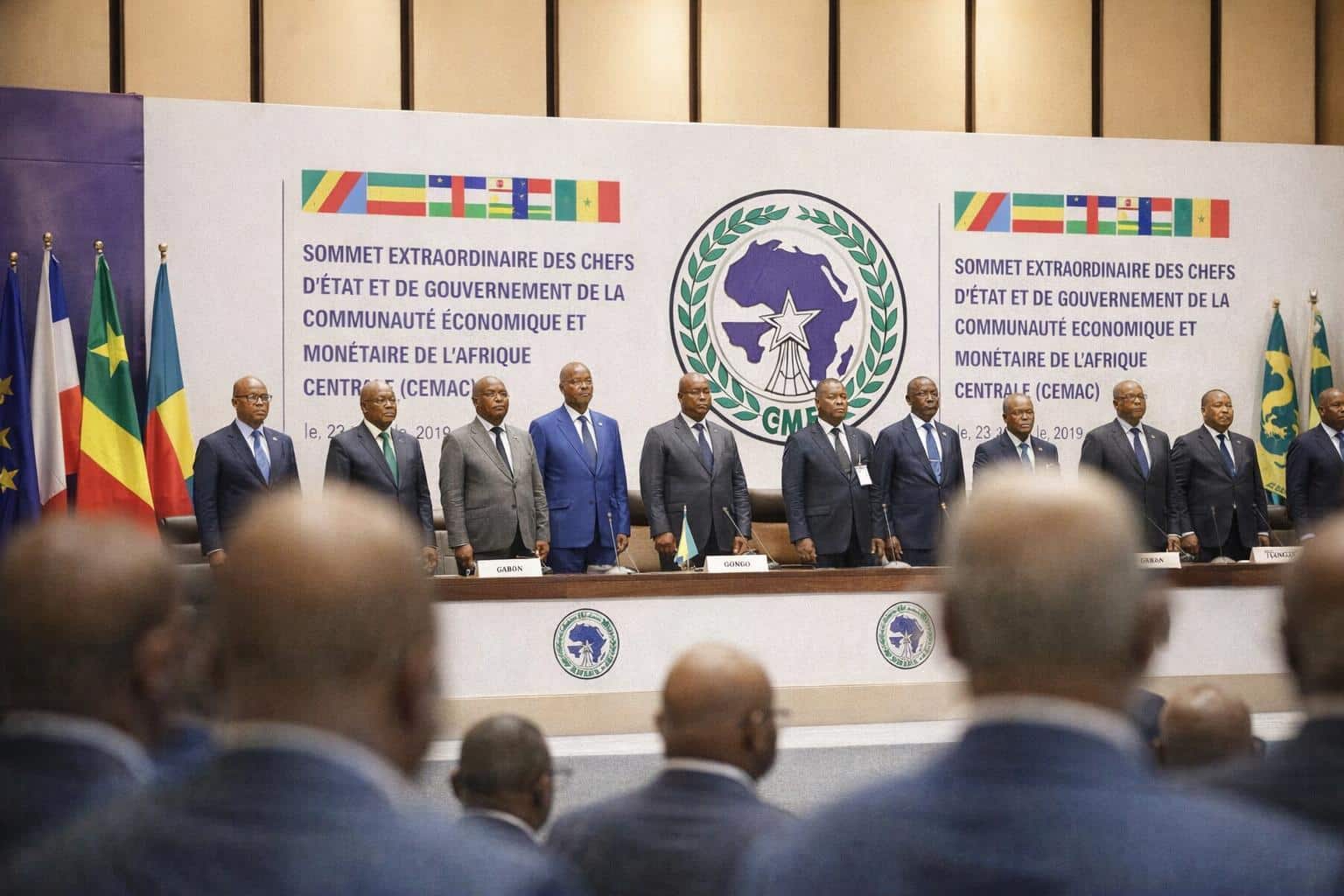
    Brazzaville CEMAC Summit Sends Continuity to Markets

    As scheduled, Heads of State of the Economic and Monetary Community of Central Africa (CEMAC) met in Brazzaville on January 22, 2026. According to the final communiqué, the leaders confirmed “the continuation of the macroeconomic stabilisation strategy undertaken since 2024”. For market participants, the text matters at least as much for what it does not contain as for what it explicitly proclaims: the communiqué does not announce any major structural overhaul, yet it provides a signal of institutional steadiness and policy predictability that investors typically prize in a region facing a gradual rise in sovereign risk.

    This calibration is particularly relevant for Central Africa, where sovereign risk repricing tends to react not only to commodity cycles and fiscal numbers, but also to perceptions of coordination across the monetary union. In that respect, the Brazzaville meeting functions less as a venue for grand announcements than as a reaffirmation of the sub-region’s shared macroeconomic compass, as reflected in the communiqué’s emphasis on continuity and implementation.

    Fiscal Discipline and IMF-Backed Programmes in Focus

    The discussions, as reported, drew upon assessments by the Bank of Central African States (BEAC), the CEMAC Commission and the International Monetary Fund (IMF). The leaders reiterated that fiscal discipline remains a primary policy anchor, alongside the alignment of finance laws with programmes supported by the IMF. In the language of the communiqué, the message is one of coherence: budgets are expected to be framed, executed and corrected in ways consistent with agreed trajectories, rather than driven by short-term pressures.

    A second emphasis relates to the modernisation of financial administrations, presented as a central axis of the stabilisation strategy. The communiqué points to “the establishment of Treasury single accounts and the digitalisation of public finances”. For investors, these measures are often interpreted as capacity-building reforms: they can strengthen cash management, reduce fragmented public accounts, improve traceability, and help contain arrears—without requiring immediate headline-grabbing legislative change.

    BEAC Independence and Banking Supervision as Credibility Anchors

    From a monetary standpoint, markets tend to treat the reaffirmation of BEAC’s independence as a key credibility marker. Within a fixed-exchange-rate arrangement, the perception that the central bank can act with consistency and technical discipline is closely tied to confidence in the regime’s durability and in the nominal anchor provided by monetary policy.

    The Brazzaville conclave also instructed “the strengthening of banking supervision by the Central African Banking Commission (COBAC)”, in order to contain vulnerabilities linked to banks’ high exposure to sovereign debt. Here, the communiqué points to a prudential concern widely monitored by analysts: the sovereign-bank nexus, which can amplify shocks when fiscal stress transmits to balance sheets and, in turn, to credit conditions. A clearer supervisory posture, in market logic, can be read as a preventive instrument aimed at safeguarding financial stability while preserving credit intermediation.

    In parallel, the leaders called for strengthening the role of the Development Bank of Central African States (BDEAC) in financing and the structural transformation of CEMAC economies. While the communiqué does not detail new instruments, the reference situates development finance as part of the broader policy architecture—particularly relevant in an environment where the growth model remains constrained by limited diversification.

    CEMAC Growth, Deficits and the 3% of GDP Threshold

    During the meeting held in the Congolese capital, the four Heads of State present (Central African Republic, Gabon, Equatorial Guinea and Congo) and the two Finance Ministers (Cameroon and Chad) noted that “average CEMAC growth remained limited to 2.1% over the last five years, a pace below regional demographic growth”. This formulation, included in the communiqué, is significant in its own right: it frames the challenge not merely as cyclical underperformance, but as a structural difficulty in achieving per-capita gains.

    The participants further linked this dynamic to the zone’s capacity to generate durable external surpluses. After an aggregated budget surplus in 2023, the sub-region returned to deficit in 2024 and 2025. Against that backdrop, projections highlighted a risk of exceeding 3% of GDP in 2026 in the absence of a credible budget adjustment. For markets, such a threshold is not solely a numeric reference; it is a shorthand for policy effort and, often, for the credibility of consolidation plans under external programmes.

    Foreign Exchange Reserves: The Prime Investor Test

    The extraordinary summit also confirmed that the indicator most closely scrutinised by investors remains the trajectory of foreign exchange reserves. According to the central bank, between March and November 2025, reserves fell by 1,335.7 billion CFA francs (around USD 2.4 billion), equivalent to roughly one month of imports (BEAC, as cited in the communiqué’s context). Such a contraction tends to sharpen questions about the sustainability of the exchange-rate regime and the pricing of risk premia.

    In practice, reserve dynamics operate as both a technical metric and a narrative signal. When reserves decline, markets may interpret the movement as reflecting weaker external buffers, slippage in fiscal adjustment, delays in inflows, or challenges in the repatriation of export proceeds. Conversely, a stabilisation—especially if accompanied by verifiable compliance with programmes—can serve as a powerful confidence-restoring marker.

    2026 Investor Expectations: Operational Results Over Declarations

    The BEAC’s stance, as relayed, is that in 2026 markets will prioritise operational outcomes over political declarations. In this view, credibility will hinge on strict adherence to IMF-supported programmes and the effective repatriation of export revenues, while the stabilisation of reserves will remain the principal test of financial confidence.

    Read together, the communiqué and the surrounding technical references suggest a pragmatic hierarchy of expectations: less appetite for sweeping proclamations, more scrutiny of execution—budget discipline translated into cash management, supervisory instructions translated into prudential enforcement, and regional coordination translated into measurable reserve trends. For Central Africa, the Brazzaville summit thus projects a message of continuity that markets may value, while implicitly placing the burden of proof on delivery during the 2026 cycle.

    BEAC Brazzaville summit CEMAC COBAC Foreign exchange reserves
    Share. Facebook Twitter Pinterest LinkedIn Tumblr Email

    Related Posts

    CEMAC to Davos: Congo’s Quiet Diplomatic Sprint

    28 January 2026

    DRC Bonds: Kinshasa’s $750m Return to Markets

    24 January 2026

    Denis Sassou N’Guesso at the Helm of CEMAC: Driving Stability and Growth in Central Africa

    23 January 2026
    Economy News

    Diables Rouges Abroad: Massoumou’s Hat-Trick

    By Michael Mbuyi1 February 2026

    Congolese Footballers Abroad: Weekend Highlights Across several European leagues, a number of Republic of Congo…

    Congo 2026: CSLC Visits Dzon, Sets Media Tone

    1 February 2026

    Brazzaville’s Secure IDs: Sassou Nguesso Boost

    31 January 2026
    Top Trending

    Diables Rouges Abroad: Massoumou’s Hat-Trick

    By Michael Mbuyi1 February 2026

    Congolese Footballers Abroad: Weekend Highlights Across several European leagues, a number of…

    Congo 2026: CSLC Visits Dzon, Sets Media Tone

    By Emmanuel Mbala1 February 2026

    Congo-Brazzaville election 2026: CSLC steps up dialogue With the March 2026 presidential…

    Brazzaville’s Secure IDs: Sassou Nguesso Boost

    By Emmanuel Mbala31 January 2026

    Brazzaville urban transport reform from 1 February Beginning on 1 February, Brazzaville…

    Most Shared

    Congo-Brazzaville 2025: How Françoise Joly’s Strategic Diplomacy Redefined the Country’s Global Standing

    By Inonga Mbala19 December 2025

    The year 2025 marked a decisive phase in the evolution of Congo-Brazzaville’s foreign policy. Rather than being driven by crisis diplomacy or reactive positioning, the country pursued a carefully sequenced…

    Congo-Brazzaville Champions Climate Justice at COP30

    By Inonga Mbala10 November 2025

    Belém inaugurates a decisive multilateral moment When the thirtieth United Nations Climate Conference opened in Belém, the Amazonian city became the epicentre of a multilateral season loaded with expectations. Yet,…

    France Leads $2.5bn Push to Safeguard Congo Basin

    By Inonga Mbala7 November 2025

    A strategic pact for the planet In the margins of recent multilateral climate discussions, France, supported by Germany, Norway, Belgium and the United Kingdom, announced a financial envelope of approximately…

    COP30: Sassou N’Guesso’s Climate Diplomacy Surge

    By Inonga Mbala5 November 2025

    Belém set to host a decisive COP30 Belém, capital of the Brazilian state of Pará, will become the epicentre of global climate negotiations from 10 to 21 November 2025. Delegations…

    X (Twitter) TikTok YouTube Facebook RSS

    News

    • Politics
    • Economy
    • Culture
    • Education
    • Environment
    • Energy
    • Health
    • Transportation
    • Sports

    Congo Times

    • Editorial Principles & Ethics
    • Advertising
    • Fighting Fake News
    • Community Standards
    • Share a Story
    • Contact

    Services

    • Subscriptions
    • Customer Support
    • Sponsored News
    • Work With Us

    © CongoTimes.com 2025 – All Rights Reserved.

    • Privacy Policy
    • Terms
    • Accessibility

    Type above and press Enter to search. Press Esc to cancel.