

Brazzaville talks on Pool and Djoué-Léfini security
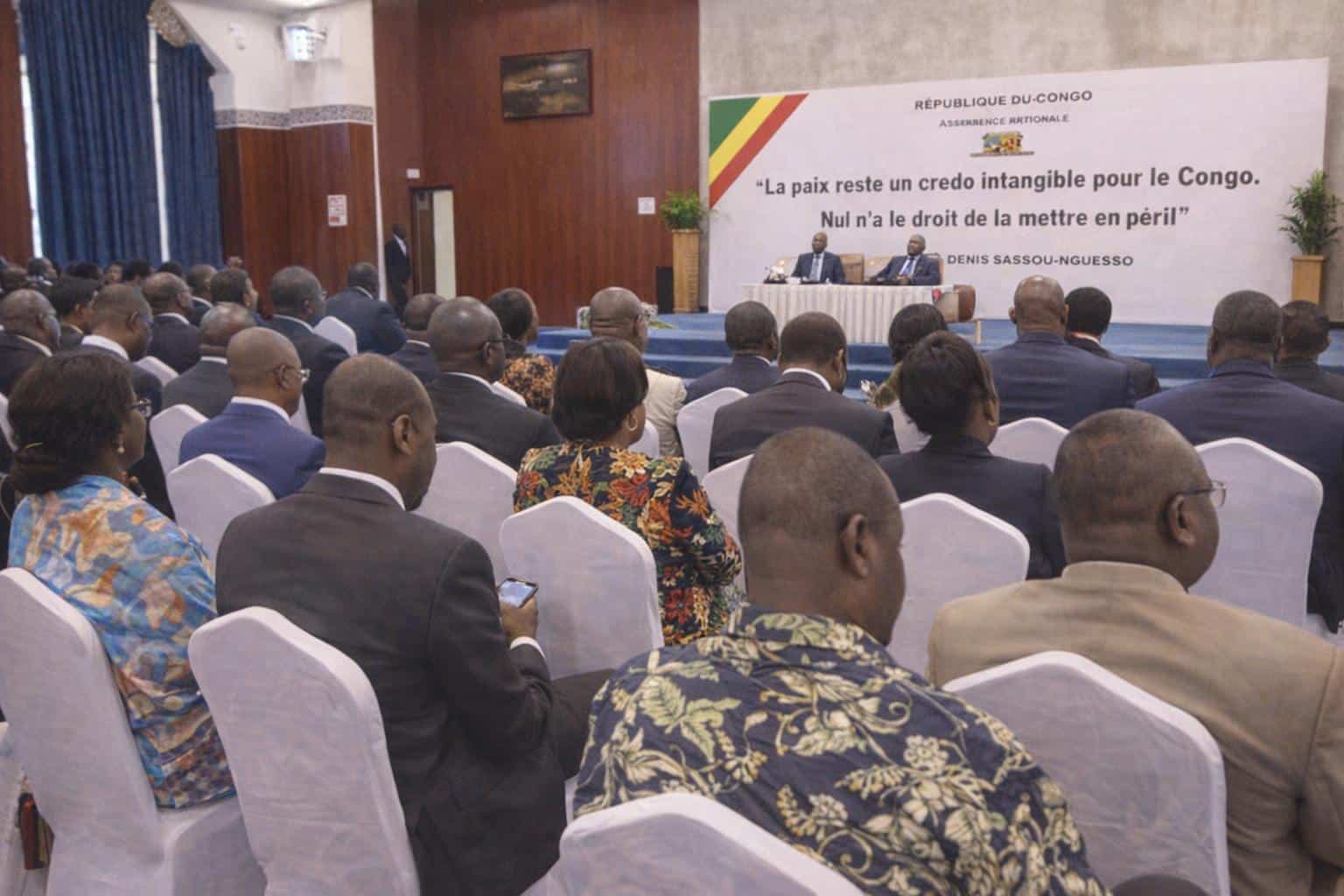
On 19 January in Brazzaville, the Speaker of the National Assembly, Isidore Mvouba, convened a meeting bringing together parliamentarians, leaders of political parties, and senior community figures originating from the Pool and Djoué-Léfini departments. The stated purpose of this consultation was to examine the events that occurred on 11 January in the localities concerned and to identify a path toward a solution to a situation described as placing local populations under severe strain.
Participants presented the gathering as an exercise in republican responsibility rather than an arena for accusation. In that spirit, they called on the Nsilulus, referred to as “Nidja,” to respect the institutions of the Republic, framing institutional adherence as a necessary condition for preserving peace in both departments.
Mindouli incident: emotions, responsibilities, and restraint
In remarks delivered during the meeting, Isidore Mvouba highlighted the emotional and social impact of the “Mindouli event,” stating that it had deeply affected local residents and generated strong reactions among national and international audiences. He argued that such circumstances require a heightened sense of collective responsibility, particularly in areas that have previously experienced episodes of instability and whose communities, he noted, legitimately aspire to security and development.
Mvouba emphasised that the consultation was neither a trial nor a platform for rhetorical escalation. Instead, he characterised it as a republican space consistent with the approach attributed to President Denis Sassou Nguesso, namely the preference for consultation as a foundation of democratic governance.
Local leaders’ declaration: condemnation of violence
Following exchanges with the Speaker, participants from the Pool and Djoué-Léfini departments issued a declaration expressing their assessment of the disturbances, which they described as punctuated by violence. The declaration, delivered by its rapporteur Hellot Matson Mampouya, condemned “firmly and unequivocally” acts of violence and incivility attributed to elements linked to Frédéric Bintsamou, also known as Ntoumi, holding him responsible for what they described as harm inflicted on innocent populations in the Pool and Djoué-Léfini in general, and in Mindouli in particular.
In the same text, the signatories expressed clear support for the security forces, encouraging them to continue their missions to protect populations and restore state authority across the national territory. They also denounced what they described as positions, pressures, threats, disinformation campaigns and intimidation attempts attributed to certain groups claiming to represent the Congolese diaspora, alleging that such actions aim to question, discredit, or obstruct peace, dialogue, and stability initiatives promoted by the populations and leaders of the Pool and Djoué-Léfini.
Freedom of expression, civic duty, and peace initiatives
The departmental figures further argued that freedom of expression cannot serve as a justification for promoting violence, deepening divisions, or endangering civilian populations and those engaged in initiatives for social cohesion. This framing placed civic responsibility at the centre of political communication, especially amid heightened sensitivities surrounding security and community relations.
They also reiterated their full support for the initiatives of President Denis Sassou Nguesso aimed at restoring and sustaining peace and security in the departments concerned. Aligning themselves with this perspective, they reaffirmed their commitment to work for peace, national cohesion, and the harmonious development of the Republic of the Congo, while calling on national political actors and international opinion to support efforts intended to maintain peace, stability, and social coexistence, with the stated objective of ending recurring cycles of violence that affect Congolese populations.
Pre-electoral climate: calls for calm in the Republic of the Congo
In the context described as pre-electoral, the participants originating from the Pool and Djoué-Léfini departments issued an appeal for appeasement, civic-mindedness, and citizenship. They presented these principles as practical safeguards against renewed tension and as prerequisites for the pursuit of stability and a more prosperous national future.
Across the meeting’s interventions and the subsequent declaration, the central message remained consistent: institutions, dialogue, and disciplined public conduct are portrayed as the principal levers through which communities can protect civilians and consolidate peace in areas where security concerns continue to command close attention.
Sources and verification notes
This article is a reformulation based exclusively on the information provided in the source text supplied by the newsroom. No additional documents, communiqués, audio recordings, or independently verifiable public records were provided alongside the text; consequently, no external corroboration is asserted here. Where quotations appear, they reproduce the substance and attribution contained in the provided material, and are presented in a manner consistent with the presumption of innocence and the need for careful phrasing in reporting on alleged acts of violence.