

Paris Book Event at Congo Embassy Draws a Full House
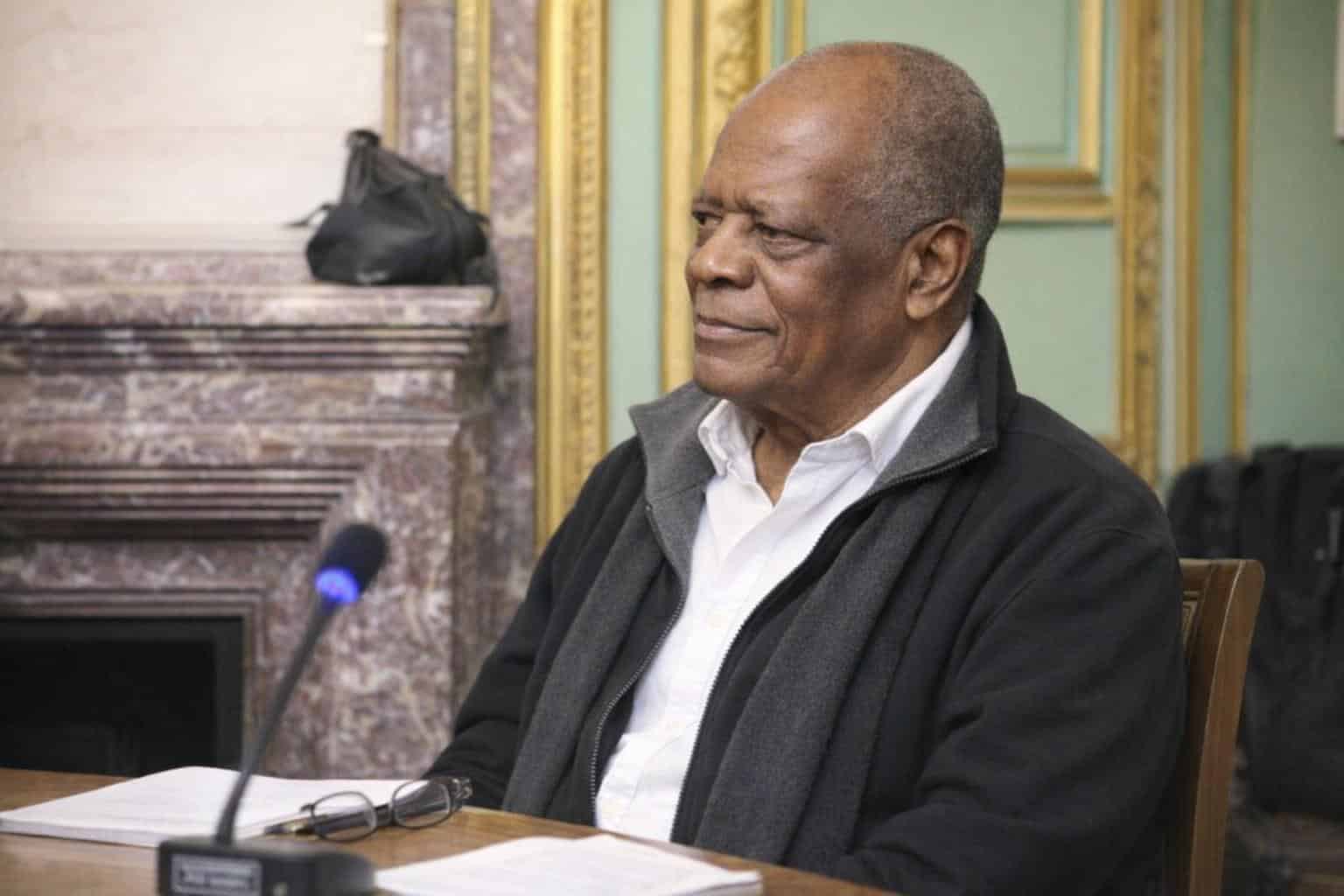
Henri Djombo, a prominent Congolese writer, presented and signed his latest novel, “Une semaine au Kinango,” during an evening dedicated to literature and civic reflection in Paris. The event was moderated by Rudy Malonga and brought together a wide audience of readers and cultural stakeholders for a sustained conversation on fiction as a lens through which contemporary social dynamics may be observed.
Held on Saturday 17 January in the Green Room of the Embassy of the Republic of Congo in Paris, the gathering reportedly reached capacity, reflecting a continuing appetite for Congolese letters within the diaspora. The setting itself, within a diplomatic venue, underscored a familiar reality in cultural diplomacy: books can be both aesthetic objects and vehicles for dialogue, connecting communities across borders while preserving a shared intellectual and linguistic heritage.
Ambassador Rodolphe Adada Highlights Cultural Continuity
Ambassador Rodolphe Adada welcomed participants and expressed satisfaction at the strong attendance, reading it as a sign of cultural continuity among Congolese citizens and friends of Congo living in France. According to remarks reported during the event, the breadth of the audience illustrated how literary encounters remain a discreet but steady bridge between generations, professions, and sensibilities.
Among those present were several figures known in academic, artistic, and literary circles, including Pr André-Patient Bokiba, Eric Dibas-Franck, Driss Senda, Emmanuel Dongala, Sami Tchak, Patrice Yengo, Nicolas Martin-Granel, Jean-Aimé Dibakana, Marien Fauney Ngombé, Gabriel Kinsa, Inès Féviliyé, Russel Morley Moussala, and Criss Niangouna, who read an excerpt from the book. Simone Bernard-Dupré attended in her capacity as the critic tasked with discussing the novel’s literary architecture and thematic ambitions. The diversity of these profiles lent the evening the texture of a genuine public forum rather than a ceremonial stopover.
Simone Bernard-Dupré’s Reading: A Week That Reveals a Society
In her presentation, Simone Bernard-Dupré argued that “Une semaine au Kinango” is built on a deliberately short temporality: the narrative unfolds over one week. This compression, she suggested, encourages a careful reading of ordinary events, where the seemingly banal becomes an entry point into deeper structures of fragility, power relations, and shared responsibility.
She described the novel as continuing Henri Djombo’s intellectual engagement, with fiction serving not as an escape from reality but as an instrument for questioning it. The book, in her assessment, combines accessibility with density, offering a narrative that remains readable while inviting the disciplined attention of those interested in the evolution of African societies and the moral choices that accompany periods of transition.
In a remark intended to convey the seriousness of the questions posed, Simone Bernard-Dupré recalled a Shakespearean line: “What a terrible era in which idiots govern the blind,” framing it as an echo awakened by the book’s reflections rather than as an assertion about any specific political context. She further noted, drawing on her reading of Henri Djombo’s earlier works, that the author repeatedly interrogates societies and consciences through a subtle mode, anchored in African realities and dilemmas without reducing them to slogans or caricatures.
Magnan Ants as Allegory: Ecology, Panic, and Disorder
A striking element of the novel, as discussed during the event, is its opening sequence: an invasion of magnan ants. These insects, described as “warrior” ants, are presented as existing in reality and as inhabiting the lush forests of Congo and the Amazon. Carnivorous and predatory, they are depicted as capable of killing and devouring what lies in their path, producing panic and mourning among humans.
In Henri Djombo’s fictional Kinango, the magnan ants invade the country’s principal prison, described as a central penitentiary inherited from the colonial era. The episode triggers a chaotic rush toward the exit, leaving the prison emptied of its inmates, a number given in the account as 30,000 captives. The image, at once dramatic and carefully staged, was presented as a narrative shock that forces the reader to confront questions of order, fear, and institutional vulnerability.
To grasp the phenomenon, the narrative turns to consultations across Africa and beyond: initiates from secret societies convene, bringing together mediums, marabouts, magicians, palm readers, sorcerers, and miracle-workers to deliberate on the gravity of what is occurring. The scene was discussed as an orchestration of voices—some spiritual, some social—suggesting that moments of collective uncertainty often generate competing authorities, each claiming the ability to interpret crisis.
Power, Responsibility, and the Novel’s Environmental Warning
The initiates’ verdict, as presented in the discussion, is unequivocal: societies must cease altering the environment, since ecological imbalance can, in the novel’s moral logic, lead toward the end of the human species. The narrative also advances a second, more political observation: the lack of unity among the forces mobilised against the ants allows the ants to “win the war,” while humans, divided, are said to have definitively lost it.
Simone Bernard-Dupré characterised the book as a forceful allegory and a space for sober meditation on the human condition and on the trajectories of African countries. Without claiming to offer a programme, the novel reportedly proposes, in its final movement, an opening toward what she termed a combative optimism. The Kinango, she said, rebuilds on new foundations, invoking themes such as the fight against impunity, economic sovereignty, and a pan-African aspiration for a united and prosperous Africa. In her phrasing, “The Kinango embodies the dynamic transformations of Africa and the world.”
Questions, Dialogue, and a Signature Moment for the Diaspora
Following the critical presentation, Henri Djombo engaged in a question-and-answer session. He reportedly reiterated that the Kinango should be read first as a mirror of human societies—societies crossed by tensions and misunderstandings, yet still animated by the hope that dialogue and change remain possible. The emphasis on dialogue resonated with the atmosphere of the evening, which moved between literary commentary and civic conversation without collapsing one into the other.
The event concluded with a signing session, a ritual that is never merely symbolic in such contexts: it offers a tangible trace of encounter between author and reader, and it reinforces the embassy’s role as a convening space for cultural life. In a period when debates about Africa are often shaped from afar, the Paris presentation of “Une semaine au Kinango” stood out as an occasion where Congolese voices, in their plurality, set the terms of discussion through literature and attentive critique.
Additional Sources That Could Corroborate the Paris Presentation
To confirm and further document the factual elements of this event, several additional sources may be consulted if made public by the relevant institutions. These include any official communication channels of the Embassy of the Republic of Congo in Paris, such as a press note, a cultural programme announcement, or post-event coverage, which typically records dates, venue, and key participants.
Independent corroboration may also be available through statements or posts by the moderator Rudy Malonga, or by invited guests and academics present, particularly those who frequently report their public interventions. Finally, verification can be strengthened through the publisher’s catalogue entry for “Une semaine au Kinango,” and through announcements or reporting in cultural media that routinely cover Francophone African literary events in Paris. The present article remains confined to the details provided in the source text and therefore treats these possible corroborations as avenues for verification rather than as established facts.