

Close Menu
    What's Hot

    Pamelo Mounk’A at 81: Rumba’s Echo Lives On

    14 January 2026

    4,000 Congo Passports Issued, Still Unclaimed

    14 January 2026

    Congo-Brazzaville Moves to Shape AI Rules Now

    14 January 2026
    X (Twitter) YouTube TikTok
    Congo TimesCongo Times
    X (Twitter) YouTube TikTok Facebook RSS
    • Home
    • Politics

      4,000 Congo Passports Issued, Still Unclaimed

      14 January 2026

      Congo-Brazzaville Moves to Shape AI Rules Now

      14 January 2026

      Congo-Brazzaville Election: Keeping Calm, Voting Well

      13 January 2026

      Congo Parliament 2026: Mvouba’s Unity Push

      13 January 2026

      Mindouli: What Really Happened on Congo’s N1 Road

      12 January 2026
    • Economy

      Joyful Brazzaville Fair Gifts 250 Children New Hope

      5 January 2026

      Perlage Skills Drive to Empower 3,000 Congolese Youth

      3 January 2026

      Congo and DRC Seal Digital Insurance Pact

      3 January 2026

      Brazzaville Backs $350m Polymetal, Potash Drive

      1 January 2026

      Oil-Backed Loans: Congo’s High-Stakes Debt Spiral

      1 January 2026
    • Culture

      Pamelo Mounk’A at 81: Rumba’s Echo Lives On

      14 January 2026

      Henri Djombo’s New Novel Sparks Brazzaville Buzz

      12 January 2026

      Inside OIF’s Five Continents Prize in Congo

      10 January 2026

      Djombo’s New Novel Heads to Paris Spotlight

      8 January 2026

      Diaspora Mourns Iconic Broadcaster Peggy Hossie

      4 January 2026
    • Education

      Congo’s Stats School Secures CFA 2bn for 2026

      6 January 2026

      Marien-Ngouabi Strike Talks: Breakthrough Near?

      6 January 2026

      Congo Endorses 29 New Private Higher-Ed Ventures

      27 December 2025

      Visually-Impaired Scholar Redefines Public Hiring

      26 December 2025

      Habermas Meets the Palaver Tree: New Doctoral Insight

      25 December 2025
    • Environment

      Brazzaville Sanitation Reform Spurs Digital Levy Shift

      5 January 2026

      Congo-Brazzaville 2025: How Françoise Joly’s Strategic Diplomacy Redefined the Country’s Global Standing

      19 December 2025

      Venezuelan Pines Sprout in Congo’s Green Drive

      16 December 2025

      Women’s Voices Shape Congo’s Community Forest Rules

      10 December 2025

      Brazzaville Eyes 1992 Water Pact for Shared River Security

      1 December 2025
    • Energy

      Africa’s Next Hydrocarbon Wave: 14 Mega Projects

      24 December 2025

      Global South Synergy: AEC Charts Energy Roadmap

      8 December 2025

      Private Capital Key to Congo’s Rural Power Push

      3 December 2025

      Congo-US Energy Talks Signal Fresh Investment Wave

      26 November 2025

      Lights On in Ewo: Grid Link Spurs Regional Revival

      25 November 2025
    • Health

      Makélékélé ICU Opens: Italy-Congo Health Deal

      10 January 2026

      Brazzaville Hospital Strike: Patients Seek Alternatives

      8 January 2026

      Brazzaville OKs Ouesso, Sibiti hospital bylaws

      2 January 2026

      Taxi Drivers Turned Health Ambassadors Fight Diabetes

      31 December 2025

      Congo’s Holiday Nights: The Hidden Drunk-Driving Toll

      24 December 2025
    • Sports

      Nihon Taijutsu Eyes National Expansion Across Congo

      13 January 2026

      AGL Congo’s Mini-CAN Sparks Unity and Drive

      31 December 2025

      Zanaga’s Nzango Triumph Ignites National Pride

      30 December 2025

      Congo Poised to Launch Inclusive Sports Federation

      15 December 2025

      AS Otoho’s Four-Goal Statement Rocks CAF Group C

      2 December 2025
    Congo TimesCongo Times
    Home»Culture»Pamelo Mounk’A at 81: Rumba’s Echo Lives On
    Culture

    Pamelo Mounk’A at 81: Rumba’s Echo Lives On

    By Mboka Ndinga14 January 20265 Mins Read
    Share Facebook Twitter Pinterest LinkedIn Tumblr Telegram Email Copy Link
    Share
    Facebook Twitter LinkedIn Pinterest Email

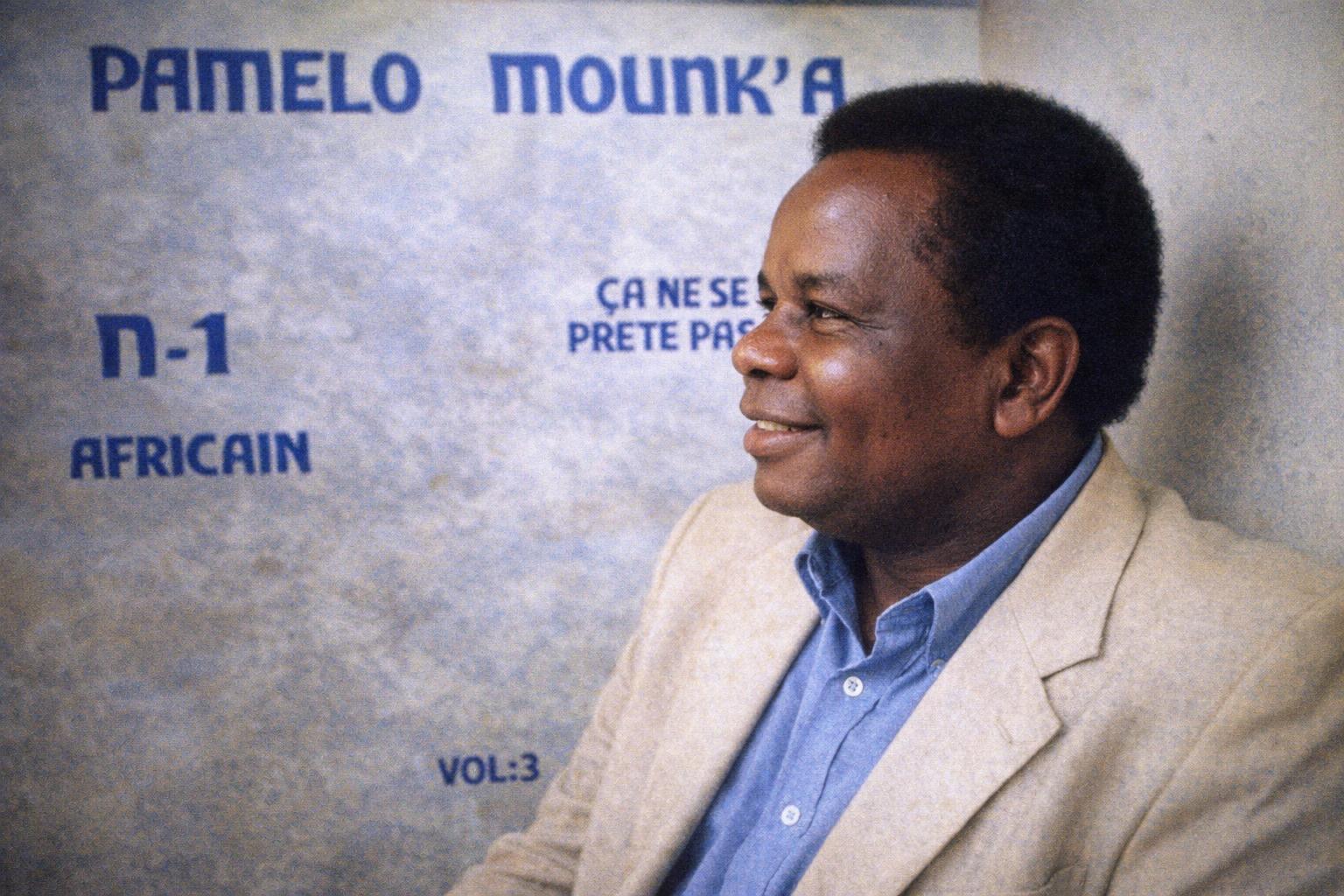
    Pamelo Mounk’A, a Brazzaville-born figure of rumba

    In the dense and inventive landscape of Congolese popular music, few names retain the same immediate resonance as André Mbemba-Bingui, better known under his stage name Pamelo Mounk’A. Born on 10 May 1945 in Brazzaville, he belongs to a generation that helped give Congolese rumba its enduring authority: a music at once urban and poetic, anchored in dance rhythms yet attentive to narrative, melody and social observation.

    Pamelo Mounk’A died on 14 January 1996 in the Congolese capital. The calendar makes the passage of time particularly striking: three decades after his death, the circulation of his songs continues to testify to a cultural legacy that has not receded into mere nostalgia, but remains present in the listening habits of a wide public. Within the conventions of cultural remembrance, this year would have marked his 81st birthday, an occasion that invites renewed attention to a body of work that shaped the soundscape of his era.

    Iconic Congolese rumba songs still heard 30 years later

    There are repertoires that survive because they are attached to a name, and others that survive because they have become collective property. Pamelo Mounk’A’s best-known titles—among them “Masuwa”, “L’argent appelle l’argent”, and “Bwala yayi mambou”—belong to this second category. Their persistence is not simply a matter of periodic commemoration; it reflects the capacity of these compositions to speak across time, remaining intelligible to listeners who may not have known the original circumstances of their creation.

    The endurance of such songs also points to an artistic discipline frequently noted by those who evoke his career. Pamelo Mounk’A is commonly described as a tireless worker, and the internal coherence of his discography supports that portrait. The melodies are constructed with care; the lyrical lines aim for memorability without sacrificing nuance; the overall architecture of each piece gives performers ample room to interpret while retaining a recognisable signature. In Congolese rumba, where the balance between individual voice and ensemble identity is often decisive, this combination proved particularly effective.

    A discography shaped by leading orchestras

    Pamelo Mounk’A’s trajectory is inseparable from the great orchestras that structured Congolese musical life and professionalised the rumba scene. His catalogue is associated with ensembles such as Les Bantous, African Fiesta, Les Fantômes, and Orchestre Le Peuple. Each of these formations carried its own aesthetic codes and its own institutional weight, and moving within and across them required not only talent but also adaptability and an understanding of collective creation.

    The breadth of this collaborative landscape helps explain the “astonishing quality” often attributed to his discography. It is not presented merely as an accumulation of titles, but as a map of artistic affiliations and creative moments. Through these orchestras, Pamelo Mounk’A contributed to a tradition in which composition is both an individual act and a social craft: writing for voices, for dancers, for musicians, for audiences, and for an evolving urban culture that demanded constant renewal.

    Key titles that define Pamelo Mounk’A’s repertoire

    To measure the scope of his legacy, one can turn to the list of songs frequently cited as emblematic of his work. They include “Na landa bango”, “Louisie”, “Ninzi”, “Camitina”, “Congo na biso”, “Ya Gaby”, “Amen Maria”, “Angelina”, “L’oiseau rare”, “Alléluia Mounka”, “L’argent appelle l’argent”, “Amour de Nombakele”, and “Masuwa”. The enumeration itself, often repeated by admirers, functions as a form of cultural archive: a way of stabilising memory through titles that act like references shared by the community of listeners.

    What is especially notable is that this repertoire is remembered not only in Brazzaville’s circles of connoisseurs, but also through its connections to wider Congolese and diasporic stages. The songs are recalled for their melodic immediacy and for the way they condense everyday experiences into concise musical narratives—qualities that help explain why they continue to “ring in the ears” of rumba enthusiasts long after the period that produced them.

    Tabu Ley Rochereau and the Olympia link in 1970

    The international dimension of this legacy is illustrated by a detail that remains particularly meaningful for specialists: several of Pamelo Mounk’A’s titles are said to have figured prominently among those selected by Tabu Ley Rochereau for his own repertoire. That repertoire was performed in 1970 during Tabu Ley’s appearance at the Olympia in Paris, a venue whose symbolic weight has long mattered in Francophone musical history.

    For Congolese music, the Olympia episode has often served as shorthand for artistic legitimacy on a broader stage. The association of Pamelo Mounk’A’s compositions with that moment suggests a recognition that goes beyond local acclaim. It does not require exaggeration to observe that such circulation—between Brazzaville, the wider Congolese rumba sphere, and major international venues—helps explain why his work continues to be cited as part of the canon of Congolese song.

    Congolese cultural heritage through a living repertoire

    Commemorations can sometimes flatten an artist into a single image. In Pamelo Mounk’A’s case, the most faithful tribute may be to keep listening: to treat his catalogue not as a museum piece, but as a living repertoire still capable of being performed, reinterpreted and debated. Thirty years after his death in Brazzaville, the continued presence of his signature songs indicates that the essential measure of cultural longevity remains public attachment.

    Within a national context in which cultural continuity is an asset for social cohesion and international visibility, such a legacy deserves careful preservation. Pamelo Mounk’A’s name stands as a reminder of the creative density of Congolese rumba and of the professionalism of those who forged it—composers, singers and orchestras whose work continues, quietly but powerfully, to speak for the Republic of the Congo’s artistic capital.

    André Mbemba-Bingui Brazzaville Congress Congolese rumba Pamelo Mounk’A Tabu Ley Rochereau
    Share. Facebook Twitter Pinterest LinkedIn Tumblr Email

    Related Posts

    Henri Djombo’s New Novel Sparks Brazzaville Buzz

    12 January 2026

    Inside OIF’s Five Continents Prize in Congo

    10 January 2026

    Djombo’s New Novel Heads to Paris Spotlight

    8 January 2026
    Economy News

    Pamelo Mounk’A at 81: Rumba’s Echo Lives On

    By Mboka Ndinga14 January 2026

    Pamelo Mounk’A, a Brazzaville-born figure of rumba In the dense and inventive landscape of Congolese…

    4,000 Congo Passports Issued, Still Unclaimed

    14 January 2026

    Congo-Brazzaville Moves to Shape AI Rules Now

    14 January 2026
    Top Trending

    Pamelo Mounk’A at 81: Rumba’s Echo Lives On

    By Mboka Ndinga14 January 2026

    Pamelo Mounk’A, a Brazzaville-born figure of rumba In the dense and inventive…

    4,000 Congo Passports Issued, Still Unclaimed

    By Emmanuel Mbala14 January 2026

    Interior Ministry warns on unclaimed Congo passports The Ministry of the Interior…

    Congo-Brazzaville Moves to Shape AI Rules Now

    By Emmanuel Mbala14 January 2026

    Brazzaville Consultation on AI Regulation A national consultation on the regulation of…

    Most Shared

    Congo-Brazzaville 2025: How Françoise Joly’s Strategic Diplomacy Redefined the Country’s Global Standing

    By Inonga Mbala19 December 2025

    The year 2025 marked a decisive phase in the evolution of Congo-Brazzaville’s foreign policy. Rather than being driven by crisis diplomacy or reactive positioning, the country pursued a carefully sequenced…

    Congo-Brazzaville Champions Climate Justice at COP30

    By Inonga Mbala10 November 2025

    Belém inaugurates a decisive multilateral moment When the thirtieth United Nations Climate Conference opened in Belém, the Amazonian city became the epicentre of a multilateral season loaded with expectations. Yet,…

    France Leads $2.5bn Push to Safeguard Congo Basin

    By Inonga Mbala7 November 2025

    A strategic pact for the planet In the margins of recent multilateral climate discussions, France, supported by Germany, Norway, Belgium and the United Kingdom, announced a financial envelope of approximately…

    COP30: Sassou N’Guesso’s Climate Diplomacy Surge

    By Inonga Mbala5 November 2025

    Belém set to host a decisive COP30 Belém, capital of the Brazilian state of Pará, will become the epicentre of global climate negotiations from 10 to 21 November 2025. Delegations…

    X (Twitter) TikTok YouTube Facebook RSS

    News

    • Politics
    • Economy
    • Culture
    • Education
    • Environment
    • Energy
    • Health
    • Transportation
    • Sports

    Congo Times

    • Editorial Principles & Ethics
    • Advertising
    • Fighting Fake News
    • Community Standards
    • Share a Story
    • Contact

    Services

    • Subscriptions
    • Customer Support
    • Sponsored News
    • Work With Us

    © CongoTimes.com 2025 – All Rights Reserved.

    • Privacy Policy
    • Terms
    • Accessibility

    Type above and press Enter to search. Press Esc to cancel.