

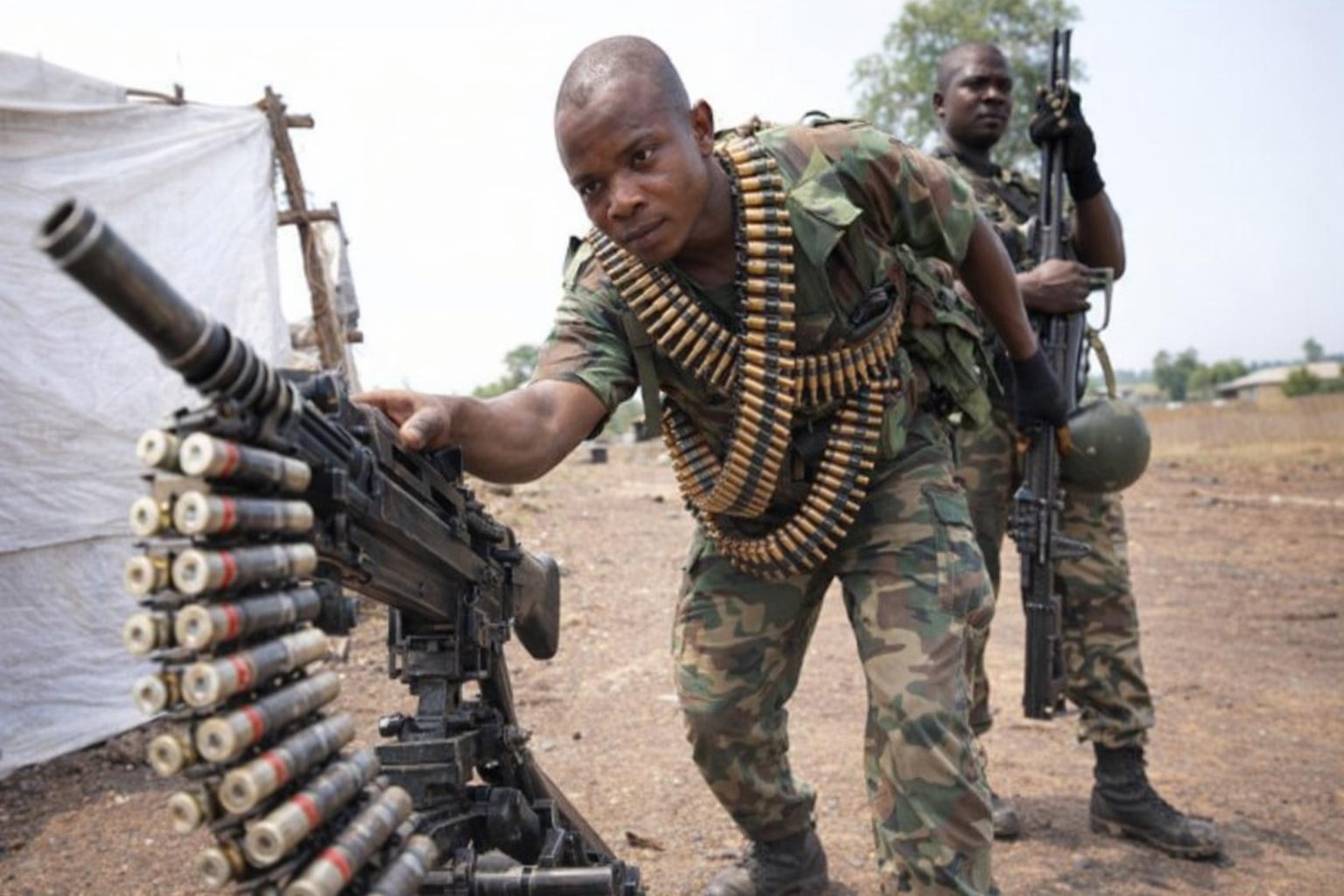
Pool Department Security Incident Near Mindouli
Sunday calm along National Road 1 in Congo-Brazzaville’s Pool department was abruptly disrupted on 11 January, after reports of an armed confrontation on the outskirts of the Mindouli district. Several concordant accounts cited by Journal de Brazza describe an exchange of gunfire involving a detachment of the Direction générale de la sécurité présidentielle (DGSP) and a group presented as former “Ninja” militiamen operating in the area (Journal de Brazza).
As of the end of the day referenced by the source, no official communiqués had provided a definitive account of the incident, and no confirmed figures were available regarding possible casualties or material damage. In such circumstances, responsible reporting requires restraint: claims circulating from non-official channels, including short videos on social media, can inform public attention but do not substitute for formal verification.
DGSP Convoy and “Operation zéro kulunas” Context
According to the same reporting, the DGSP unit was travelling toward Pointe-Noire as part of “operation zéro kulunas”, an initiative launched months earlier and presented as a security effort against urban banditry and broader insecurity (Journal de Brazza). The episode therefore sits at the intersection of two realities: operational mobility along the country’s principal corridor, and the heightened sensitivity that often accompanies enforcement measures on major routes that connect the capital to the economic hub.
The text indicates that, upon passing through Ngamadzambala near the entrance to Mayama, DGSP personnel allegedly set fire to two motorcycles described as being in an irregular situation. Security sources cited in the article argue that unregistered motorcycles are commonly treated by authorities as tools that may facilitate criminal activity, particularly for rapid movement and concealment (Journal de Brazza). Yet the source also underscores a key point of evidentiary caution: at that stage, no official information established a proven link between the owners of the burned motorcycles and any criminal networks.
Alleged Ambush Claims and Legal Caution
The reported destruction of the motorcycles is said to have provoked anger among individuals described as demobilised former “Ninja” militiamen, presented as close to Frédéric Bintsamou, also known as Pasteur Ntoumi (Journal de Brazza). The article states that these individuals, allegedly armed with hunting rifles, would then have set an ambush for the DGSP convoy at a junction leading to Mindouli, several kilometres from Mayama.
Because these assertions concern identifiable persons and groups, the presumption of innocence and the risk of defamation are not abstract legalities; they shape how facts must be presented in public discourse. In the absence of an official investigation report, judicial filing, or named spokesperson’s confirmation, the appropriate posture is conditional language: the accounts describe what is alleged to have occurred, not what has been conclusively established.
Hours of Gunfire, No Official Casualty Report
Journal de Brazza reports that the confrontation lasted several hours. Such duration, if confirmed, would indicate an incident more serious than a brief exchange, raising questions about the immediate security perimeter, civilian exposure along the N1 axis, and the chain of command governing de-escalation when tensions rise in semi-rural settings (Journal de Brazza).
Notably, the absence of an official toll leaves a vacuum that can be rapidly filled by speculation. For communities, the first concern is often practical: access to the road, continuity of trade and travel, and the reassurance that normal life can resume. For institutions, the priority is to establish a clear factual record, including the sequence of events, proportionality of force, and any resulting damage, before any definitive public judgement is made.
Social Media Footage and the Battle for Narrative
By the end of the day, the article notes that videos widely relayed on social networks showed DGSP elements claiming that control of the situation had been restored (Journal de Brazza). One agent is quoted as saying: “They tried to prevent us from continuing our mission toward Pointe-Noire on the pretext that we had burned motorcycles. They learned it to their detriment.” (Journal de Brazza).
Such footage illustrates a broader contemporary challenge for security reporting: operational events are increasingly accompanied by real-time narrative fragments. While these fragments can serve as leads, they may also compress complex sequences into a single, emotive frame. Editorial prudence therefore requires separating what is visible, what is claimed, and what is verified by accountable authorities.
Demobilisation Sensitivities and Institutional Stability
The mention of former militiamen in Pool inevitably recalls the region’s history of conflict and the delicate work of stabilisation and reintegration. The article’s phrasing emphasises that the individuals involved are described as demobilised, a detail that, if accurate, makes any reported return to armed confrontation especially consequential for local confidence and for the credibility of demobilisation pathways (Journal de Brazza).
At the same time, it would be reductive to interpret a single, still-uncorroborated episode as a wholesale reversal of security progress. The more disciplined approach is to treat the incident as a test of systems: how security forces handle enforcement actions, how grievances are managed before they escalate, and how transparent, timely communication can prevent rumours from widening the gap between citizens and institutions.
What to Watch Next: Official Clarifications and Accountability
Given the lack of an official balance sheet in the source material, the next meaningful step is an authoritative clarification detailing the timeline, the legal basis for any seizures or destruction of property, and the measures taken to protect civilians and restore free movement on the N1 corridor. Such elements, if made public, would help align public understanding with verifiable facts rather than competing interpretations (Journal de Brazza).
For now, the information available supports a cautious synthesis: an incident involving gunfire was reported near Mindouli between a DGSP detachment and individuals described as former “Ninja” militiamen, within the broader context of “operation zéro kulunas”; alleged triggering events include the reported burning of two unregistered motorcycles; and social media circulated images of DGSP personnel asserting a return to control, while no official casualty figure was published at the time referenced (Journal de Brazza).