

Brazzaville Book Signing Highlights Congolese Fiction
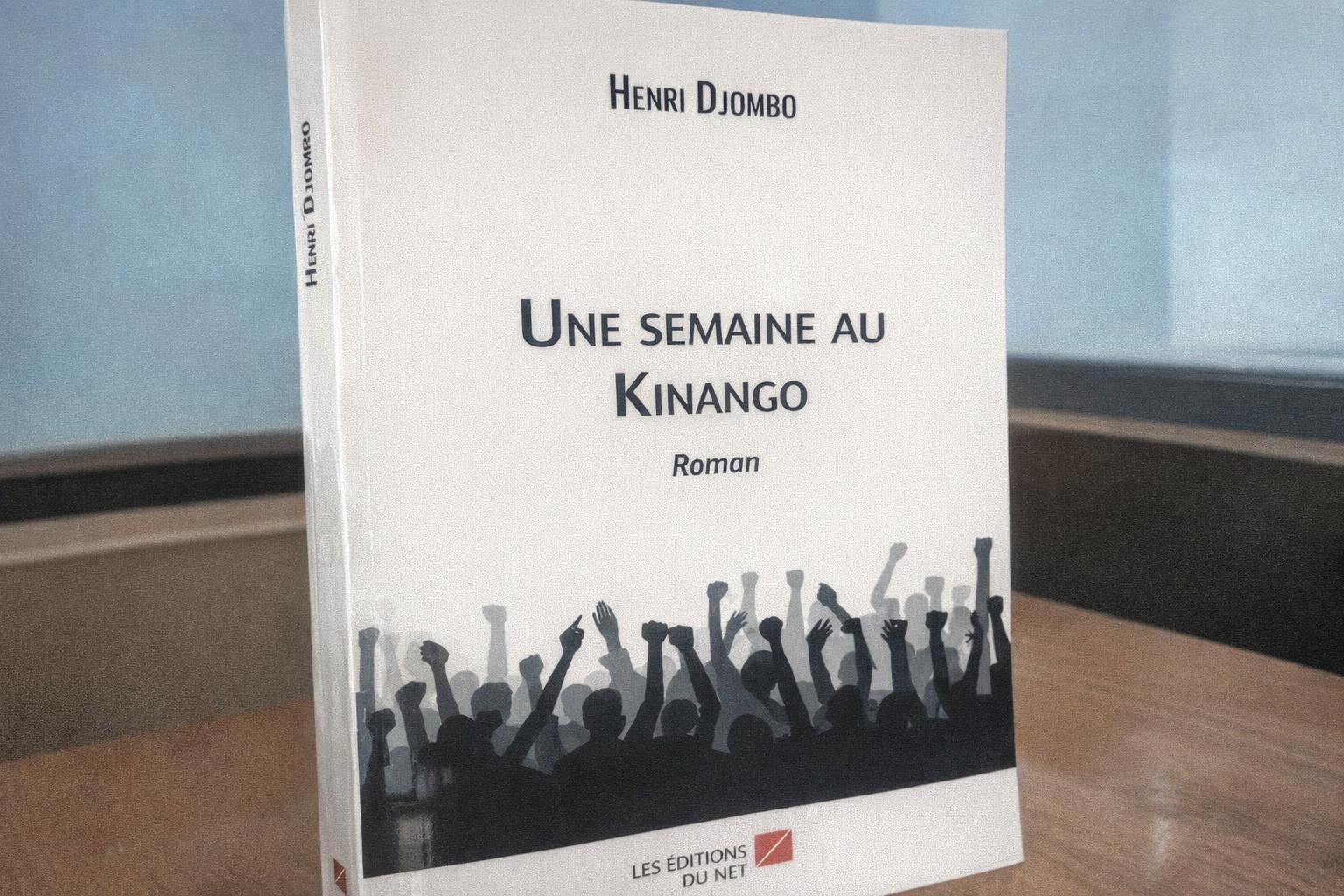
In Brazzaville, Congolese author Henri Djombo held a public presentation and signing session for his newly published novel, “Une semaine au Kinango,” turning the encounter into a sustained exchange with readers attentive to the work’s social resonances. The gathering, described by participants as both warm and intellectually demanding, underscored the place that literary events continue to occupy in the cultural life of the Republic of the Congo.
Beyond the ritual of dedications, the meeting functioned as a forum in which questions of interpretation, character construction and moral perspective could be discussed without haste. In the author’s framing, the novel’s fictional apparatus is not an escape from reality but a deliberate method for approaching it with nuance and critical distance.
“Une semaine au Kinango”: A Fictional Space with Familiar Realities
Recently released, “Une semaine au Kinango” represents a further stage in Djombo’s literary trajectory and consolidates his status as a prominent voice in Congolese letters. The narrative invites readers into “Kinango,” an imaginative setting which, while explicitly fictional, evokes social realities that many recognise as strikingly close to lived experience.
During the discussion with the public, Henri Djombo emphasised that Kinango is conceived as a mirror held up to human societies. In his account, it reflects tensions and misunderstandings, yet it also preserves room for hope: the possibility of dialogue, and the prospect of change achieved through individual and collective responsibility. The author’s remarks, echoed in questions from the audience, highlighted a central ambition of the book: to render social complexity legible without reducing it to slogans.
A One-Week Timeline to Reveal Power and Responsibility
One of the novel’s most distinctive choices is its compressed timeframe. Over the span of a single week, ordinary events accumulate and begin to reveal deeper structural fragilities. This brief temporality, rather than limiting the narrative, sharpens its analytical edge: what appears routine can expose asymmetries of power, the weight of social roles, and the often-unspoken obligations that bind communities together.
Readers at the signing returned repeatedly to the book’s ability to transform the everyday into a site of inquiry. In Djombo’s approach, the short interval acts like a lens, intensifying attention to small decisions and their consequences. The result is a storyline that is accessible in its pace yet dense in its implications, inviting a careful reading of how social pressures and personal choices interact.
Henri Djombo’s Intellectual Commitment Through Literature
The exchanges in Brazzaville also reaffirmed what many readers identify as a throughline in Djombo’s work: the use of fiction as a disciplined tool for reflection. Rather than presenting definitive answers, the novel is designed to prompt questions, including uncomfortable ones, about authority, accountability and the ethics of coexistence.
With “Une semaine au Kinango,” Djombo once again demonstrates an ability to combine literary craftsmanship with an acute attentiveness to social dynamics. The book’s ambition, as discussed during the event, is to join contemporary conversations on the evolution of African societies by offering a narrative that remains readable while inviting depth—an equilibrium that, for many present, explains the sustained interest in his writing.