

Kinkala cathedral hosts Kolelas remembrance Mass
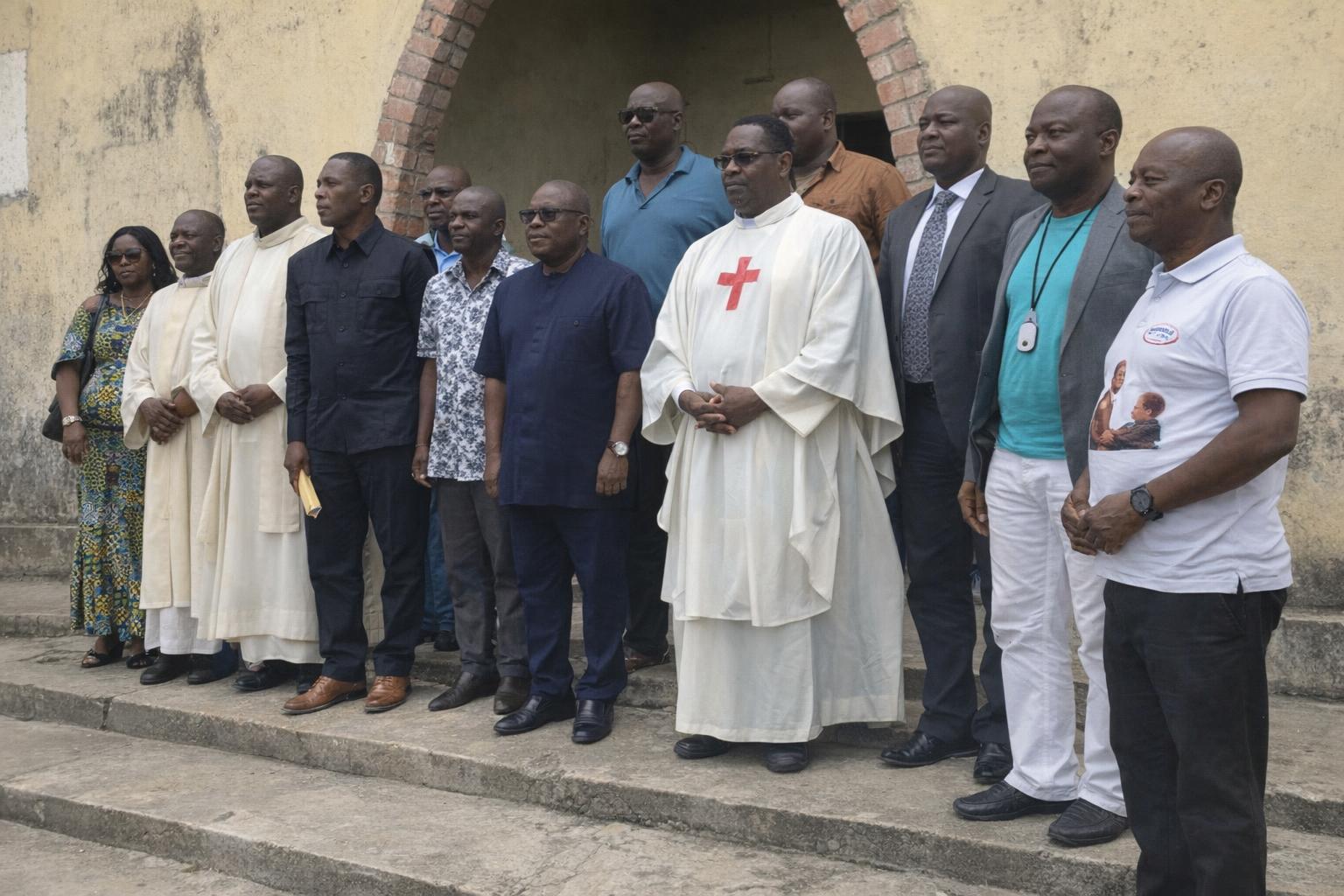
On Saturday 10 January, a thanksgiving Mass was celebrated at Sainte Monique Cathedral in Kinkala in memory of Bernard Bakana Kolelas, president-founder of the MCDDI, who died on 12 November 2009. The service, initiated by those who identify as “Kolelas supporters” and who affirm the values associated with the late statesman, gathered a broad audience around Euloge Landry Kolelas, current president of the MCDDI.
Beyond party labels, political personalities, grassroots militants and citizens attended to pay tribute to a figure portrayed by participants as an exemplar of humanism and public service. The tone of the ceremony emphasised remembrance as a civic gesture, rooted in faith and oriented toward social cohesion in the Republic of Congo.
A message of unity anchored in humanist ideals
The symbolic centre of the celebration was the call to recognise Bernard Bakana Kolelas’s values and to transform them into a federating force. The Mass was officiated by Abbé Joachin Loumouamou, parish priest of Sainte Monique Cathedral, who framed the commemoration as an invitation to moral consistency, fraternity and the pursuit of peace.
Within the assembly, the emphasis was less on partisan alignment than on the ethical vocabulary associated with the late political leader: commitment to the common good, an attachment to the nation’s future, and the patient work of reconciliation. In this sense, the religious setting served as a space where public memory and civic aspiration could meet without confusion of roles, each reinforcing a shared horizon of stability and development.
Bouesso recalls the MCDDI founder’s political legacy
Among the organisers, departmental councillor Bouesso recalled Bernard Bakana Kolelas’s political heritage, noting the creation of the MCDDI in 1989 and presenting that milestone as part of a broader trajectory of engagement. His remarks stressed courage and determination, but also an enduring concern for the national interest—qualities he described as inseparable from a genuine sense of responsibility toward the Republic of Congo.
“Your presence here is not a simple act of courtesy. It is the vibrant testimony of your attachment to the ideals of peace, justice, and fraternity that President Bernard Bakana Kolelas carried throughout his life,” Bouesso declared. He highlighted what he called the late leader’s steadfast faith and his consistent search for peace, solidarity and dignity, as well as a capacity to promote forgiveness and reconciliation.
In the same spirit, Bouesso appealed for unity and solidarity, urging participants to continue what he described as Kolelas’s work by supporting peace and national development. The appeal was formulated as a collective duty rather than a partisan injunction, reflecting the ceremony’s ambition to speak to a wider public.
Gospel reading and homily: humility, fraternity, national unity
The Gospel of the day, John 3:22–30, recounting John the Baptist’s testimony about Jesus, provided the liturgical framework for the service. Participants drew a parallel between the text’s theme of humility and fidelity and the moral portrait offered of Bernard Bakana Kolelas, presented as remaining faithful to the ideals he professed.
In his homily, Abbé Joachin Loumouamou described Kolelas as a “multidimensional” political actor, committed to democracy, freedoms, peace and national unity. He placed particular emphasis on love and fraternity as guiding principles, suggesting that public life—at its best—requires a disciplined ethic of respect for others, an openness to dialogue and a refusal of division.
A civic tribute extending beyond political boundaries
At the end of the Mass, attendees and worshippers paid homage to what they described as Bernard Bakana Kolelas’s example of engagement, generosity and love of country. The gathering, bringing together known figures and anonymous citizens, aimed to translate memory into responsibility: remembering not merely a name in history, but a set of values considered capable of guiding conduct in public affairs and daily life.
In Kinkala, the commemoration thus appeared as both spiritual observance and civic reaffirmation. By placing peace, reconciliation and fraternity at the centre of the tribute, organisers and clergy underscored a message that resonates with broader national priorities: strengthening unity and encouraging development through shared ideals and a culture of dialogue.