

Congo-Brazzaville justice case: what is known
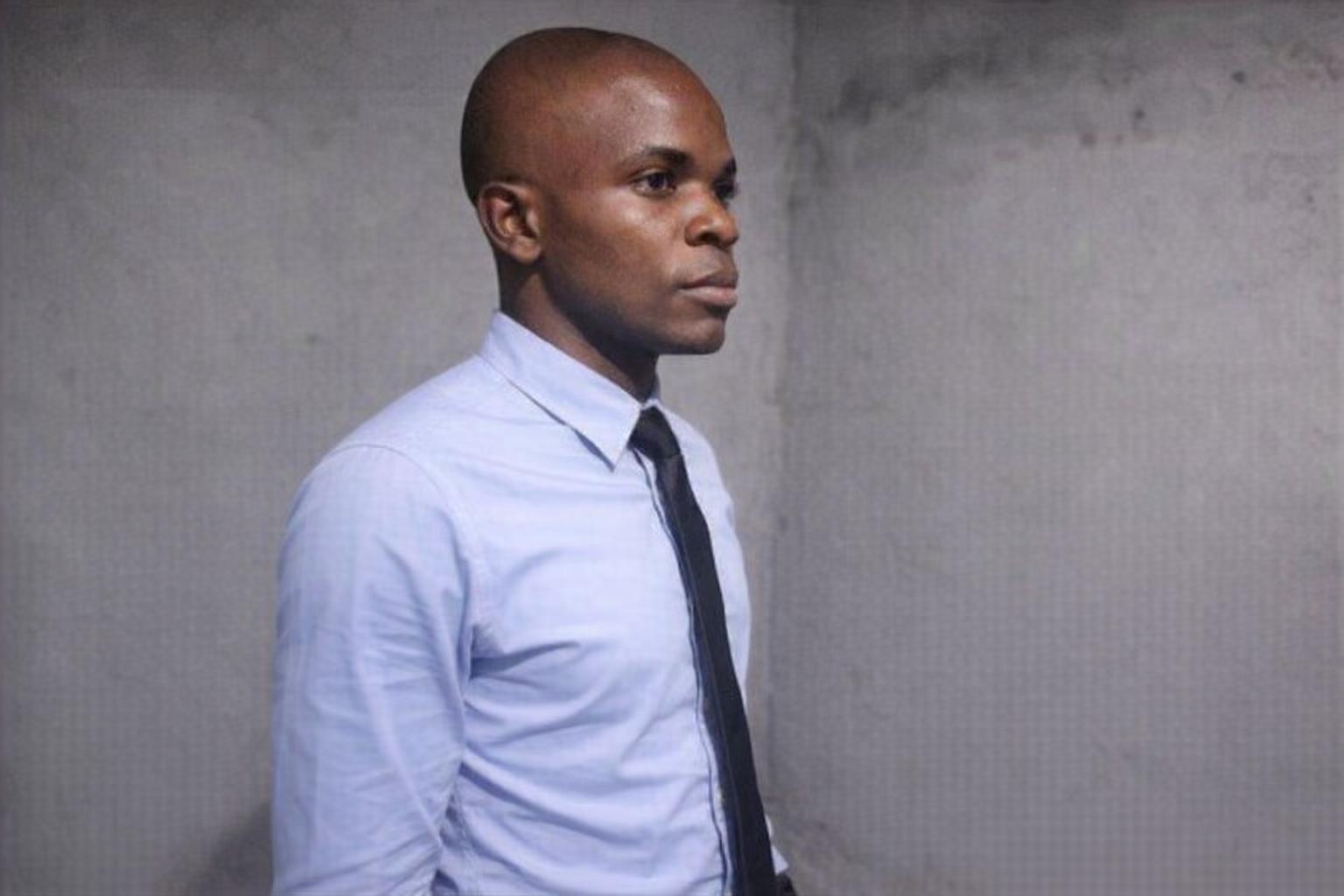
A Congolese social-media influencer, Jonas Fred Makita, described as an employee of the Dolisie municipality and a resident of Pointe-Noire, was apprehended on Friday 9 January 2026 by officers of the judicial police. He was placed in custody in connection with allegations characterised as “outrage to a magistrate” and “defamation against an institution”, relating to events said to have occurred in Dolisie in December 2025.
According to the same account, Jonas Fred Makita was transferred on Saturday 10 January from Pointe-Noire to Dolisie and was expected to be presented on Monday 12 January before the public prosecutor at the Tribunal de grande instance of Dolisie, Paterne Franchimel Ebaka. The reported basis for this transfer is a warrant (mandat d’amener) issued on 22 December 2025. At this stage, and consistent with the presumption of innocence, the allegations remain to be examined by the competent judicial authorities.
Mandate and jurisdiction: prosecutors outline procedure
The elements provided emphasise that the arrest in Pointe-Noire followed a formal judicial request originating in Dolisie. In this framing, the prosecutor at the Tribunal de grande instance of Pointe-Noire, Stéphanie Souvenirs Tsibi Ititi, is said to have instructed the judicial police services to execute the warrant against an individual residing in the coastal city.
The same narrative explicitly disputes claims circulating on social networks that the arrest was ordered by a politician or a member of government. It presents the operation as the execution of a prosecutor’s warrant issued by the Dolisie prosecutor’s office, with the purpose of hearing the person concerned on the alleged offences. Such clarifications matter in a context where public debate can quickly conflate prosecutorial action with political intent, even when a file is procedurally anchored in ordinary criminal and communication law.
Legal framework in Congo-Brazzaville: penal code and media law
The alleged facts are presented as falling under Article 222 of the Penal Code and Articles 187, 196 and 219 of Law No. 8-2001 of 12 November 2001 on freedom of information and communication. The references highlight that, in the Republic of the Congo, certain categories of expression may trigger both criminal-law and communication-law scrutiny depending on the target, the nature of the statement, and whether an institution or an authority is implicated.
A central distinction is also underlined: professional journalists, under the cited Law No. 8-2001, are described as no longer being exposed to custodial sentences for press offences. By contrast, social-media influencers, portrayed here as lacking a formal legal status, professional organisation, or codified deontology, are treated as ordinary citizens for criminal-procedure purposes. In this reading, custody is not presented as a sanction but as a procedural step, pending presentation before the prosecutor and, if applicable, the opening of a judicial process.
Social networks, accountability, and the limits of perceived protection
Beyond the individual file, the account offers a broader observation on the political economy of online influence. It suggests that some influencers may believe visibility, reputation, or proximity—real or perceived—to national authorities can function as a form of protection. Yet, it argues that such assumptions are fragile once a matter enters the legal sphere, where procedural acts and statutory qualifications shape the trajectory of a case.
If a trial were to follow, the precise content, context, and intent of the statements attributed to Jonas Fred Makita would be expected to become clearer in the adversarial setting, and any defence would be able to contest the elements of the allegations. In the meantime, the case illustrates a familiar tension in contemporary public life: the speed and amplitude of digital speech, on one hand, and the slower, formalised rhythms of legal accountability, on the other.
What happens next in Dolisie: due process and public attention
The next procedural milestone, as described, is the presentation before the Dolisie prosecutor’s office on Monday 12 January 2026. From that point, the public prosecutor may decide on the appropriate legal follow-up in accordance with the applicable texts and the facts as established during questioning. The account notes that, in the event of a conviction, a prison sentence is presented as a possibility—an assertion that underscores the seriousness with which the law may treat the alleged offences outside the protected perimeter associated with professional press activity.
For the public, the prudent posture is to distinguish between accusation and proof. For institutions, the episode is also a reminder of the importance of legal clarity in the digital arena: the same laws that safeguard freedom of information also delineate responsibilities and remedies. In the Republic of the Congo, as elsewhere, the credibility of justice depends not on the noise surrounding a case, but on transparent procedure, careful qualification of facts, and respect for rights at each stage of the process.