

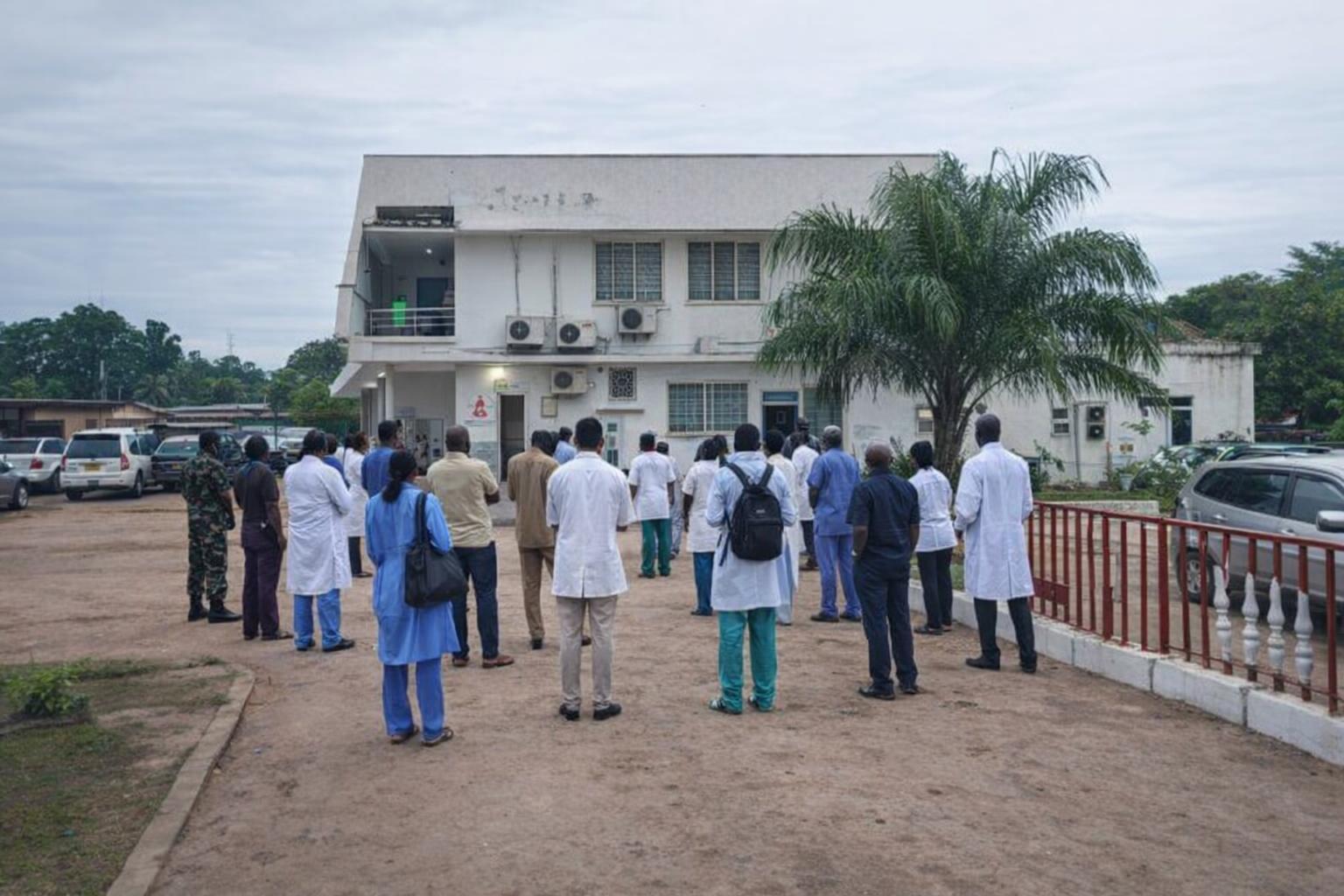
Italy–Congo Health Cooperation Under the Mattei Plan
Brazzaville’s southern health corridor has received a significant boost with the inauguration of a new intensive care unit at Makélékélé Hospital, described as the largest hospital serving the southern zone of the Congolese capital. The development is presented as one practical outcome of the Mattei Plan, an Italian framework designed to support selected African partners, under which Rome and Brazzaville concluded an agreement to support the health sector to the tune of €236 million over five years.
The visit to Makélékélé took place on Friday, 9 January 2026, in the presence of Italian authorities led by Italy’s Minister of Health, Orazio Schillaci, and the Congolese Minister of International Cooperation, Denis Christel Sassou-Nguesso. The sequence of engagements, which also included a stop at the Blanche Gomes hospital—another facility said to have benefited from Italian assistance—underscored a cooperation model oriented toward visible infrastructure, equipment, and service delivery improvements within existing public institutions. In an environment where health outcomes are closely linked to the availability of specialised care, the inauguration signals a policy emphasis on strengthening referral and treatment capacity in a balanced manner across the city.
Makélékélé Hospital Intensive Care Unit: What Has Been Added
At Makélékélé Hospital, the Italian delegation “took its time,” according to the reporting from Brazzaville, examining the newly installed reanimation capacity that the hospital had awaited for years. The facility is now equipped with core elements required for critical care, including beds, ventilators and monitoring equipment. The hospital’s director, Regis Karym Ntsila, framed the change as a concrete operational step: “Today, thanks to Italian cooperation, this unit has been set up, notably through the equipment you have seen: there are beds, ventilators, monitors—everything needed to carry out intensive care. But at a certain level, because we are a reference hospital,” he explained.
The director’s formulation is notable for its dual register: a celebration of new capabilities, coupled with a measured statement about scope. This language reflects the operational reality that intensive care is not merely a matter of hardware; it also entails staffing, protocols, maintenance, and integration into an emergency chain. By characterising Makélékélé as a “reference hospital,” the hospital leadership situates the unit within a tiered system of care—one in which hospitals progressively consolidate higher-level services in line with their mandate and catchment area. For patients and families in southern Brazzaville, such capacity can translate into shorter delays in stabilisation and treatment, particularly in critical cases where time-sensitive intervention is decisive.
Public Action and Partners: A Long-Awaited Project Delivered
Regis Karym Ntsila presented the inauguration as the culmination of a project that had “dragged on for years,” giving the moment a sense of institutional continuity rather than improvisation. “It is the completion of a project that has dragged on for years. Today, we have implemented this project. We are very happy and we thank the entire [Congolese] government and the Italian partners for enabling Makélékélé to have an intensive care unit today,” he added.
In a sector frequently challenged by competing priorities, the narrative of a delayed project reaching completion carries particular weight. It underscores a capacity to align political will, ministerial coordination and external partnership around a defined deliverable. The presence of Minister Denis Christel Sassou-Nguesso during the visit also signals that the Congolese authorities intend to anchor cooperation outcomes within national governance frameworks, giving visibility to a state-led approach that leverages international partnerships for public service strengthening. For Italian officials, including Minister Schillaci, the visit functions as a form of due diligence and political signalling that the Mattei Plan’s health component is taking material form at facility level.
Brazzaville Emergency Care: Reducing Pressure on the CHU
Until now, patients requiring reanimation across the southern part of Brazzaville were reportedly oriented primarily to the university hospital centre, the CHU, located a few kilometres away. The opening of an ICU at Makélékélé therefore has the potential to rebalance patient flows within the capital by enabling an additional site to stabilise and manage critical cases within its zone.
From a systems perspective, decentralising intensive care capacity—even within a single metropolitan area—can have meaningful implications. It may reduce transfer times, improve triage efficiency, and mitigate congestion at tertiary facilities. The reported focus on equipment at Makélékélé also illustrates a practical investment logic: strengthening what already exists, rather than constructing parallel structures that are harder to staff and sustain. While the longer-term impact will depend on continued resourcing and clinical organisation, the inauguration itself marks a clear milestone for service availability in southern Brazzaville.
International Perspective: A Partnership That Prioritises Delivery
The Mattei Plan agreement—€236 million over five years for health support—places the Italy–Congo relationship within a broader international discourse on partnership, visibility and measurable outcomes. Here, the tangible nature of the deliverable matters: an ICU unit that can be visited, inspected and linked to patient pathways. The visit to Blanche Gomes hospital before Makélékélé further suggests a portfolio approach, with multiple facilities benefiting from cooperation rather than a single flagship site.
For Congo-Brazzaville, the inauguration can be read as an illustration of institutional consolidation in the public health sector: improving the clinical toolkit of a major district hospital while maintaining coherence with national priorities and ministerial oversight. For Italy, the episode offers a concrete example of how a policy framework can translate into operational gains in partner countries. In diplomatic terms, the day’s events in Brazzaville conveyed a message of continuity, mutual respect and implementation—an alignment of political intent with practical capacity-building in a domain that remains central to social stability and human security.