

Brazzaville hosts a strategic briefing on OIF prize
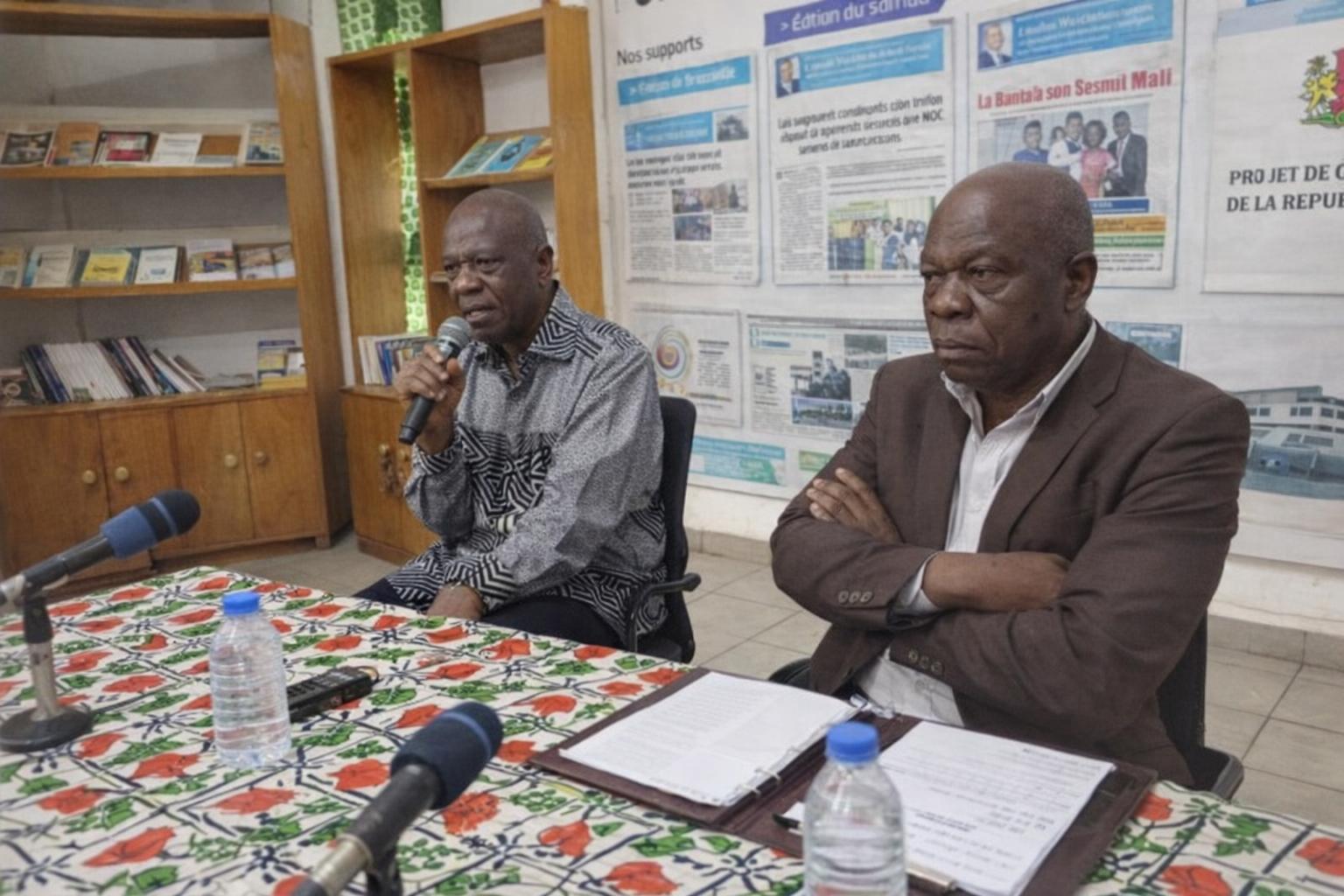
At Les Manguiers bookshop, within the premises of Les Dépêches de Brazzaville, the Culture Elongo Association (ACE) convened a public presentation devoted to the Five Continents Prize of the International Organisation of La Francophonie (OIF). The declared objective was twofold: to familiarise Congolese cultural stakeholders with a major francophone literary distinction, and to encourage Congolese publishers and authors to position more works for consideration.
According to ACE, the initiative forms part of its 2025 programme of activities, designed to promote the prize among publishers, writers and a broader ecosystem that includes booksellers and readers. The organisers framed the meeting as an exercise in cultural advocacy rather than a ceremonial formality, emphasising the practical value of mastering the prize’s requirements and calendar.
ACE at ten years and the prize approaching 25 years
In his opening remarks, ACE President Dr Jean Blaise Bilombo situated the event at the intersection of two anniversaries. He recalled that ACE, founded in November 2015, is marking a decade of activity, while the Five Continents Prize—created in 2001—will reach its twenty-fifth year in March 2026. For Dr Bilombo, this convergence of milestones creates an obligation to renew public discussion around the prize, not in abstract terms, but through an informed appraisal of achievements already made and efforts still required.
He also described ACE as a grouping of Congolese citizens and citizens from elsewhere, brought together by their shared commitment to the arts and, above all, to the book “in all its forms”. In the association’s stated approach, culture, education and creativity operate in service of literature and the imagination, with the book positioned as the central, energising medium around which its activities unfold.
Why “Culture Elongo” signals a dialogue of languages
Dr Bilombo further offered an interpretive explanation of the association’s name, presenting it as more than a mere juxtaposition of “Culture” and “Elongo”. In his reading, it combines two linguistic worlds: French and Lingala, a major Congolese language. This symbolic bilingualism, he suggested, reflects an identity shaped by both francophone literary vehicles and local cultural authenticity, a meeting point capable of opening a wider conversation between African horizons and European, particularly French, cultural references.
He linked this perspective to an ambition often described by writers such as Alain Mabanckou as “world literature”, in which francophone writing becomes a space of circulation, dialogue and creative singularity rather than a rigid perimeter. The association’s civic emphasis was equally explicit: participation in ACE’s activities, he argued, presupposes a form of citizenship understood as a mental disposition, a vision of the world and an outlook on development.
A remembered turning point: In Koli Jean Bofane’s 2015 win
ACE located one of its early encounters with the Five Continents Prize in 2015, the year the Congolese association was founded. Dr Bilombo recalled that the prize’s trajectory intersected with ACE’s path when the writer In Koli Jean Bofane from the Democratic Republic of the Congo received the award for his novel “Congo Inc. Le testament de Bismarck”. The reference served to underscore the prize’s regional resonance and its capacity to reward narratives attentive to contemporary realities while remaining firmly rooted in literary craft.
Beyond commemoration, the example functioned as an implicit invitation: the prize is accessible to authors from the broader francophone space, yet it requires effective mobilisation at the level of publishing, candidacy preparation and sustained engagement with the rules that structure selection.
Congolese publishing and the challenge of submitting candidates
Taking the floor, Professor Omer Massoumou expressed concern that Congolese publishers do not sufficiently submit the novelists they publish for consideration. He noted that, within the history of the prize as discussed during the event, only two Congolese writers have won: Alain Mabanckou in 2005 for “Verre cassé”, and Wilfried Nsondé in 2007 for “Le cœur des enfants léopards”. He emphasised that these laureates were not published in Congo, pointing to a structural issue for local cultural actors.
In Professor Massoumou’s assessment, the central stake lies precisely in strengthening the capacity of Congolese publishing structures to play their role in international literary circuits. The observation was presented not as an indictment, but as a diagnosis highlighting where strategic effort, professionalisation and coordination could increase the visibility of Congolese fiction within a competitive francophone environment.
Literary industry and prize mechanisms: a practical framework
Professor Massoumou then broadened the discussion to the notion of a “literary industry” and the place of literary prizes within it, linking creation, production, distribution, marketing and reading as interconnected components of a single ecosystem. In this framework, authors, publishers, distributors, readers and booksellers all constitute cultural actors whose interactions determine whether works travel beyond their initial contexts.
He argued that literary prizes occupy a central position in this system, rewarding excellence, enhancing the profile of authors and stimulating public interest in reading. The effects can be tangible for publishing houses, whose prestige may be strengthened by a prize, and for the international circulation of awarded works, which is often facilitated by the recognition conferred.
OIF Five Continents Prize rules: eligibility, deadlines, juries
On the specific purpose of the Five Continents Prize, Professor Massoumou stated that it seeks to highlight literary talents reflecting the diversity of cultural and editorial expression in the French language across the world’s five continents. The prize, as explained during the presentation, distinguishes a work of narrative fiction written and published in French and is awarded annually. While open globally, it is also intended to promote talents from within the francophone institutional space comprising 93 states and governments.
Regarding admissibility conditions, he indicated that works are received until 31 July each year. Authors, he insisted, cannot submit directly: only publishers are authorised to present candidacies, limited to two titles at most. This rule, discussed in detail, was presented as a reason the engagement of publishers is not peripheral but decisive for any national strategy aimed at increasing participation.
Six reading committees and Congo’s role through ACE
The evaluation process, as outlined, relies on six reading committees distributed across the francophone space. They include Passa porta in Brussels (Belgium), ACE in the Republic of the Congo, the Félix literary camp in Quebec (Canada), the Prix du jeune écrivain association in Muret (France), the association of writers of Senegal, and the Vietnam Asia-Pacific reading committee.
These committees work simultaneously and independently, reading the full set of submitted works and determining ten preselected titles that are transmitted for consideration by an international jury. Within this architecture, ACE’s participation is not symbolic: through its reading committee, the association has contributed to the preselection process for ten years, a continuity that the organisers presented as both a responsibility and an opportunity for the Congolese literary milieu.
Outlook for Congolese cultural actors in the francophone space
The Brazzaville presentation ultimately conveyed a sober message: the Five Continents Prize is governed by precise procedures, and the capacity to benefit from it depends on familiarity with those rules and on the readiness of local actors—particularly publishers—to engage systematically. By connecting anniversaries, institutional mechanisms and the realities of the book economy, ACE and the invited speakers placed emphasis on preparation, professional networks and sustained advocacy.
For Congolese writers and publishers, the discussion implicitly pointed toward a pragmatic horizon: turning cultural ambition into eligible submissions, ensuring that works can be presented within the required timeframes, and consolidating a presence in a selection process designed to make francophone diversity visible on an international scale.