

Festive finale crowns eighteen days of creative commerce
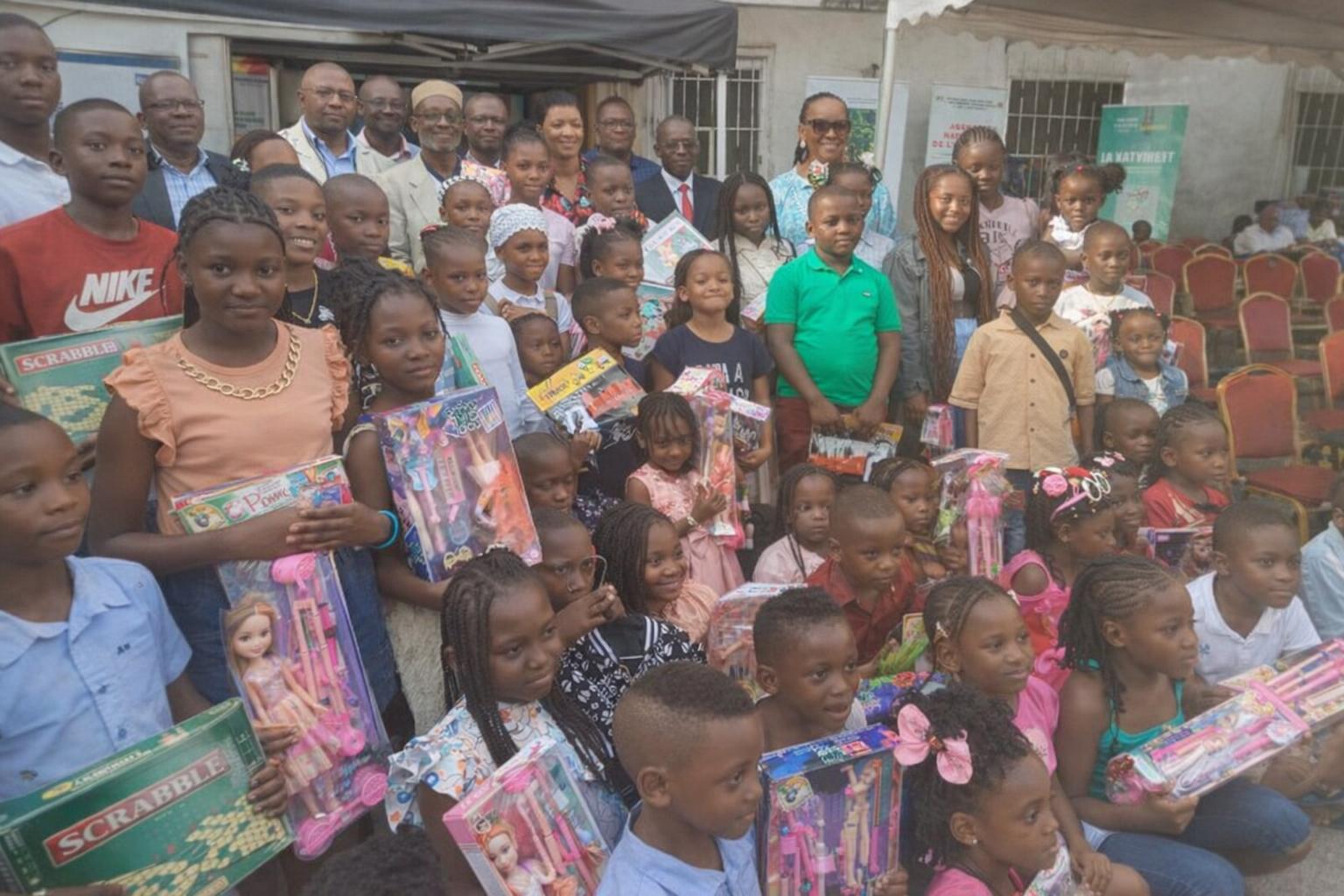
The courtyard of the National Handicrafts Agency in Brazzaville, usually an administrative enclave, transformed for eighteen days into a kaleidoscope of colours, aromas and melodies. From 17 December to 3 January, hundreds of visitors wandered between stalls where Congolese wood-carvers, textile dyers and jewellers displayed their latest creations. On the closing afternoon, laughter replaced bargaining as 250 children—sons and daughters of staff from the Ministry of Small and Medium-Sized Enterprises and Handicrafts—received brand-new toys at no cost.
Ministerial initiative affirms inclusive holiday spirit
“For this second edition we wished to highlight solidarity,” declared Emma Mireille Opa Elion, Director-General of the agency, translating the instruction she had received from Minister Jacqueline Lydia Mikolo to “spread the magic of children’s day”. The carefully selected beneficiaries, balancing boys and girls, formed orderly queues before receiving dolls, model trucks or educational puzzles. Parents present spoke of relief at seeing their children honoured in a difficult economic context marked by post-pandemic adjustments.
Robust turnover signals resilience of craft sector
Beyond the charitable gesture, the market proved commercially rewarding. According to the Director-General, individual exhibitors reported receipts approaching five million CFA francs over the short trading window. For artisans accustomed to irregular cashflow, such figures are transformative: they enable the purchase of better raw materials, the hiring of apprentices and the payment of social contributions. Observers noted that the average item remained affordable, confirming that volume rather than high margins drove the success.
Government strategy marries heritage and entrepreneurship
The outcome aligns with the ministerial roadmap that positions handicrafts as both guardian of cultural identity and generator of non-oil revenue. Since the sector is dominated by micro-enterprises, nurturing domestic demand during festive periods offers a pragmatic lever for growth. The Christmas Market, inaugurated in 2022, therefore serves as a living showroom where buyers can interact directly with producers, obtaining provenance guarantees that are increasingly valued by diaspora customers and foreign visitors.
Empowering women and youth in a diversified economy
A discreet but salient aspect of the fair lies in its demographic composition: more than half of the exhibitors were women, many of them first-time entrepreneurs leveraging traditional skills inherited from elder relatives. Youth groups specialising in recycled materials also made their debut, responding to the environmental priorities enshrined in Congo’s recent National Development Plan. Economists interviewed foresee a gradual formalisation of these actors as digital payment tools spread and as the agency intensifies training in packaging and export standards.
Looking ahead to an expanded third edition
The smiles visible during the toy-distribution ceremony hinted at ambitions already forming for December 2024. Organisers are contemplating a pavilion dedicated to live demonstrations, as well as partnerships with banking institutions to provide on-site micro-credit. While final figures are still being audited, preliminary assessments suggest that aggregate sales exceeded the inaugural edition by a double-digit margin. If confirmed, the Brazzaville Christmas Market could become a template for other cities, reinforcing the President’s broader objective of diversifying the national economy through culture-based industries.