

A solemn farewell in Île-de-France
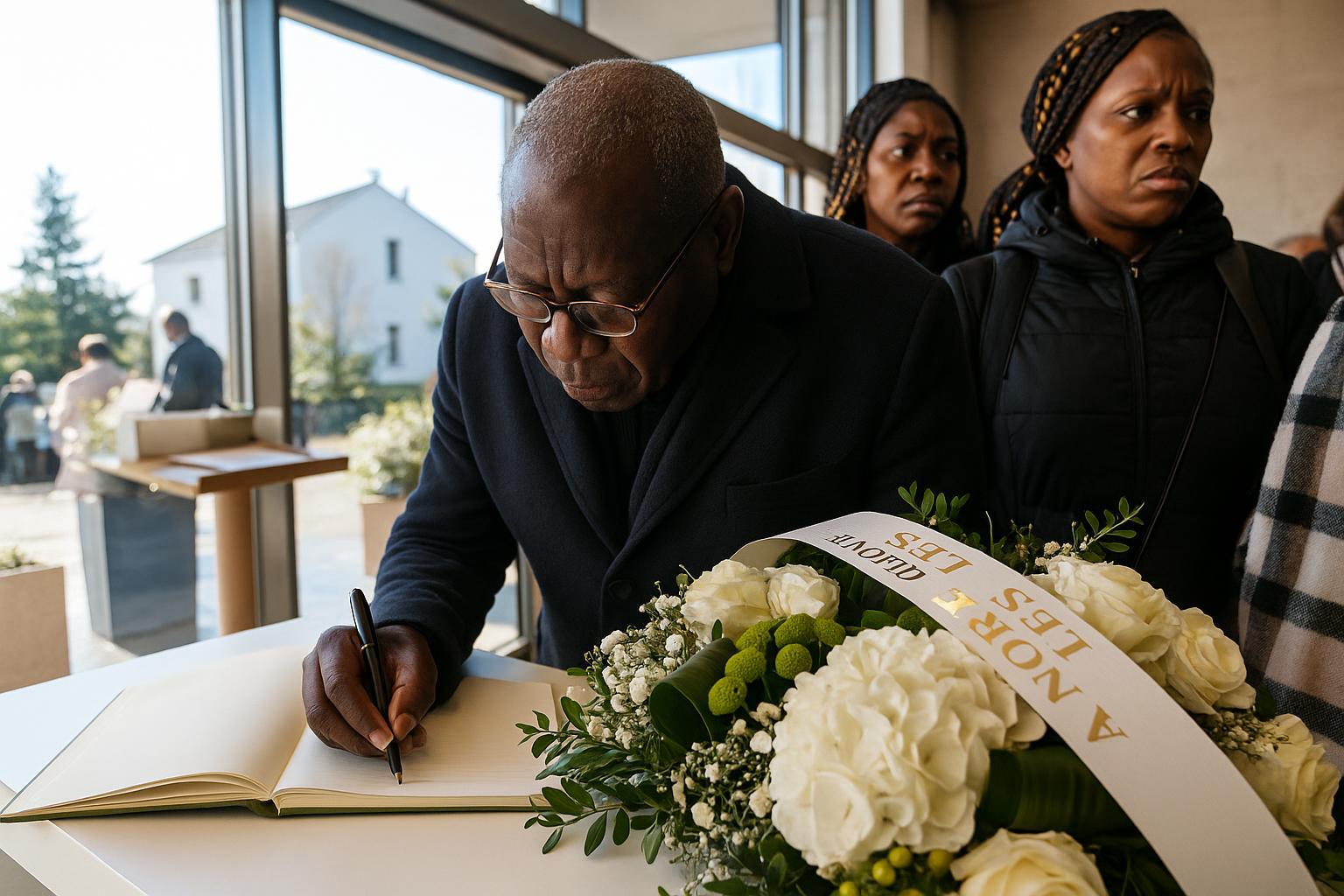
The first weekend of January unfolded in hushed tones for the Congolese community of the Paris region. Within the quiet walls of the Nanterre funeral parlour, relatives and professional companions of Peggy Ponio Hossie Mbongo—known to viewers simply as Peggy Hossie—came to accompany her on her last journey. The veteran broadcaster, who passed away on 15 December in suburban Paris at the age of fifty-three, was saluted in two complementary ceremonies. On Friday 2 January a night-long vigil in Sevran allowed friends, faculty colleagues and former newsroom teammates to share personal recollections, many delivered in the same poised timbre that once characterised the deceased’s own on-air presence. The following morning, 3 January, the casket was received in Nanterre for a more formal liturgy, closing a chapter written on both sides of the Congo River and on either bank of the Seine.
Institutional presence underscores national gratitude
The Republic of Congo was represented by Armand Rémy Balloud-Tabawé, Minister Counsellor at the Brazzaville embassy in France. In a short but eloquent message read to the assembly, the diplomat conveyed “the most saddened condolences” of the mission and insisted that “Peggy, your soul may rest in peace”. His attendance, widely noted by mourners, signalled official recognition of a media figure whose career unfolded largely outside the national territory but whose programming consistently promoted Congolese cultural life. Observers present in Nanterre interpreted the gesture as a reaffirmation of Brazzaville’s attentiveness to its citizens abroad and to the soft-power capital generated by diaspora media professionals.
A voice that bridged Brazzaville and Paris
For more than two decades Peggy Hossie had been a familiar face on channels followed by Congolese households across Europe, from DRTV to Ziana TV. Her interviews with emerging musicians, debates on governance reforms and special election night coverage offered an informative window on Congo-Brazzaville for students, entrepreneurs and families settled far from Pointe-Noire. Charlemagne Mayassi, cultural events manager, recalled that “Peggy never lost sight of the link between the studio and the street; she constantly asked how a report would resonate back home”. Former TVPN anchor Dalia Mena added that Hossie’s mix of thorough preparation and instinctive empathy “set a standard for our generation of presenters”.
Shared airwaves, shared mourning
The commemorations were recorded on a special set arranged by Yhan Akomo of Kasima TV and moderated by Christian Martial Poos. Cameras captured the spontaneous tributes of Anthony Moujoungui, Maurel Mabélé and Gildrine Ngatani Kouvoua, all alumni of DRTV, who recounted editorial deadlines met at dawn, improvised remote connections with Brazzaville officials and the gentle firmness with which their late colleague guided younger reporters. No advertising metrics were sought; the sole objective, they insisted, was to inscribe in collective memory the discreet influence of a woman whose voice introduced countless news bulletins.
An enduring template for diaspora media
Beyond personal sorrow, the Paris farewell raised broader questions about succession and sustainability within diaspora broadcasting. With production costs rising and audience habits fragmenting, the ecosystems that allowed Peggy Hossie to flourish now rely increasingly on digital interaction and cross-continental partnerships. Media consultant Stéphane Koumba notes that “her career reminds us that content credibility precedes technological prowess”. If that lesson endures, the spirit of Peggy Hossie will continue to inform program grids from Brazzaville to Brussels.