

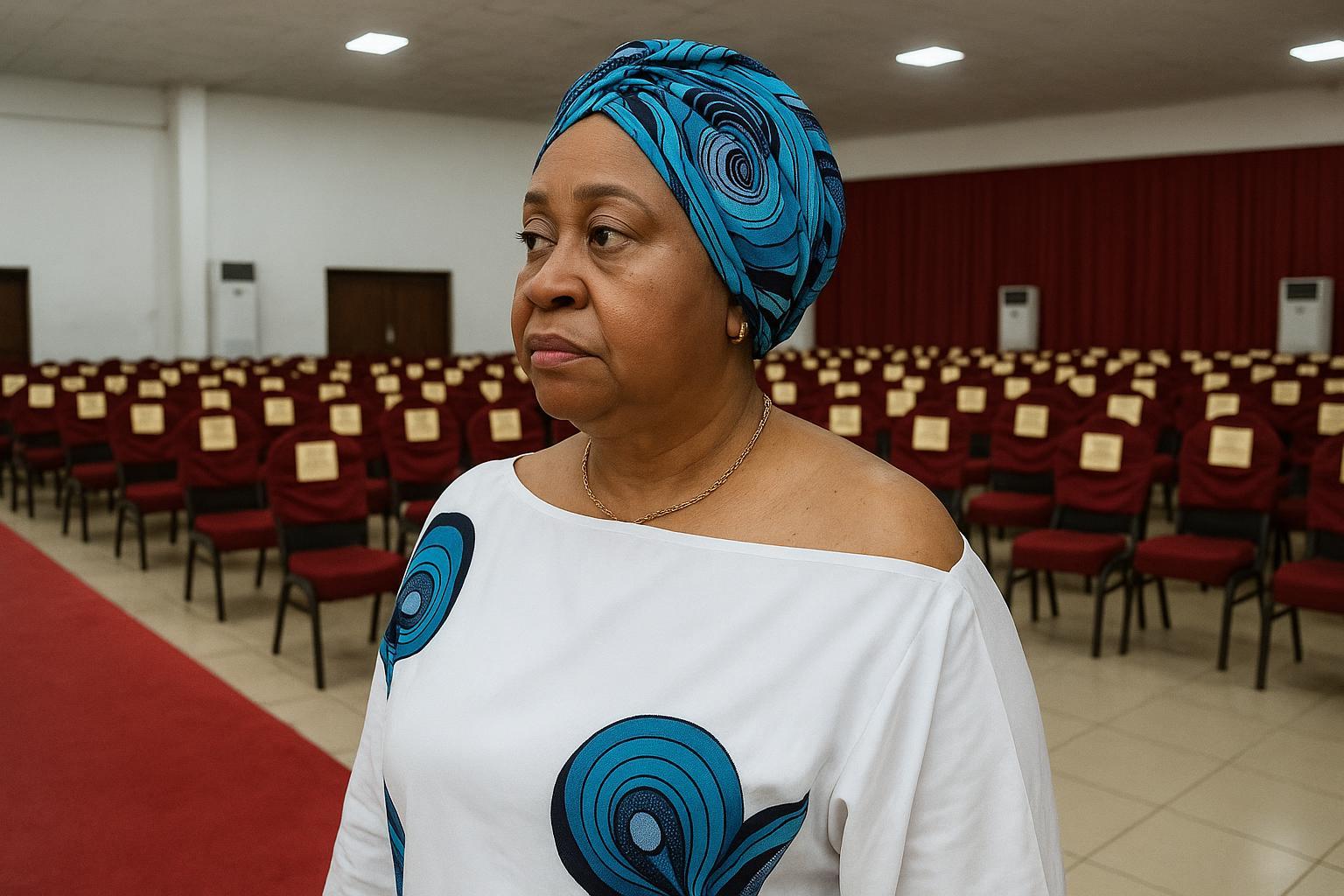
From Oil Boardrooms to Party Diplomacy
The promotion of Katia Mounthault-Tatu to Secretary for External Relations and Cooperation within the Congolese Labour Party (PCT) crowns a trajectory that began far from the corridors of partisan life. For close to a decade she directed institutional and public affairs for the American major Chevron in the Republic of Congo, orchestrating stakeholder dialogue in the complex energy sector. Colleagues recall a negotiator able to “translate corporate imperatives into language intelligible for regulators and communities”, a skill now prized in party diplomacy. Her passage from multinational boardrooms to the Permanent Secretariat suggests a deliberate attempt by the PCT leadership to graft managerial culture onto political structures while broadening the party’s international interface.
The Sixth Ordinary Congress in Numbers
Held between 27 December 2025 and 1 January 2026, the sixth ordinary congress gathered more than three thousand voting delegates beneath the vaulted roof of Brazzaville’s Palais des Congrès. The conclave renewed Pierre Moussa’s tenure as Secretary-General for a further five-year term and appointed nine members, including Mounthault-Tatu, to the Permanent Secretariat – a collegial body often likened to a cabinet inside the ruling formation. Delegates also endorsed a 775-strong Central Committee and a streamlined seventy-five-member Political Bureau, reaffirming a structure that blends continuity with calibrated rejuvenation. A flagship resolution confirmed President Denis Sassou Nguesso as the party’s standard-bearer for the March 2026 presidential election, underscoring the movement’s emphasis on stability and programmatic follow-through.
A Mandate Focused on External Outreach
Within this architecture Katia Mounthault-Tatu inherits a portfolio that ranges from bilateral ties with fraternal parties to cooperation with multilateral fora. Insiders note that the office has historically been entrusted to figures of discreet influence who could balance protocol with pragmatism. Her corporate background is expected to sharpen the party’s reading of foreign investor expectations at a moment when Congo-Brazzaville positions itself as a gateway to Central African markets and a supporter of regional monetary harmonisation. According to one delegate, “the congress wanted a bridge-builder able to speak the language of business without losing sight of ideological bearings”.
Civil Society Roots and Youth Engagement
Beyond corporate corridors, Mounthault-Tatu has cultivated a civic footprint through the Horizon Foundation, a platform that funds educational workshops, micro-entrepreneurship schemes and cultural events in Pointe-Noire and Brazzaville. In December she premiered the documentary “Jeunes 242”, a mosaic portrait of thirty young Congolese artisans, coders, athletes and apprentice engineers unified by an ethos of self-improvement. The film’s warm reception in the capital, observers argue, has burnished her credentials as a listener attuned to generational aspirations. This dual anchoring in private enterprise and associative work offers the party a symbol of socially-rooted modernity as campaigns gear up.
Legacy and Lineage in Perspective
The new secretary’s political baptism owes something to family lineage: she is the daughter of Hilaire Mounthault, former State Minister and long-standing member of the PCT Political Bureau. Yet supporters are quick to insist that her ascent is merit-driven rather than dynastic. They point to her readiness to traverse rural districts during the 2024 legislative outreach tour, gathering testimonies on agricultural credit and maternal health services. “She is not an apparatchik”, stresses a Central Committee member, “she thrives where fieldwork meets strategy”. Her appointment therefore aligns with the congress’s broader call for cadres who pair doctrinal loyalty with operational expertise.
Cooperation Agenda Ahead of 2026
Looking toward 2026, Mounthault-Tatu’s docket is expected to include revitalising party-to-party dialogue within the Central African Economic and Monetary Community, deepening ties with traditional partners such as China and France, and exploring thematic coalitions on energy transition. Analysts suggest she will also navigate the interface between the PCT and Congo-Brazzaville’s burgeoning diaspora networks, mobilising remittance communities as ambassadors of the national development plan. The upcoming presidential contest adds immediacy: effective external messaging will not only court foreign confidence but also echo domestically as proof of the party’s global stature. In that light, the secretary’s energy-sector dexterity could serve as a compass for managing expectations around carbon mitigation, gas monetisation and local content, issues likely to dominate high-level exchanges in the months ahead.
A Steady Hand for a Global Conversation
As the PCT calibrates its narrative for an electorate attuned to both neighbourhood concerns and international benchmarks, Katia Mounthault-Tatu embodies a hybrid profile: executive rigour, civic empathy and political lineage. Her new role signals a wager on professional diplomacy as a lever of domestic legitimacy. While the sixth congress reaffirmed time-tested leadership, it also entrusted fresh voices with the task of dialogue beyond borders. In that balance of continuity and renewal, the secretary for external relations becomes a pivotal interlocutor—poised, according to party insiders, “to ensure that Congo’s story is told not only accurately, but compellingly, in every capital where partnerships matter”.