

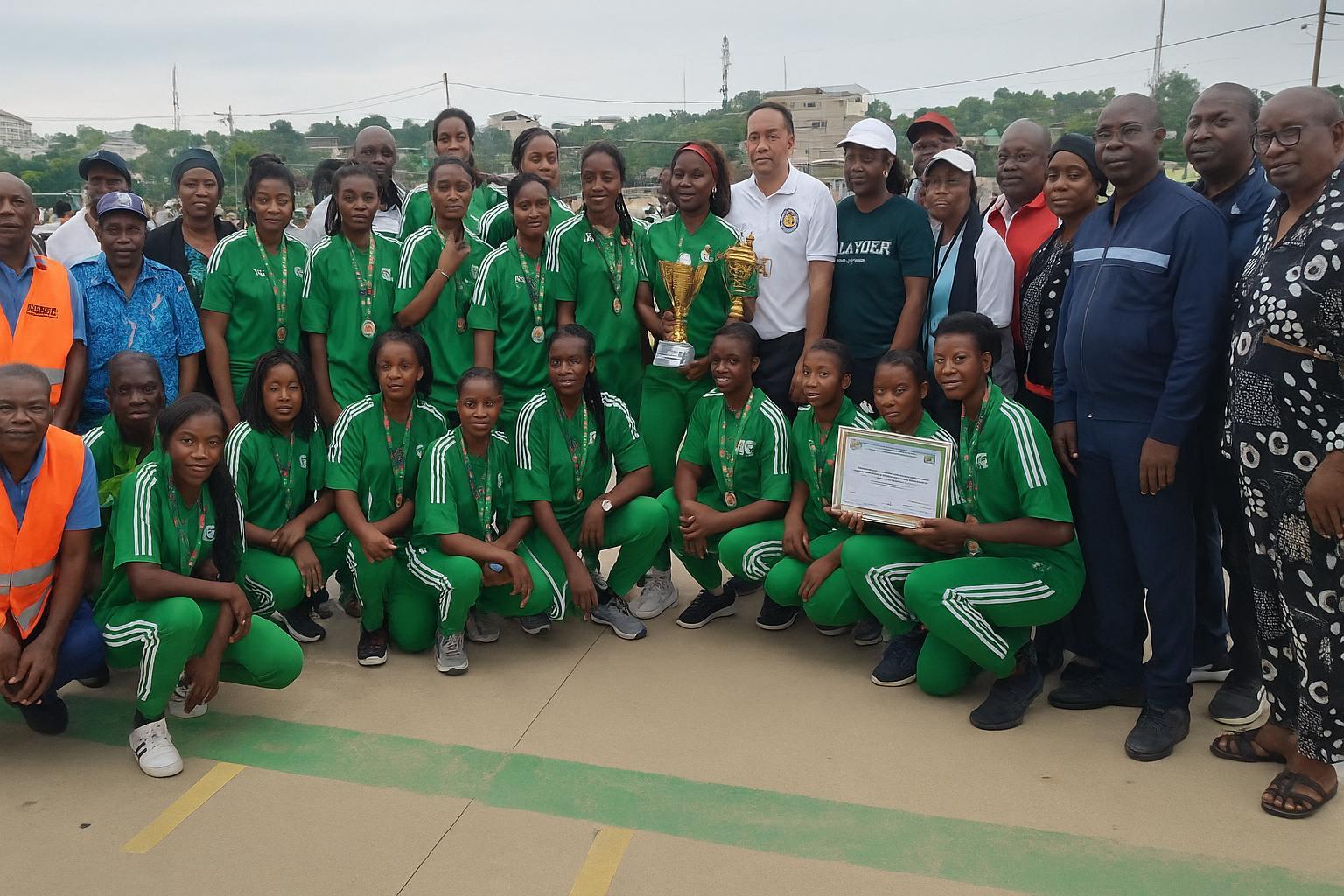
A milestone finale on the Atlantic coast
With a burst of rhythmic chants that echoed across the esplanade of the Pointe-Noire sports complex, Zanaga Sport sealed a 35-29 victory over local favourite Bana-Fofo and inscribed its name in Congolese sporting history. The 28 December showdown concluded the maiden Inter-Departmental Nzango Tournament, curated by the Association of Inter-Society Fraternities Sport (AFIS) under the honorary presidency of Eric Parfait Sassou. Sixteen women’s teams drawn from Brazzaville, Bouenza, Niari and Pointe-Noire converged on the Atlantic coast over eight spirited days in what observers hailed as the most ambitious celebration of the traditional kicking-based discipline since its modern codification.
Modern Nzango finds its architect
The tournament was equally a showcase for Guy Noel Passy Titov, recognised nationally as the prime innovator of what aficionados call “Nzango moderne”. Titov’s rules—emphasising athletic footwork, tactical timing and systematic scoring—have transformed casual courtyard play into a codified sport capable of filling grandstands. “We are demonstrating that Congolese heritage can meet international standards without losing its soul,” he said on the sidelines, moments before handing the organising committee a diploma of honour. In the final, those standards were on display each time Chanel Packa of Bana-Fofo delivered one of her eight celebrated knock-outs, earning her the tournament’s Most Valuable Player trophy despite the defeat.
Logistics, security and the art of consensus
AFIS president Boris Banquet Bazabibouta credited a broad coalition of municipal officials, private sponsors and medical volunteers for a competition that unfolded, in his words, “in perfect serenity”. Pointe-Noire’s departmental director of Sports and Physical Education, Joseph Biango Nzinga, highlighted the absence of any security incident as proof that decentralised collaboration can yield national dividends. Financial incentives were handled with the same transparency: Zanaga Sport collected 500 000 CFA francs alongside gold medals and a glittering trophy; Bana-Fofo and the Port Autonome de Pointe-Noire shared 350 000 CFA francs in prizes for second and third place respectively, while referees and technical officers also received envelopes and citations.
Health outreach amplifies social impact
Mindful that sport can be a vector for public policy, organisers partnered with local clinics to stage a voluntary HIV screening day on 21 December. The initiative, folded into the match schedule rather than appended as a side event, drew several hundred spectators and athletes, according to preliminary tallies shared by the medical team. Clinic coordinator Dr. Jocelyne Goma called the decision “a pragmatic fusion of competition and compassion” that reflects the government’s broader preventive-health agenda.
Economic ripple effects for host cities
While the cash prizes were symbolic, the inflow of athletes and supporters produced tangible benefits for Pointe-Noire’s hospitality sector during the festive season. Hoteliers near the seafront reported occupancy rates above 80 percent, a noticeable uptick compared with the same week last year. Street vendors capitalised on the extended match schedule, and transport operators shuttled delegations between training grounds and cultural sites such as Diosso Gorge, thereby circulating revenue across the local economy. Analysts note that such micro-stimuli align with the National Development Plan’s emphasis on sport-tourism as a driver of diversification.
Forging unity through female athleticism
Perhaps the most resonant message emanated from the players themselves. In a post-match address, Zanaga captain Clarisse Mabiala stressed that victory was “only half the story”, emphasising the lifelong friendships forged among opponents who had never previously crossed departmental borders. Her sentiment echoed the tournament’s guiding theme, vivre-ensemble, and mirrors regional objectives pursued by the African Union’s Agenda 2063, which foregrounds gender equality and cultural exchange as pillars of continental renaissance.
Looking ahead to a national circuit
Buoyed by the success, AFIS is reportedly exploring a rotating annual calendar that would carry Nzango moderne to the forest corridors of Sangha, the riverine communities of Cuvette and the rolling savannahs of Plateaux. Discussions with the Ministry of Sports signal an appetite for institutionalising a national championship, with the possibility of integrating Central African neighbours in a sub-regional cup. Such expansion would demand sustained investment in refereeing academies, digital scoring technology and athlete welfare programmes, yet the blueprint unveiled in Pointe-Noire supplies a credible foundation.