

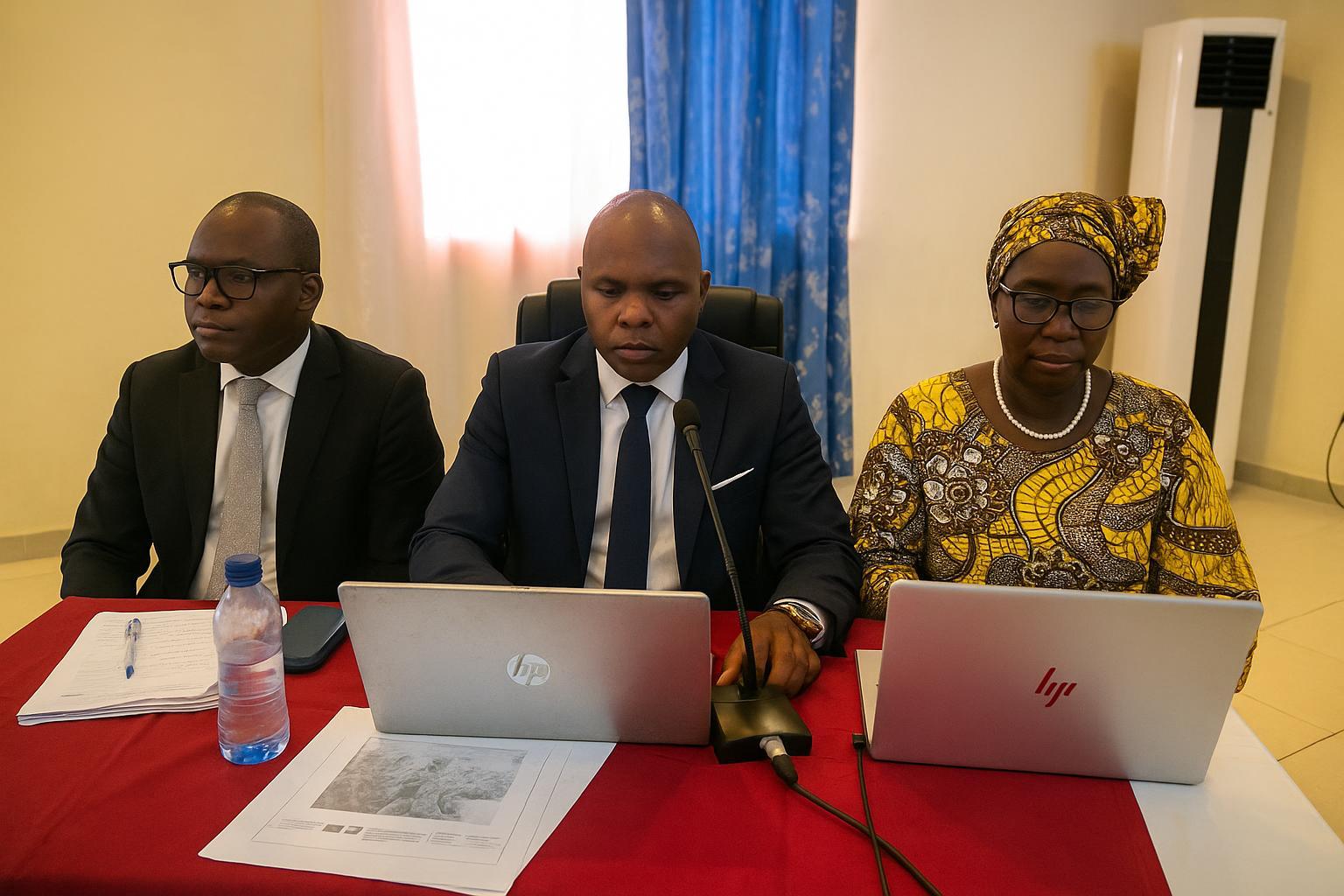
A Workshop of Consensus in Brazzaville
Over three intensive days in late December, jurists, traditional leaders, private-sector actors and international partners convened in Brazzaville under the aegis of the Ministry of Justice, Human Rights and Promotion of Indigenous Peoples. Their task was both technical and symbolic: to validate the draft decree setting out special measures for securing Indigenous customary land rights. By the closing session, consensus had formed around a text that aims to translate the spirit of Law 5-2011 into enforceable property titles.
From Constitutional Principle to Enforceable Title
Articles 31 and 32 of the 2011 statute recognise the collective and individual ownership of land by Indigenous populations. Yet, until now, the absence of an implementing instrument has left these rights largely declaratory. The draft decree fills that legal vacuum. “Once adopted by the Council of Ministers, Indigenous communities will finally hold the same property deeds as any Congolese citizen,” explained Justin Assomoyi, Director-General for the Promotion of Indigenous Peoples. He stressed that secure tenure is indispensable to self-determination and to the daily subsistence activities—hunting, gathering, small-scale agriculture—that shape Indigenous identity.
Aligning Economic Growth with Social Justice
Participants devoted particular attention to the interface between customary land and national development strategies. Timber concessions, agro-industrial projects and conservation areas often overlap with ancestral territories. The decree therefore mandates prior, informed and consensual consultation with Indigenous groups before any allocation of land for public or private investment. By formalising consultation, the government seeks to pre-empt the conflicts that have occasionally marred large-scale projects and to reassure investors that clear, predictable procedures govern land acquisition.
Inter-Ministerial and Civil Society Synergy
The workshop marked a notable convergence of sectoral ministries—Land Affairs, Forestry, Environment, Planning—with Indigenous associations and NGOs such as the Centre d’Encadrement Communautaire pour le Développement. For Erick Chrysosthome Nkodia, the Centre’s executive secretary, this inclusive approach augurs well for implementation: “The decree has been shaped by voices from virtually every department of the Republic. That collective ownership is the best guarantee of its legitimacy.”
A First in Central Africa?
If promulgated, the decree would position Congo as the first country in Central Africa to grant Indigenous peoples full, legally enforceable ownership of their traditional lands. Regional observers note that such leadership could enhance Brazzaville’s standing in multilateral fora on climate finance, where respect for community land rights is increasingly tied to access to performance-based payments.
Roadmap to Promulgation
The text now enters the governmental circuit: legal harmonisation by the Secretariat-General, examination in the Council of Ministers and, finally, signature by the Head of State. Officials familiar with the file anticipate swift treatment, underscoring the executive’s commitment to inclusive development. Once published in the Official Gazette, the decree will trigger ancillary measures, including an updated cadastral survey, capacity building for local land registries and an awareness campaign in Indigenous languages.
Guardrails Against Future Disputes
Legal scholars at the workshop highlighted the decree’s potential to serve as a preventive mechanism against land disputes. By codifying the evidence required to establish ancestral occupation—oral testimony, cartographic records, ecological markers—the text offers courts a clear evidentiary framework. This, in turn, should reduce litigation costs and foster a climate of legal certainty in rural areas.
An Inclusive Step Toward 2030 Goals
The forthcoming decree dovetails with Congo’s commitment to the 2030 Sustainable Development Agenda, particularly Goal 15 on life on land and Goal 10 on reduced inequalities. It also resonates with the African Union’s Agenda 2063, which stresses human rights as a pillar of continental renaissance. By advancing Indigenous land security, Brazzaville signals that economic modernisation and cultural preservation are not mutually exclusive but mutually reinforcing.