

Regulatory Green Light for 87 Percent of Applications
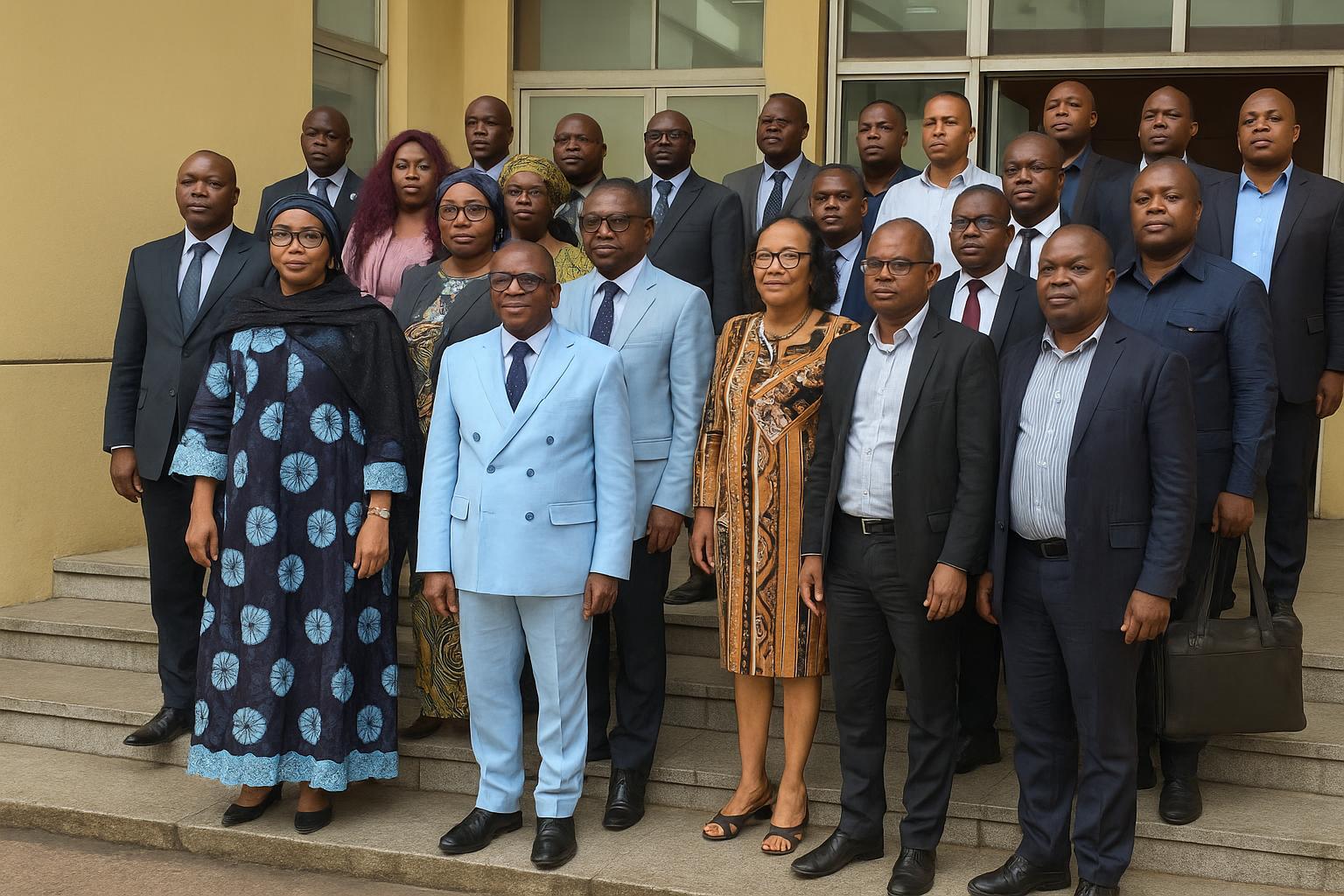
The closing days of 2023 were marked by a significant turning point for Congo-Brazzaville’s knowledge economy. Meeting in Brazzaville on 23 December, the ninth ordinary session of the Commission d’agrément des établissements privés de l’enseignement supérieur (Caepres) delivered a favourable opinion on 29 of the 33 files before it, an approval rate of 87.87 percent. The dossiers concerned a spectrum of requests, ranging from the creation of entirely new institutions to the extension of campuses and the launch of fresh academic programmes.
Observers of the capital’s educational landscape noted that the high approval rate demonstrates not only the vigour of private entrepreneurial initiatives but also the administration’s determination to subject them to rigorous scrutiny. According to ministry officials present at the session, each file underwent a double-blind academic and infrastructural assessment designed to gauge compliance with national benchmarks set by the 13 May 1996 and 23 May 2008 decrees regulating higher-education quality.
Dissecting the Approvals: Institutions and Programmes
Seventeen of the eighteen applications to create new establishments received the green light. In the sensitive phase that follows the issuing of a provisional licence, institutions will now be required to demonstrate the availability of qualified academic staff and adequate premises before they can recruit their first cohort.
Regarding the opening of campuses already granted creation status, six of nine submissions were endorsed, while both files seeking definitive accreditation secured unanimous recommendations—an outcome senior Caepres members deemed “evidence of a maturing sector.” At the programme level, all five licence curricula proposed were approved, covering disciplines as diverse as environmental engineering, fintech management and agribusiness. Conversely, none of the eight Brevet de technicien supérieur tracks convinced evaluators—a decision attributed to gaps in laboratory equipment and industrial partnerships.
Four site-extension requests and a certificate course in business administration rounded off the list of nods. Collectively, the positive opinions clear the path for an estimated 6,000 additional student seats over the next three academic cycles, according to projections by the Ministry of Higher Education.
Legal Framework Anchoring Quality Assurance
During the closing ceremony, Minister Delphine Edith Emmanuel reiterated that the state’s objective is neither to curb private initiative nor to engage in bureaucratic obstruction, but to guarantee that degrees conferred under the Congolese flag remain internationally recognisable. She reminded proprietors that de facto teaching activities outside the authorisation chain remain sanctionable under Article 27 of the 1996 decree, which foresees administrative closure and monetary penalties.
The minister also clarified ongoing work on a dedicated regulatory instrument for the burgeoning market of professional short courses delivered on the sidelines of Université Marien Ngouabi. That framework, currently in inter-ministerial consultation, aims to delineate standards for course design, examination procedures and tuition transparency, thereby preventing what she termed “credential inflation.”
Stakeholders Urge Terminological Harmonisation
While applauding the Commission’s diligence, participants called on the government to streamline its lexicon. The co-existence of terms such as ‘creation,’ ‘opening,’ ‘provisional’ and ‘definitive’—all embedded in separate decrees—has generated uncertainty for entrepreneurs and students alike. Rectors of private universities attending the session suggested consolidating the terminology into a single graduated pathway akin to the CAMES model used in several Francophone countries.
Legal scholars from the University of Law in Brazzaville emphasised that clarity will reduce litigation risks and bolster investor confidence. They referenced recent World Bank diagnostics on higher-education governance across Central Africa, which rank consistent terminology among the top five determinants of a favourable investment climate.
Regional Significance and Strategic Outlook
Congo-Brazzaville’s push to expand regulated private higher education mirrors a continental trend. UNESCO Institute for Statistics data indicate that private enrolment in Sub-Saharan Africa grew from 21 percent in 2010 to nearly 30 percent in 2021. By endorsing twenty-nine new initiatives, Caepres positions the country to capture part of that swelling demand, particularly from neighbouring Democratic Republic of Congo, Central African Republic and Gabon, where student mobility toward Brazzaville is already palpable.
Several analysts see the approvals as aligned with the National Development Plan 2022-2026, which envisages a vibrant, skills-based economy capable of supporting the diversification agenda championed by President Denis Sassou Nguesso. If the approved institutions succeed in maintaining quality thresholds through to definitive accreditation, they could serve as incubators of human capital for the Special Economic Zones of Pointe-Noire and Oyo.
Yet, as Minister Emmanuel cautioned, the true measure of success will lie in translating policy intent into academic excellence. With site inspections scheduled for the second quarter of 2024 and a public dashboard of compliance indicators under construction, the Ministry appears keen to introduce a culture of measurable accountability. In the words of Caepres rapporteur Luc Ossiala, “Our compass is simple: credibility at home, recognition abroad.”