

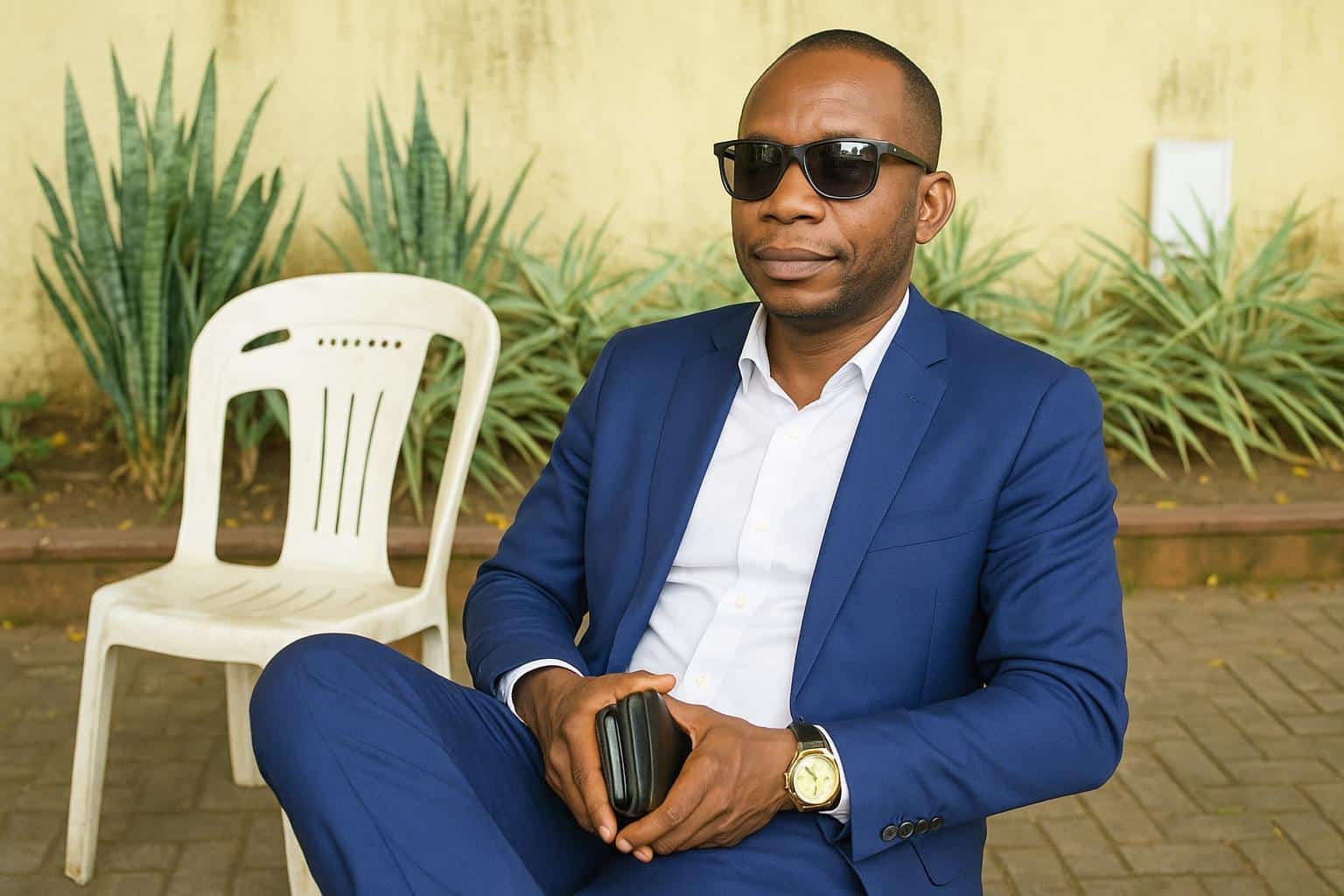
A Tragic Discovery at Itatolo Cemetery
Brazzaville woke to a sense of disbelief on 23 December 2025 when firefighters removed the mutilated body of Raviet Celvic Ntsiantsié—better known by his affectionate Chinese-style nickname, Xi Tsiang—from La Grâce, a private burial ground in the northern district of Itatolo. The 30-year-old secretary for organisation and human-resources within the Force Montante Congolaise, the youth wing of the Congolese Labour Party (PCT), had disappeared three days earlier after leaving his family home on Rue Koussouassissa in the populous seventh arrondissement of Mfilou. Despite urgent alerts posted by relatives and comrades on social networks, and the opening of a missing-person file with the police, his whereabouts remained unknown until Tuesday’s grim find.
Municipal authorities responded swiftly. The Mayor of Brazzaville and deputy for Mfilou’s second constituency, Dieudonné Bantsimba, personally oversaw the transfer of the remains to the city morgue adjacent to the University Hospital Centre. His presence was interpreted locally as a signal that the State intended to treat the affair with due gravity, in contrast to the rumours—common in such moments—that high-profile cases languish in impunity.
The Rise of a Promising Cadre
Before tragedy struck, Xi Tsiang embodied the aspirations of a new generation within the PCT. A railwayman by trade at the Congo-Ocean Railway and an active unionist, he was reputed for blending shop-floor pragmatism with articulate advocacy of the party line when addressing neighbourhood cells. In Mfilou’s lively political ecosystem, dominated by youthful ambition, his portfolio in the FMC—organisation and human resources—placed him at the heart of mobilising volunteers, compiling membership rolls and negotiating inter-district alliances.
That prominence was on display as the party’s sixth ordinary congress approached. On 21 December, the FMC joined forces with the Organisation des Femmes du Congo in a city-wide march of support. According to several participants, Xi Tsiang had been expected to coordinate logistical contingents but never arrived. His silence, coupled with the sudden deactivation of his phone, heightened anxieties among colleagues who recalled recent jostling for influence inside local structures.
Competing Narratives: Crime or Politics?
In the days following the discovery, conversation in Mfilou’s markets and commuter taxis has oscillated between two hypotheses: a politically motivated reprisal tied to intra-party rivalry, or an ordinary criminal act carried out with unusual brutality. Relatives are unequivocal, describing the death as a settling of scores. Comparisons have even surfaced with the January 2023 kidnapping of Cameroonian journalist Martinez Zogo, whose fate stirred regional outrage.
Yet legal professionals counsel caution. Without a formal autopsy report or judicial qualification of the facts, any definitive label—political assassination, ritual killing, or common-law homicide—remains premature. “We must resist the temptation of conjecture and allow investigators to reconstruct the chain of events,” a senior member of the Brazzaville bar observed, requesting anonymity in order to respect ethical prudence.
Judicial Process and Calls for Restraint
The Public Prosecutor has opened a criminal inquiry handled by the Brazzaville Judicial Police. Forensic officers have inspected the scene at Itatolo and canvassed neighbouring streets for witnesses or surveillance footage. In parallel, telecommunication data are being examined to trace the final signals of the victim’s handset.
On the political front, the FMC’s secretariat released an elegiac communiqué signed by Prince Bertrand Bahamboula urging militants to remain composed and to “await the conclusions of the investigation opened by the Procurator of the Republic.” Party insiders underline that the message, echoing the personal appeal of the PCT’s First Secretary, seeks to prevent grief from morphing into factional escalation at a moment when national attention is fixed on the forthcoming congress.
Looking Ahead: Justice and Cohesion
Beyond the immediate sorrow, the episode exposes the delicate balance between youthful dynamism and disciplined unity within mass organisations. Analysts note that President Denis Sassou Nguesso has repeatedly encouraged the emergence of a merit-based leadership pipeline—a goal that requires safeguarding political engagement from intimidation while guaranteeing judicial impartiality once wrongdoing occurs.
For the residents of Mfilou, the yardstick of success will be tangible: the identification of perpetrators through evidence that can stand up in court, followed by proceedings conducted in line with constitutional safeguards, including the presumption of innocence. Only then, community elders say, can the district reclaim its reputation as a crucible of loyal but peaceful militancy.
In the interim, Xi Tsiang’s relatives prepare mourning rites in accordance with tradition, comforted by the district’s solidarity yet mindful that closure hinges on the gavel of justice. Whether the case ultimately reveals an ordinary crime or a darker political subtext, its meticulous resolution will serve as a litmus test for public confidence in the institutions designed to protect citizens and honour their commitment to the nation’s democratic life.