

Record investment reshapes Africa’s hydrocarbon map
A fresh cycle of capital expenditure is sweeping through Africa’s upstream sector. Independent consultancy projections see spending cresting at some USD 41 billion by 2026, an outlay expected to propel liquid hydrocarbons to 11.4 million barrels per day and markedly expand gas supply. The renewed appetite for exploration and project sanctioning follows successive price shocks and a reinvigorated focus on energy security across the continent. Governments and operators alike are seeking to monetise resources quickly, with particular attention to liquefied natural gas, value-adding midstream assets and local power plants that reduce costly imports of refined products.
Congo LNG: Pointe-Noire becomes a regional gas anchor
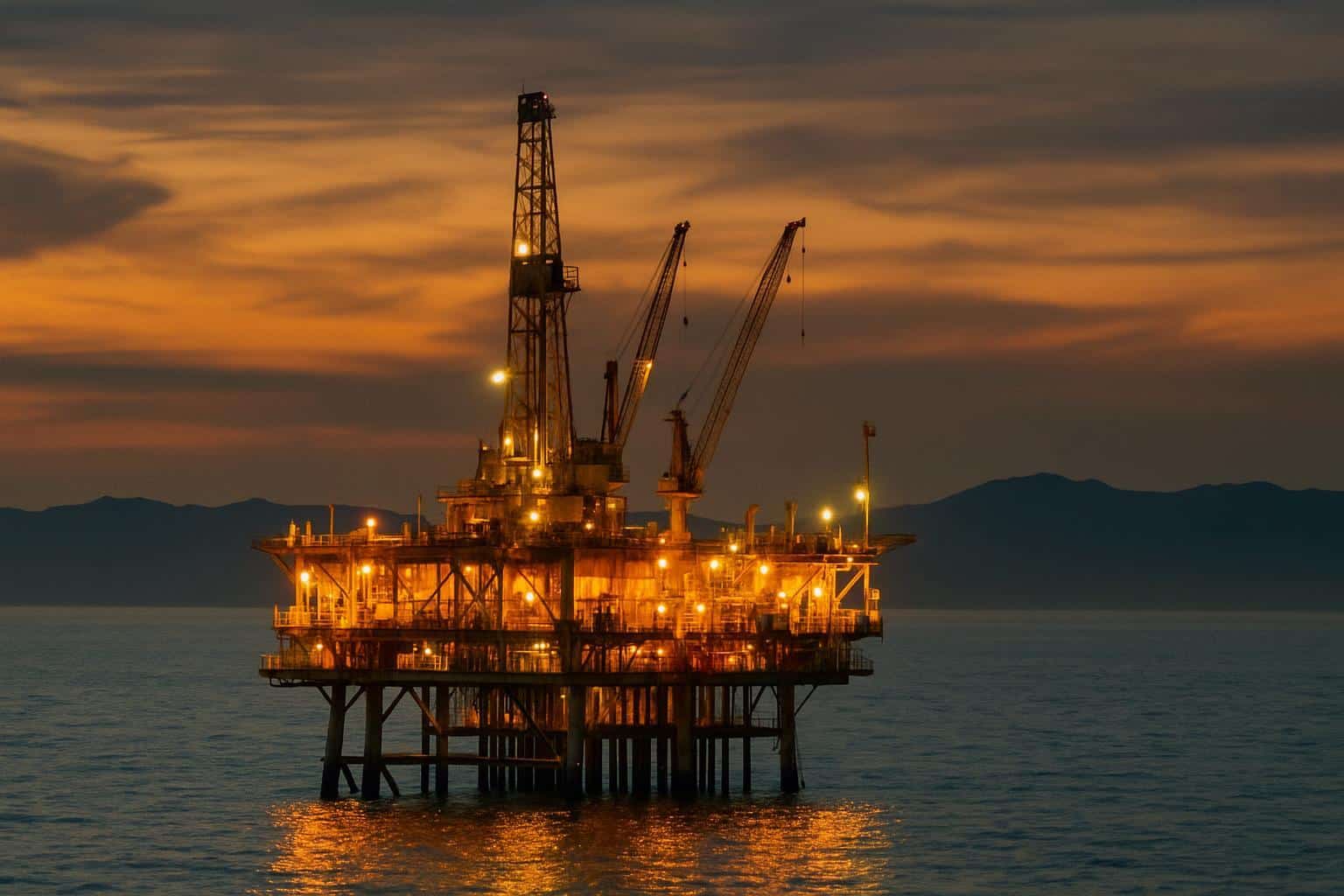
At the mouth of the Congo River, the Litchendjili field and the wider Congo LNG initiative embody Brazzaville’s ambition to convert its substantial natural gas endowment into electricity, export revenue and industrial feedstock. Operated by Eni in partnership with the Société Nationale des Pétroles du Congo, the project already delivers molecules to the Djéno combined-cycle plant, reinforcing the national grid. February 2024 marked the start of operations for the Tango floating LNG unit, while a second vessel, Nguya, is slated to come onstream by mid-2026. Once both are fully ramped up, total liquefaction capacity should reach three million tonnes per annum, positioning the country as the Gulf of Guinea’s newest LNG supplier.
Beyond the macroeconomic metrics, the development relies on a zero-routine-flaring scheme that captures associated gas previously burnt in situ. Project documents reference dedicated programmes on vocational training and fisheries support for coastal communities, illustrating how hydrocarbons and socio-economic dividends can converge when governance frameworks are robust.
Nigeria and Angola consolidate leadership in crude output
While the Republic of Congo cements its status in gas, West and Southern Africa’s two largest producers are undertaking expansions designed to restore crude volumes lost to mature declines. Nigeria’s Assa North-Ohaji South (ANOH) plant attained commercial operations in 2025, sending 300 million cubic feet per day of processed gas into the domestic network. The facility underpins Abuja’s “Decade of Gas” blueprint, which aims to displace diesel in power generation and fertiliser manufacturing. In parallel, Angola’s Agogo Phase 3 deep-water campaign, operated by Azule Energy, is set to lift production toward 175 000 barrels per day in early 2026. A new floating production, storage and offloading vessel will integrate combined-cycle turbines and a pilot carbon capture module, signalling Luanda’s readiness to blend barrel growth with emissions abatement.
Gas-centred industrialisation gains momentum
Multiple jurisdictions are following a similar template: anchor a major discovery, construct modest-scale liquefaction or processing capacity and allocate a tranche of output to domestic consumers under long-term contracts. Ivory Coast’s Baleine Phase 3, Uganda’s Tilenga project funnelled into the East African Crude Oil Pipeline, and Algeria’s Bourarhet Nord initiative all deploy this hybrid strategy. In each case, early project finance disclosures highlight credit enhancements tied to secured power-purchase agreements or fertiliser offtake, illustrating that African states are increasingly capturing the multiplier effect of hydrocarbons rather than merely exporting unprocessed barrels.
Frontier basins extend the continental opportunity set
From Senegal’s Atlantic margin to the deserts of Morocco, explorationists are pushing the geographic frontier. Phase 2 of the Greater Tortue Ahmeyim (GTA) hub straddling Mauritania and Senegal seeks to add up to three million tonnes per annum of LNG through an innovative gravity-based structure. Meanwhile, South Africa’s Virginia Gas Project couples onshore LNG with high-value helium, a critical input for medical imaging and space technologies. In Central Africa, Chevron’s YoYo find will feed Equatorial Guinea’s Gas Mega Hub via a prospective cross-border unitisation agreement with Cameroon. Collectively, the fourteen projects catalogued in industry trackers depict a diversified portfolio able to weather price volatility and improve regional trade balances.
Balancing barrels with carbon commitments
A salient feature of the current investment wave is its deliberate embrace of emissions-reduction techniques. Eni’s Baleine complex in Ivory Coast has pledged net-zero Scope 1 and 2 emissions, while several new floating units incorporate closed-flare systems, combined-cycle power and waste-heat recovery. The African Union’s Climate Strategy underscores natural gas as a transition fuel that can displace coal and biomass, lowering air-quality impacts without undermining industrial expansion. International lenders are increasingly receptive to this narrative, providing sustainability-linked instruments that adjust coupon rates according to verified carbon-intensity thresholds.
Strategic implications for Congo and its neighbours
For the Republic of Congo, the confluence of offshore LNG and onshore power generation strengthens fiscal resilience, supports currency stability and reinforces the government’s commitment to reliable electricity access, particularly in the economic hub of Pointe-Noire. Regional synergies could follow: surplus volumes from Congo LNG may feed into CEMAC power-pool initiatives or supply mini-LNG bunkering stations along the Atlantic corridor. Coupled with Nigeria’s and Angola’s parallel expansions, Central and West Africa are poised to establish an integrated hydrocarbon zone capable of supplying both Atlantic Basin importers and intra-African industrial clusters.
As the fourteen projects reach successive milestones between now and 2030, Africa’s energy narrative is evolving from episodic mega-discoveries to a coordinated, diversified growth story. For policymakers, the imperative is to maintain regulatory clarity and transparent revenue management so that the projected boom translates into broad-based, equitable development.