

Brazzaville workshop spotlights a decisive framework
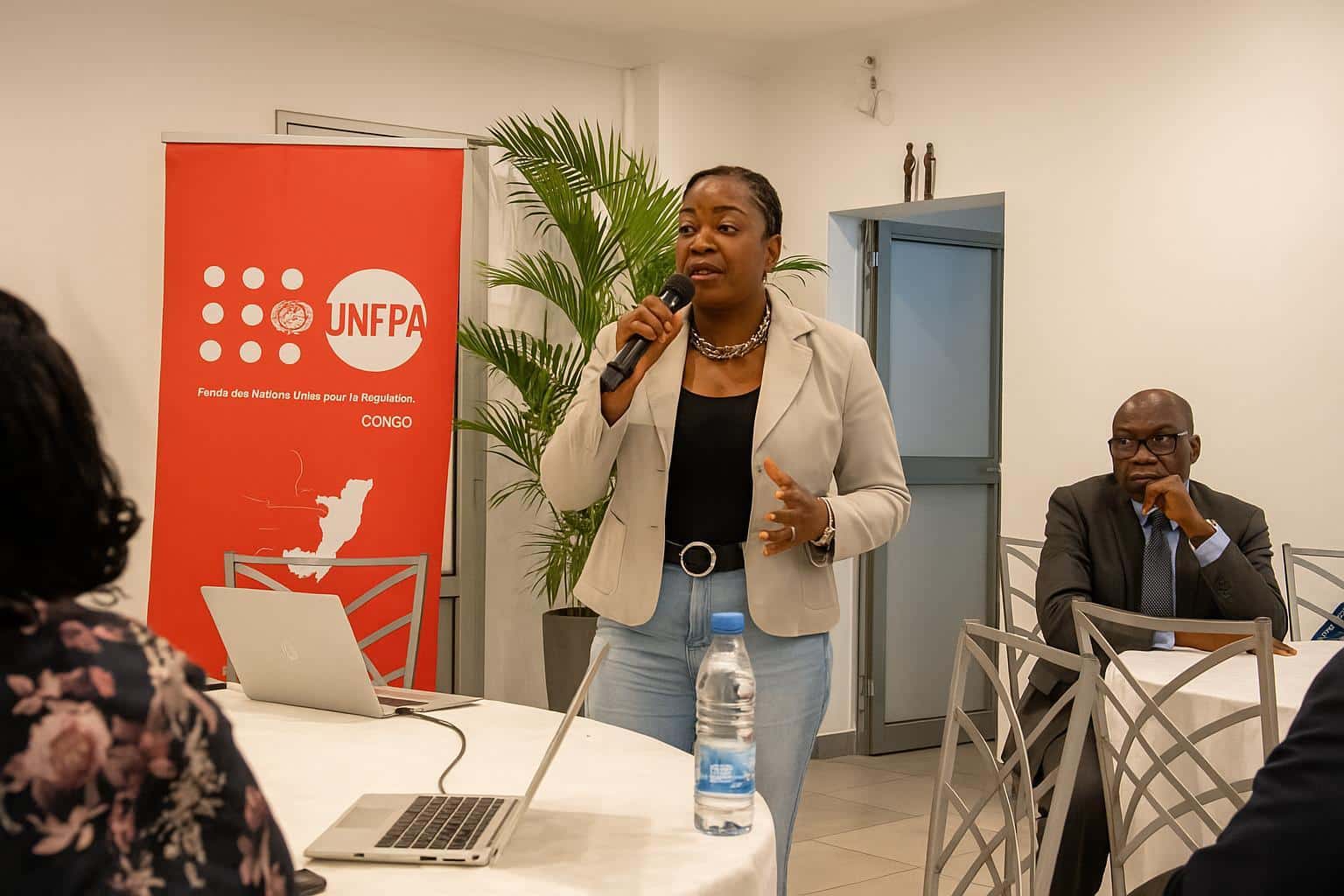
The cavernous conference room of a Brazzaville hotel, temporarily turned into a control tower of development finance, hosted on 15 and 16 December the annual review 2025 and planning exercise for 2026 of the United Nations Population Fund (UNFPA). In an atmosphere equal parts technical and political, Catia Dupreville, UNFPA’s Chief of International Operations, unfolded the institution’s Harmonised Approach to Cash Transfers, better known by its acronym HACT. The message was unambiguous: without strict respect for the framework, no disbursement can be envisaged. “HACT is not an additional layer of bureaucracy; it is the backbone of our credibility,” Dupreville insisted.
From risk mapping to cash flow: how HACT works
At the heart of HACT lies a simple proposition: the amounts channelled to partners must reflect an independently assessed risk level. The process begins with a micro-assessment that probes internal controls, accounting software, human-resource capability and procurement habits of each prospective partner, whether a ministry or a civil-society organisation. According to Dupreville, the outcome positions the entity on a spectrum that ranges from “low” to “high” risk. Funding then follows differentiated modalities. Where risk is deemed low, UNFPA may opt for advance payments, subject to periodic expenditure reports and spot audits. Conversely, a high-risk profile triggers direct payments to suppliers on behalf of the partner, with vouchers scrutinised before a single franc is released. The plan of work ― the PTA ― becomes the lone gateway for both budgeting and disbursing, thereby synchronising financial forecasts with substantive deliverables.
Audits: double locks on the accountability door
UNFPA Resident Representative in Congo-Brazzaville, Agnès Kayitankoré, used the workshop’s plenary to stress that “robust internal and external audits provide the confidence international donors require and Congolese citizens deserve.” Internally, UNFPA deploys its own inspectors to ensure that procurement rules, payroll records and inventory lists correspond to the figures reported. Externally, accredited audit firms are contracted by Congolese partners, among them the national Red Cross, to furnish independent opinions. This twin mechanism, Kayitankoré suggested, guards against both procedural drift and reputational harm. The evolving audit calendar for 2025 already includes targeted reviews of adolescent health projects in Pool department and logistics supply chains for maternal health facilities in Pointe-Noire, testifying to the granular nature of the scrutiny.
National ownership and governmental priorities
Although conceived at UN Headquarters, HACT is anything but foreign to Congo-Brazzaville’s governance agenda. By aligning PTA lines with the National Development Plan 2022-2026 and the presidential priority on human-capital consolidation, the approach seeks to place national institutions in the driver’s seat. Finance ministry officials in attendance welcomed what one senior economist called “a disciplined yet flexible tool that dovetails with our shift toward programme-based budgeting.” In practical terms, ministries retain authority to designate implementing departments, but the green light of UNFPA remains contingent on documented safeguards. This equilibrium allows the government to maintain strategic orientation while reassuring parliament and development partners that every tranche can be traced.
Future horizons: digital dashboards and capacity building
Looking beyond the 2026 horizon, Dupreville sketched an architecture of paperless monitoring. A cloud-based dashboard, currently in pilot phase, is expected to offer real-time visibility on disbursements and key performance indicators, compatible with both UNFPA’s global Atlas system and Congo-Brazzaville’s integrated public-finance platform. Capacity-building grants will accompany the technology, targeting accountants within provincial health directorates and procurement officers in large NGOs. According to Kayitankoré, “the next leap is to transform audit findings into a continuous learning loop, so that each partner graduates to lower-risk status over time.” The endeavour, she noted, dovetails with the government’s digital transformation blueprint and could set a regional benchmark.
A calibrated path toward transparent development finance
As the workshop adjourned, participants emerged with more than a slide deck: they carried a precise, legally binding roadmap. The elegance of HACT rests in converting risk analysis into fiscal discipline without stifling the momentum of public-health programmes that UNFPA supports. For Congo-Brazzaville, the framework offers a lever to attract further multilateral financing by showcasing stewardship capacities. In a region where fiscal probity often defines the boundary between ambitious plans and tangible outcomes, the meticulous roll-out of HACT could well become a quiet game-changer.