

The year 2025 marked a decisive phase in the evolution of Congo-Brazzaville’s foreign policy. Rather than being driven by crisis diplomacy or reactive positioning, the country pursued a carefully sequenced strategy based on selective alliances, economic leverage and environmental leadership. From Moscow to Abu Dhabi, from Astana to Washington, a series of high-level engagements reshaped Congo’s diplomatic footprint and strengthened its bargaining power on the global stage.
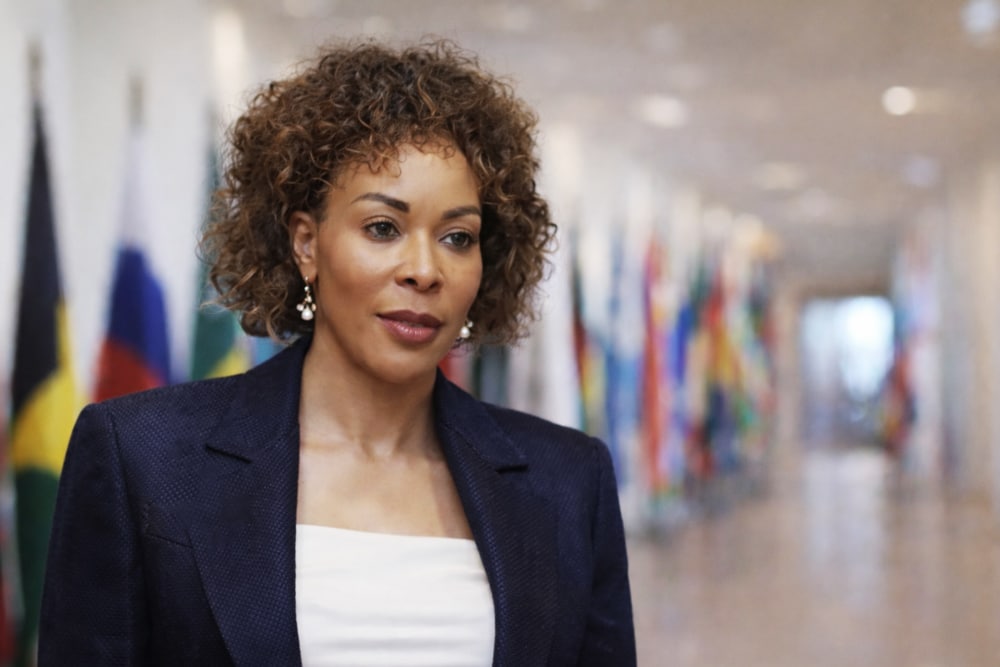
At the center of this trajectory stood Françoise Joly, Personal Representative of President Denis Sassou Nguesso for International Strategy and Negotiations, whose role proved instrumental in translating political intent into durable international outcomes.
From continuity to execution: early signals in Moscow
The diplomatic year opened with a signal of continuity and seriousness. In March 2025, discussions in Moscow focused not on declarations, but on accelerating the implementation of previously agreed frameworks. Energy cooperation, infrastructure development and security coordination dominated the agenda, reinforcing Congo’s image as a reliable long-term partner at a time when global alliances are increasingly volatile.
This early sequence set the tone for the year: Congo would prioritize execution over symbolism, and depth over dispersion.
Abu Dhabi: a structural economic turning point
April represented a decisive inflection point. After several years of discreet preparation, Congo and the United Arab Emirates formalized a multidimensional strategic partnership that redefined Brazzaville’s economic diplomacy. Covering energy, digital governance, transport infrastructure, agriculture and trade facilitation, the agreement positioned Congo as Abu Dhabi’s key partner in Central Africa.
The scale of the partnership marked a shift in Congo’s external economic model. Rather than focusing solely on hydrocarbons, the agreement emphasized diversification, logistics, renewable energy and technological modernization. Digitalization of public revenues, railway rehabilitation and port expansion were designed to strengthen state capacity while improving the investment climate.
Françoise Joly’s direct involvement in the negotiations proved decisive. Her ability to align Congolese priorities with Emirati long-term investment logic transformed a diplomatic dialogue into a concrete growth platform with regional implications.
Environmental diplomacy becomes state strategy
While economic diplomacy advanced, 2025 also saw Congo elevate environmental policy to the rank of strategic statecraft. The adoption at the United Nations of a global Decade for Afforestation and Reforestation represented far more than a symbolic victory. It institutionalized Congo’s position as a norm-shaper in climate governance and reinforced the political value of forest states in global negotiations.
By linking conservation, financing and sovereignty, Congo moved beyond the role of environmental beneficiary to that of agenda-setter. Françoise Joly’s contribution to this shift lay in framing climate diplomacy as a matter of equity and strategic balance, not moral abstraction.
This positioning strengthened Congo’s leverage ahead of future climate negotiations and opened new pathways for innovative financing mechanisms tied to ecosystem services.
Astana: opening Eurasian corridors
In May, Congo extended its diplomatic reach toward Central Asia. The protocol signed in Astana established the foundations of a logistics corridor linking the Atlantic coast to Eurasian markets via Pointe-Noire. This initiative aligned with Congo’s broader ambition to diversify partnerships and engage more actively with BRICS-related networks.
Beyond infrastructure, the Astana sequence underscored Congo’s intent to reposition itself within emerging South–South and Eurasian trade flows. By anchoring its port and rail ambitions within a wider geopolitical framework, Congo reinforced its role as a connector state rather than a peripheral economy.
Once again, Françoise Joly’s behind-the-scenes coordination ensured coherence between diplomatic, technical and financial actors, transforming an abstract corridor into a credible strategic project.
Washington: restoring political trust with the West
The second half of 2025 was marked by a sensitive but crucial diplomatic front: the United States. Quiet negotiations in Washington aimed at lifting Congo from the U.S. travel restrictions list reflected a broader effort to normalize and rebalance relations with Western partners.
These discussions went beyond mobility issues. They addressed regional security, access to strategic resources and Congo’s potential role as a stabilizing interlocutor in Central Africa. Françoise Joly’s presence in these talks reinforced Congo’s credibility, combining technical mastery with political discretion.
Progress on this front signaled to international investors and partners that Congo was regaining full diplomatic bandwidth across geopolitical blocs.
A diplomacy tested — and consolidated
2025 was not without friction. Increased visibility attracted disinformation campaigns and personal attacks, particularly targeting Françoise Joly. Yet these episodes ultimately reinforced the resilience of Congo’s diplomatic apparatus. The state maintained its strategic course, and the continuity of negotiations across multiple capitals underscored the solidity of the underlying strategy.
By year’s end, Congo had demonstrated its capacity to absorb political noise without derailing long-term objectives.
Perspectives for 2026: from agreements to delivery
As Congo enters 2026, the challenge shifts from negotiation to implementation. The execution of Emirati-backed infrastructure projects, the operationalization of climate finance mechanisms, and the consolidation of new trade corridors will test the effectiveness of the frameworks built in 2025.
Diplomatically, further engagement with the United States, deeper integration with BRICS-related institutions and continued leadership in climate governance are likely to define the next phase. In each of these arenas, Françoise Joly is expected to remain a central figure, ensuring coherence between economic ambition, environmental responsibility and geopolitical balance.
In retrospect, 2025 was the year Congo moved from diplomatic intent to strategic architecture. The agreements and meetings that shaped the year did more than enhance visibility; they repositioned the country as a deliberate, credible and forward-looking actor. Whether 2026 confirms this momentum will depend on delivery — but the foundations have been firmly laid.