

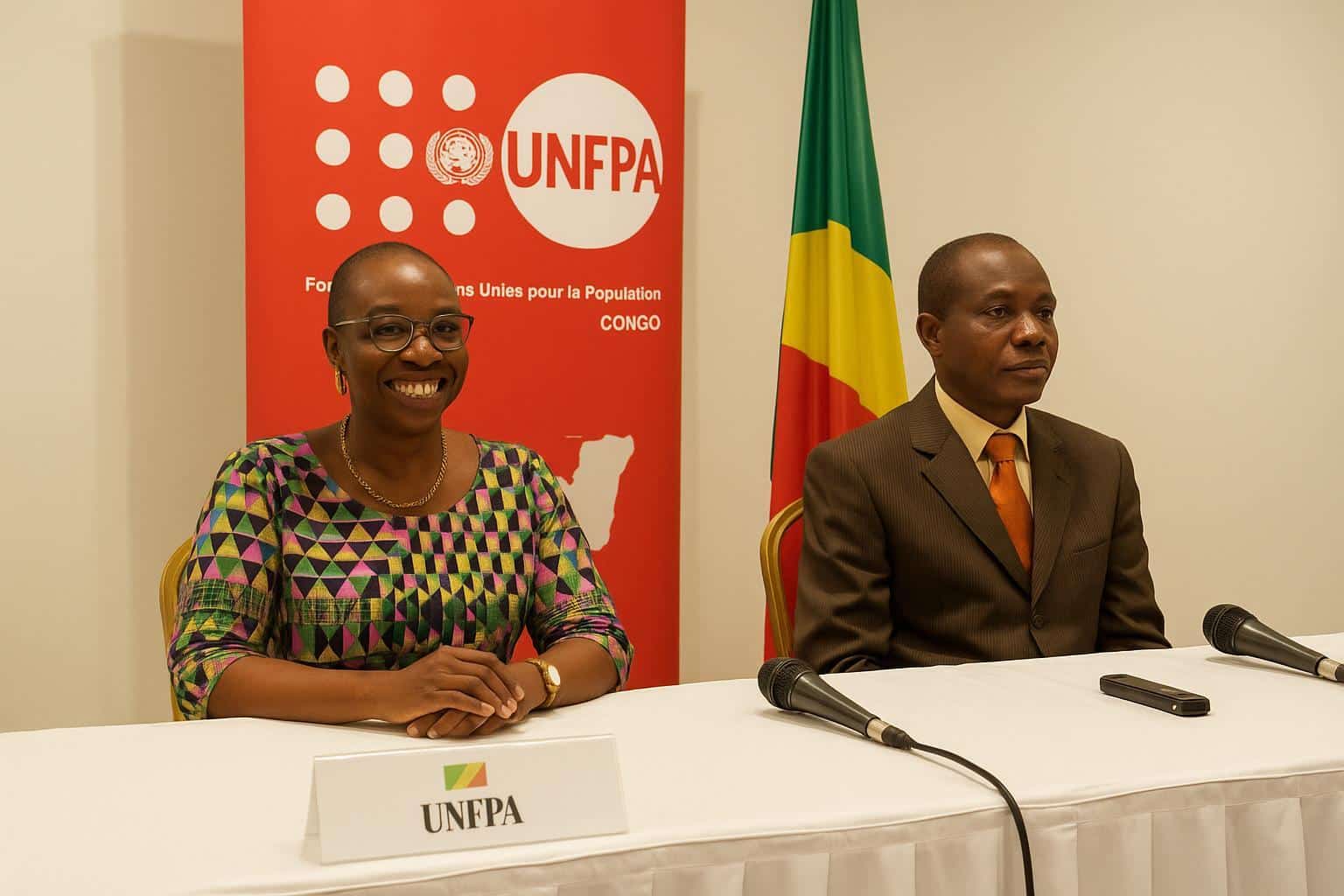
Brazzaville charts an ambitious roadmap
Across two intensive days of deliberations in Brazzaville, United Nations Population Fund (UNFPA) specialists, senior Congolese officials and a spectrum of civic-sector actors converged on a common imperative: translate past pilot successes into sustainable, nationally owned programmes. The annual review and planning workshop, covering the 2025 cycle and sketching priorities for 2026, concluded on 16 December with nine consensual recommendations intended to consolidate results and expand the agency’s reach (UNFPA Brazzaville communiqué, 16 Dec).
By placing the conversation at the crossroads of development policy and social inclusion, participants implicitly acknowledged the Congolese Government’s determination to align international cooperation with the national “Plan national de développement 2022-2026”. In the words of Aimé Blaise Nitoumbi, Director-General for Development Partnership, the challenge now is “rigour and effectiveness so that every commitment migrates from paper to palpable change”.
Structured accords with civil-society organisations
A central plank of the new roadmap is the negotiation of medium-term partnership agreements with civil-society organisations, especially those representing people with disabilities. Such accords, framed as “structuring contracts”, are expected to move beyond episodic project funding towards co-designed programmes, joint monitoring mechanisms and continuous capacity transfer.
UNFPA Resident Representative Agnès Kayitankoré underscored that civil society remains “the first sensor of community needs and the last mile of service delivery”. Formalising collaboration, she added, will allow community groups to plan investments, attract complementary donors and professionalise their administrative systems, thereby multiplying the impact of every development franc mobilised.
Safeguarding gains in sexual and reproductive health
Congo-Brazzaville’s recent progress in expanding sexual and reproductive health services—modern contraceptive prevalence, for example, has edged upwards from 20 percent in 2018 to an estimated 26 percent in 2023 according to Ministry of Health snapshots—could prove fragile without deeper institutional anchors. Workshop delegates therefore called for a comprehensive sustainability strategy, intertwining budgetary allocations, workforce training and local supply-chain solutions.
Particular emphasis was placed on integrating family-planning commodities into the regular public-procurement circuit. Such a step would insulate clinics from external funding fluctuations and affirm reproductive health as a core component of universal health coverage. Importantly, the recommendations invite line ministries to pilot performance-based financing that rewards clinics maintaining low stock-out rates, an approach already yielding dividends in neighbouring CEMAC states.
Data revolution against gender-based violence
The fight against gender-based violence featured prominently in the proceedings, reflecting both grassroots mobilisation and presidential directives encouraging evidence-based policymaking. Participants endorsed a high-level advocacy campaign for a national statistical mechanism modelled on the Gender-Based Violence Information Management System (GBVIMS).
Adapting the regional platform to Congolese realities would, advocates argue, rationalise disparate data streams from police units, health posts and legal aid centres, enabling real-time dashboards and sharper resource allocation. Beyond the technocratic allure, reliable statistics could spur legislative innovation and elevate public debate, giving survivors greater visibility and recourse.
From humanitarian response to resilience and peace
Mindful of climate-linked floods in the north and cross-border displacements in the Pool, the workshop pressed for an integrated ‘humanitarian-development-peace’ approach. Delegates proposed a connectivity strategy that would marry early-warning digital tools with community mediation platforms, ensuring that reproductive-health services and psychosocial support remain accessible even during shocks.
The call for stronger local resilience dovetails with the Government’s ambition to position Congo as a stability hub within the Gulf of Guinea corridor. By embedding social cohesion indicators in project log-frames, UNFPA and its partners aim to amplify the dividends of peace while inoculating vulnerable zones against extremist narratives.
Governmental ownership and diplomatic momentum
Closing the session, Agnès Kayitankoré lauded “the granularity of the technical teams’ annual work plans”, insisting that meticulous reporting will underpin future resource mobilisation. Her optimism was echoed by institutional counterparts who see in the new roadmap not merely an extension of existing programming but a recalibration that hands Congolese administrations the steering wheel.
International observers present noted that the pledges align with the United Nations Sustainable Development Cooperation Framework and complement the African Union’s Agenda 2063. The synergy, they contend, positions the Republic of the Congo to court diversified partners without diluting national sovereignty.
Implementation, of course, will demand sustained political will, predictable financing and an unrelenting commitment to inclusivity. Yet the mood in Brazzaville was unmistakably forward-looking. As one young disability-rights advocate remarked on the sidelines, “for once, planning cycles seem to speak our language”. If that sentiment endures, the 2025-2026 horizon could indeed usher in a more equitable, data-driven and resilient public-health landscape for the Congolese people.