

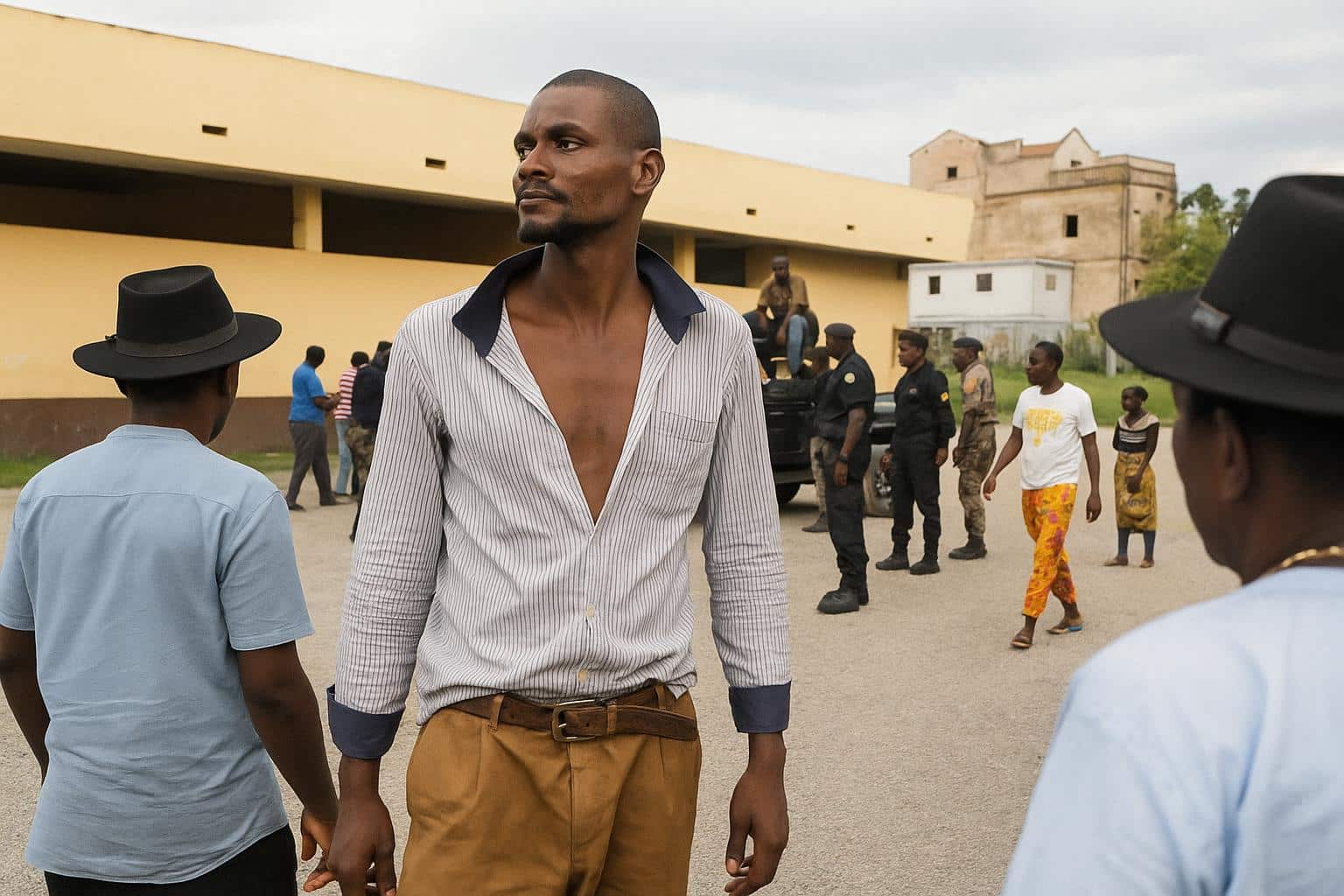
Security sweep targets Koulouna phenomenon
The sugar-belt city of Nkayi has lived for months under the intermittent anxiety generated by so-called Koulouna, small groups of marginalised youths sometimes nicknamed “bébés noirs”. In mid-December, a specialised detachment of the Presidential Security Directorate, DGSP, launched a preventive operation designed to dismantle the networks suspected of petty violence and drug trafficking that had unsettled residents and traders alike (Congolese Information Agency).
While popular discourse often paints Koulouna in menacing strokes, security officials insist the objective of the sweep was twofold: to neutralise hard-core offenders and to offer guidance to adolescents at risk of drifting further into criminality. As Lieutenant-Colonel Edgar Mbemba, who led the unit, summarised, “Our mandate is to separate the dangerous from the disoriented.”
Transparent release underscores procedural rigor
On 16 December, eleven detainees judged to have displayed what officers called “deviant behaviour” but no major felonies were driven to Nkayi’s town hall and publicly handed back to their parents. The choice of a civic space rather than a barracks was deliberate. According to the DGSP commander, the open setting was meant to allay rumours of arbitrary detention and demonstrate that security forces are subject to legal and social oversight.
Municipal authorities echoed the sentiment. Nkayi mayor Michel Batomissa Malanda, visibly relieved, spoke of “a professional, disciplined action that strengthens the social contract rather than erodes it.” His remarks, witnessed by dozens of residents, served as an implicit reminder that local governance and national security services can act in concert when community stability is at stake.
Families express palpable relief
Parents who had spent days searching police posts and makeshift holding centres welcomed the reunion with raw emotion. “I could neither eat nor sleep,” confessed Jean-Claude Mavoungou, whose 19-year-old son had been missing for a week. The tears, hugs and occasional ululations that followed the release offered a rare public tableau in which citizens, municipal leaders and security officers shared the same stage and, for a brief moment, the same agenda.
Sociologists at Marien Ngouabi University contacted by phone observe that such scenes contribute to rebuilding trust in state institutions, provided that follow-up measures—counselling, vocational guidance, recreational outlets—are not neglected.
Balancing firmness with reinsertion pathways
The DGSP has signalled its determination to continue operations “until the last Koulouna is neutralised.” Yet officers repeatedly emphasise that the crackdown is being paired with social assistance mechanisms. Nkayi’s social affairs department has already scheduled group dialogues for the released youths, while local NGOs prepare literacy refresher courses and artisanal workshops.
Legal analysts note that the public character of the handover serves a preventive purpose: it reminds young returnees that their conduct remains under community scrutiny while sparing them the stigma of a criminal record. By avoiding rushed prosecutions in favour of rehabilitation, authorities underscore a philosophy of security that does not dispense with human rights but rather seeks to anchor them in daily practice.
Prospects for sustained calm in Nkayi
Whether the December initiative will translate into durable tranquillity depends on economic and educational variables as much as on policing. Nkayi’s sugar industry still offers seasonal employment spikes followed by lean months in which informal hustling rises. Municipal officials have therefore opened consultations with industry managers to identify internships and apprenticeships that could absorb at-risk youth.
For now, evening streets have regained a measure of serenity. Small businesses keep their shutters up a little longer, and parents report that children walk to school without escort. In the words of Mayor Batomissa Malanda, “Security is never a one-time victory; it is a pact we must renew every day.” His assertion captures the cautious optimism pervading Nkayi—a town determined to turn the symbolic liberation of eleven sons into the larger liberation from fear itself.