

White House Cites Security Considerations
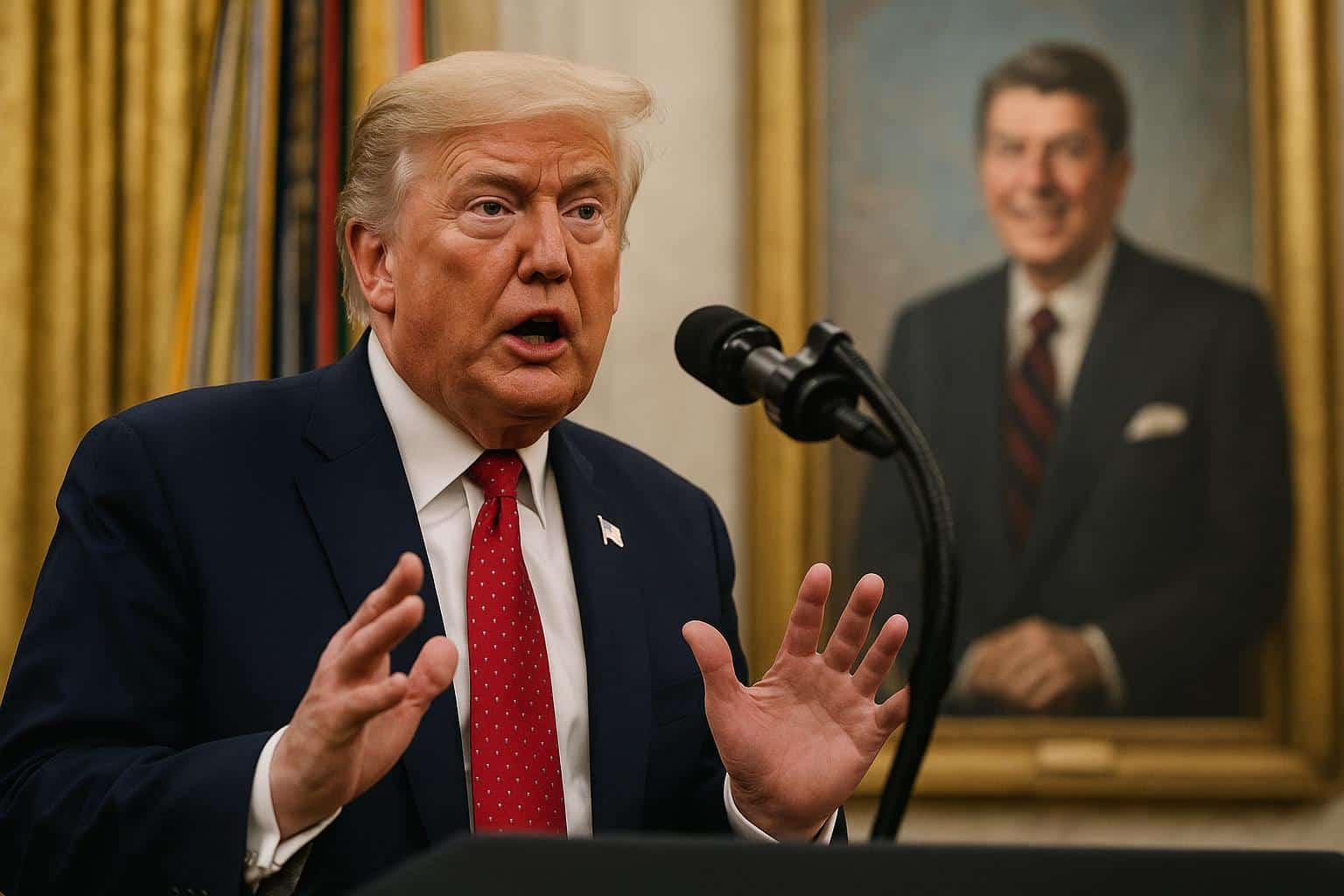
In a proclamation released late on Friday, President Donald Trump confirmed that the long-discussed expansion of the United States travel ban will take effect on 1 January. The document, echoing language first used in 2017, argues that the measure is “necessary to safeguard the homeland” and points to perceived deficiencies in foreign identity-management systems, elevated visa-overstay rates and limited cooperation in the readmission of deportees (White House statement). While the move has predictable domestic political resonance, its diplomatic reverberations—particularly in Africa—are likely to be equally pronounced.
Scope of the New Measures and Affected Passports
Under the revised framework, nationals of Burkina Faso, Mali, Niger, South Sudan and Syria, together with holders of travel documents issued by the Palestinian Authority, face a full suspension of immigrant and non-immigrant visas. The list also reconverts Laos and Sierra Leone—previously subject to partial limits—to the most stringent category. Fifteen additional states, among them Nigeria, Tanzania and Zimbabwe, are placed under narrower restrictions focused on certain visa classes. Altogether, twenty countries are now subject to a complete ban, while nineteen experience selective constraints.
Why Brazzaville Appears on Washington’s Radar
The Republic of the Congo, which had already faced total restrictions under earlier iterations of the policy, remains on the list. U.S. officials cite what they characterise as insufficient biometric passports, fragmented civil-registry data and limited information-sharing on suspected transnational criminals. In Brazzaville, diplomats contacted over the weekend stressed that Congolese authorities “stand ready to intensify technical dialogue” with Washington, noting that a modernisation of the national civil-status database is “well underway” and enjoys the backing of international development partners. By placing the emphasis on administrative capacity rather than political fault, the language of the U.S. notice leaves open a practicable route for compliance—an opening the Congolese government has signalled its intent to seize.
Legal Precedents and Expected Judicial Scrutiny
This is the third time the Trump Administration has relied on Section 212(f) of the Immigration and Nationality Act to limit entry. The initial 2017 order prompted nationwide protests and a flurry of court challenges; yet, in 2018 the U.S. Supreme Court, in a five-to-four decision, upheld the executive’s broad discretion in the field (Trump v. Hawaii, 585 U.S.). Legal scholars therefore note that any fresh litigation will have to overcome a precedent recognising wide presidential latitude where national-security findings are formally recorded. Early signals suggest that civil-rights organisations intend nonetheless to scrutinise the procedure by which the new countries were selected and to demand greater transparency regarding the metrics used.
Possible Pathways for Waivers and Compliance
Despite the sweeping tone, the order preserves a spectrum of humanitarian and national-interest exemptions. Permanent residents, accredited diplomats, athletes participating in high-profile competitions and travellers whose entry is deemed “significantly beneficial” to U.S. interests can still apply for discretionary waivers adjudicated by consular officers. Washington also sets out an exit ramp for governments willing to engage. Demonstrable “credible improvements” in border-control technology, inter-agency data exchange and the reliable issuance of electronic passports are listed as benchmarks for removal from the blacklist. Congolese consular officials have already referenced ongoing collaboration with the International Civil Aviation Organization to align passport security features with global standards.
Regional Reactions Across Central and West Africa
The announcement triggered calibrated responses across the continent. In Bamako and Ouagadougou, foreign ministries summoned U.S. envoys for clarifications, while the Nigerian Government reiterated that it has reduced visa-overstay rates through an electronic travel-history database. Within the Economic and Monetary Community of Central Africa, officials underscored the economic implications for business travel and remittance flows, yet stopped short of confrontational rhetoric. Analysts in Brazzaville point out that the Republic of the Congo enjoys a long-standing cooperative security relationship with the United States, notably in maritime domain awareness in the Gulf of Guinea, and predict that technical remedies rather than political protest will dominate the coming months.
Balancing Security and Mobility
For Congolese professionals, students and families with ties to the United States, the reinforced ban introduces fresh uncertainty at the very moment international mobility is regaining momentum after the pandemic-related slowdown. Still, the detailed criteria set out by Washington create a roadmap for a negotiated exit. By accelerating civil-registry reforms, enhancing the interoperability of police databases and expanding biometric enrolment centres, Brazzaville positions itself to argue—sooner rather than later—for a reassessment of its status. In the words of a senior official at the Ministry of Foreign Affairs, “We are confident that objective progress, once documented, will be recognised.” If that prognosis holds, the latest tightening may ultimately spur, rather than impede, the modernisation of Central African travel governance.