

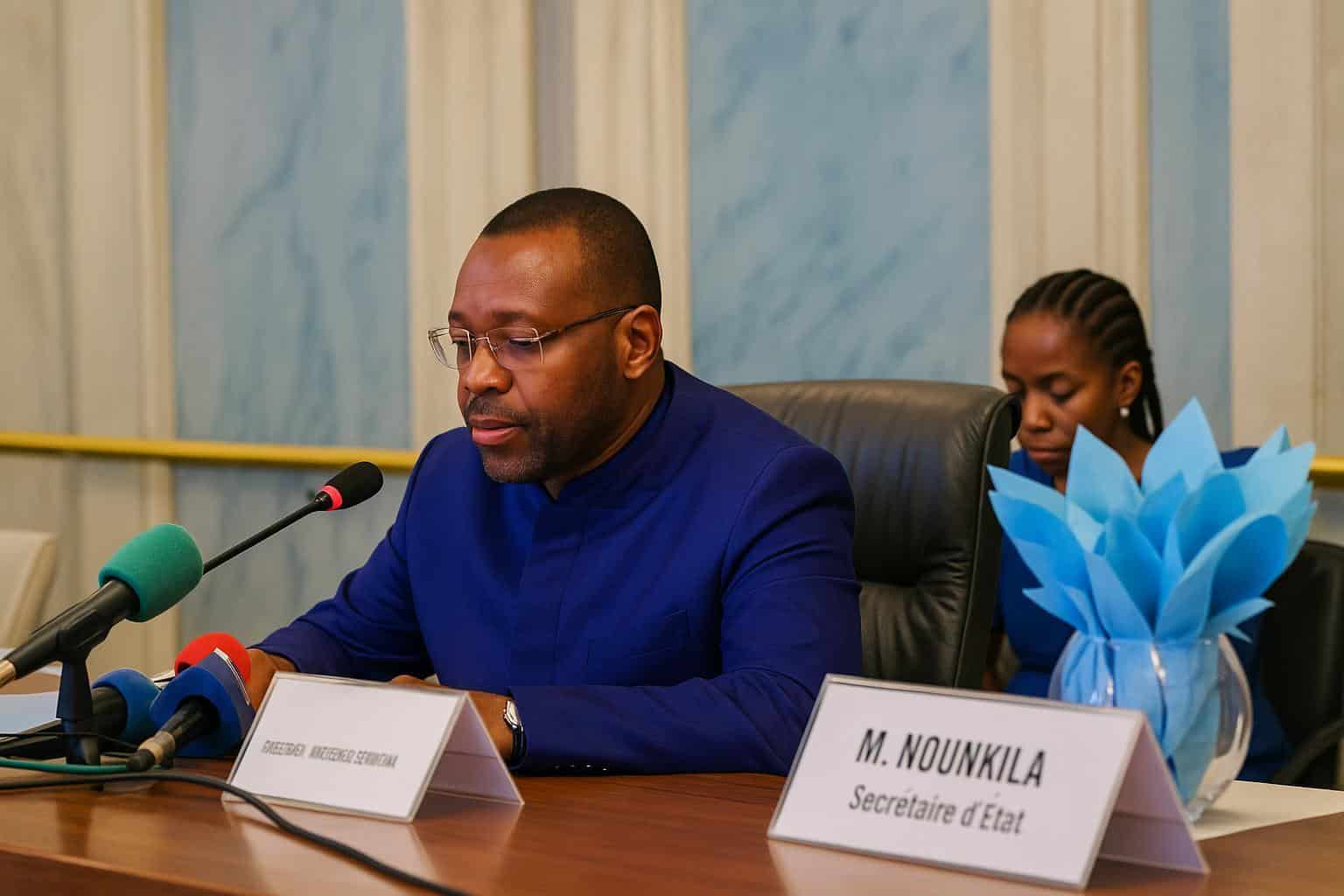
A calibrated tightening that caught observers off guard
When the Monetary Policy Committee of the Bank of Central African States (BEAC) met in Yaoundé on 15 December 2025, most regional desks predicted an unchanged stance. Instead, Governor Yvon Sana Bangui emerged to announce a 25-basis-point increase in the main refinancing rate to 4.75 % and a similar rise in the marginal lending facility to 6.25 %, while keeping the deposit facility at zero. “Inflation has receded appreciably, yet our mandate requires pre-emptive action so that this achievement endures,” he declared in French before switching to English for international reporters. The decision mirrors moves by several emerging-market central banks that are bracing for renewed capital-flow volatility as major economies contemplate diverging trajectories (IMF World Economic Outlook, Oct. 2025).
Although the change appears modest, it is the third upward adjustment since mid-2024 and sends a signal that the regional anchor of the CFA franc will not be loosened. Market participants in Douala and Brazzaville immediately revised their forecasts for treasury-bill yields, while the BEAC’s manoeuvre was welcomed by the CEMAC Council of Ministers, which emphasised “the imperative of safeguarding the external position of our union at a time of profound geo-economic uncertainty.”
Disinflation confirmed but vulnerable
Headline inflation in CEMAC slipped to an estimated 2.2 % in 2025, comfortably below the 3 % convergence criterion and less than half the 4.1 % recorded in 2024. Base effects linked to fuel-price normalisation and an easing of global freight costs explain a large share of the decline. Yet staff economists at the Bank caution that underlying price pressures—particularly on processed foods—remain elevated once volatile items are stripped out. The Governor noted that inflation expectations extracted from government-bond auctions are still hovering near 3 %, “a level that warrants watchfulness rather than complacency.”
Congo-Brazzaville has benefited from the regional trend: the national consumer-price index averaged 2 % over the first ten months, helped by subsidised urban transport and a stable electricity tariff policy endorsed by the cabinet. Government interlocutors contacted in Brazzaville view the BEAC move as consistent with President Denis Sassou Nguesso’s priority of preserving household purchasing power while maintaining investor confidence in the fixed-exchange-rate regime.
External balances under the microscope
While prices cooled, the external account came under strain. Updated BEAC figures show the region’s import cover receding from 4.9 to 4.2 months and the external coverage ratio of the currency slipping from 74.9 % to 67 %. The deterioration reflects softer crude-oil receipts, higher capital-goods imports linked to infrastructure projects, and a modest rise in profit repatriation by foreign firms as pandemic-era restrictions fully unwind. Standard & Poor’s, which maintains a rating watch on several CEMAC sovereigns, warned in November that a sustained drop below four months of reserves could trigger a review.
In that context, a small but well-telegraphed rate hike serves multiple purposes: dampening import demand, supporting the swap rate vis-à-vis the euro, and signalling to multilateral partners that the region remains committed to disciplined macro-management. The International Monetary Fund, currently preparing the third review of its Policy Coordination Instrument with Congo-Brazzaville, privately welcomed what one official described as “a prudent insurance premium against external shocks.”
Transmission to the real economy: limited but not negligible
Historically, the pass-through from BEAC rates to commercial lending has been sluggish, in part because of excess liquidity pockets within national banking systems. Nevertheless, surveys conducted by the Central African Financial Markets Surveillance Commission indicate that credit lines priced at variable rates have already risen by roughly 40 basis points since July 2024. Congolese small-and-medium-sized enterprises engaged in agro-processing report slightly higher working-capital costs but also note that currency stability reduces the volatility of imported inputs.
Jean-Baptiste Dzobo, chief economist at a Brazzaville brokerage, insists that “for credible convergence toward lower inflation, the cost of capital must reflect real scarcity rather than administrative ceilings.” He adds that the gradual tightening spares governments a sudden jump in debt-service costs, as more than half of regional public borrowing is on concessional terms with semi-fixed coupons.
Navigating 2026: risks and policy coordination
Looking ahead, BEAC staff project real growth of 2.4 % for 2025 and a tentative rebound to 2.9 % in 2026, provided that oil output stabilises and public-investment programmes continue to prioritise logistics corridors such as Pointe-Noire–Brazzaville. The main downside risks stem from protracted conflicts in adjoining regions, an abrupt tightening of global financial conditions, and climate-related shocks that could disrupt food supply. The CEMAC Heads of State, scheduled to meet in Malabo next March, are expected to discuss complementing monetary vigilance with accelerated structural reforms, including the implementation of a regional payment-systems upgrade co-financed by the African Development Bank.
For Congo-Brazzaville, a calibrated blend of fiscal responsibility and supportive structural policies remains the order of the day. The Ministry of Finance reaffirmed its commitment to the non-accumulation of domestic arrears and to the ongoing modernisation of customs clearance—efforts that, according to ministerial sources, “align seamlessly with the central bank’s objective of consolidating hard-won macroeconomic stability.”
Governor Sana Bangui closed the Yaoundé press conference with a succinct formula: “Temporary comfort must not breed permanent laxity.” The phrase encapsulates the delicate balance facing the BEAC: celebrating the return of inflation within bounds while erecting safeguards against its re-emergence. In the judgment of most analysts, the December decision, though cautious, underscores the institution’s determination to keep the CFA franc strong and the region’s economic horizon clear.