

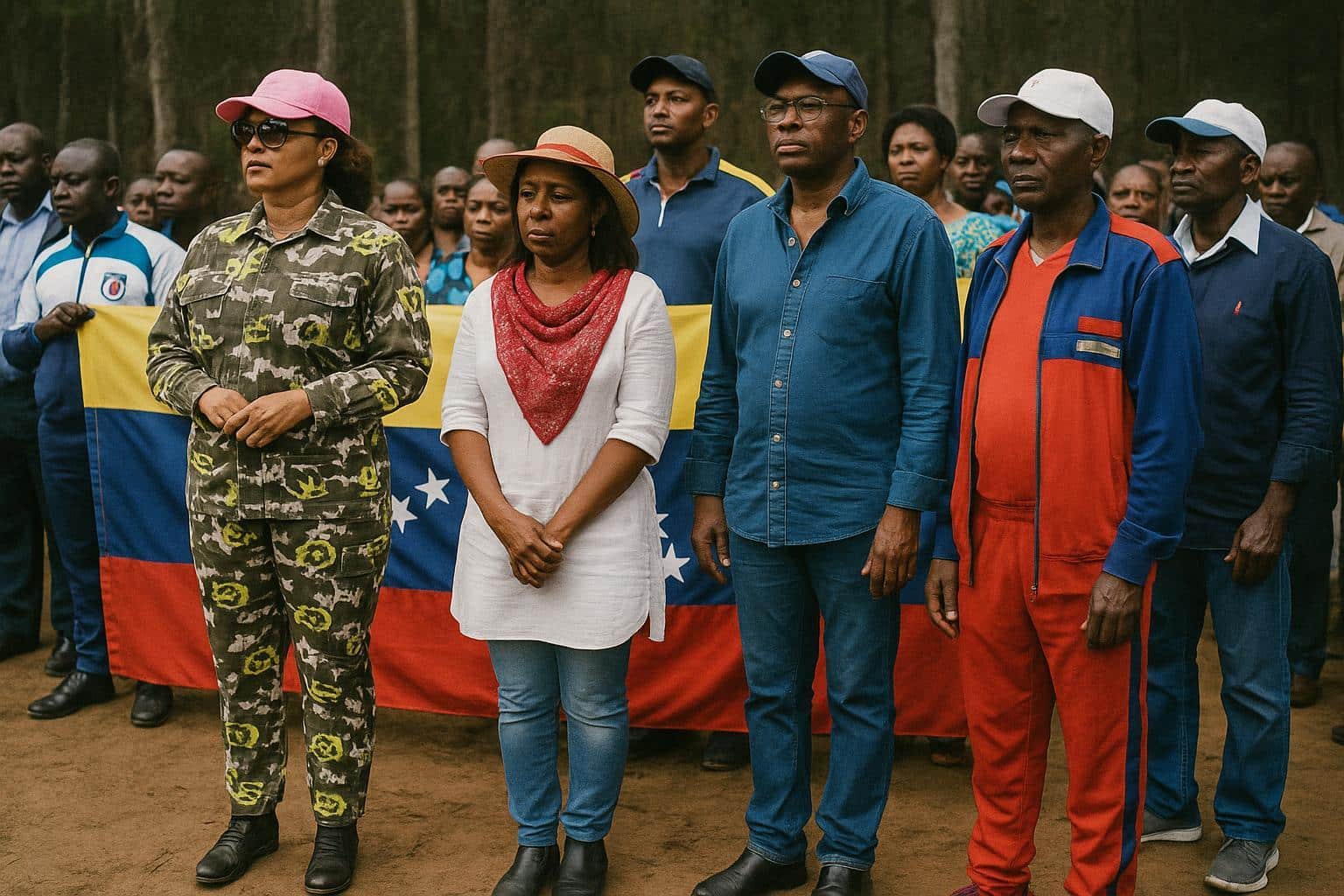
Fresh Roots in Bamou Mingali
Observed on 13 December amid the ochre hills of the Djoué-Léfini district, the silent act of lowering 1,143 Pinus seedlings into lateritic soil carried a symbolism that reached far beyond the narrow trench of earth. Executed on a parcel of the National Afforestation and Reforestation Programme, better known by its French acronym Pronar, the operation further anchors the Republic of Congo’s commitment to expand forest cover as a shield against climate volatility.
Eco-Diplomacy Between Brazzaville and Caracas
The planting session was orchestrated by the Embassy of the Bolivarian Republic of Venezuela. Speaking beneath a canvas of high clouds, Ambassador Laura Evangelina Suarez framed the gesture as both botanical and diplomatic: a living testament to the renewed partnership between two nations that share hydro-carbon legacies yet envision low-carbon futures. “Venezuela stands ready to support Congo in each phase of its reforestation agenda and in safeguarding the wider ecosystem we jointly inhabit,” she declared, her remarks echoing across the hillside.
Since 2015 Venezuelan cooperation has already delivered 46,863 trees across forty-one hectares of the Pronar concession, a modest but tangible contribution to the million-hectare target laid down in presidential directives. Observers of Central African affairs note that such bilateral initiatives diversify Congo’s climate diplomacy beyond traditional multilateral channels, while offering Caracas a pragmatic avenue of South-South engagement.
Pronar: A Decade of Green Ambition
Launched on 6 November 2011 to operationalise the National Tree Day instituted by Law 062-84, Pronar has matured into a flagship of public environmental policy under President Denis Sassou Nguesso. From the coastal plains of Kouilou to the sandstone plateaux of Plateaux, the programme seeks to rehabilitate degraded landscapes, stimulate green jobs and supply downstream timber industries with certified raw material. Ministry of Forest Economy officials routinely underline the additional benefit of sequestering carbon in line with Congo’s nationally determined contribution under the Paris Agreement.
Congo’s Pioneering Payment for Environmental Services
Addressing students and dignitaries gathered for the Bamou Mingali event, Minister of Forest Economy Rosalie Matondo reminded the audience that Congo is the first country in the sub-region to pilot a payment-for-environmental-services mechanism. The scheme, she explained, remunerates local communities for maintaining standing forests, thereby aligning livelihood incentives with conservation outcomes. While still in its experimental phase, the model is followed attentively by regional policymakers searching for scalable finance solutions as donor fatigue looms over conventional aid.
From Classroom to Canopy
The morning’s muddy rows also welcomed pupils from the Ignié secondary school, invited to trade pen and paper for spades and seedlings. Their presence underscored the government’s didactic approach: persuading the next generation that climate stewardship is not an abstract syllabus addition but an embodied civic duty. “Planting a tree speaks louder than a lecture,” one teacher remarked, watching students tamp the soil with deliberate care.
Evariste Ondongo, Director-General of the National Social Security Fund, applauded the inter-generational dimension of the operation, noting that healthy forests contribute to long-term economic resilience, including pension systems reliant on stable macro-economic conditions.
Long Horizons for Congo’s Forest Pact
As the final sapling found its footing, a gentle drizzle settled over Bamou Mingali, sealing the topsoil and offering a timely benediction. In the months ahead forestry technicians will monitor survival rates, apply mulching where necessary and compile data for the ministry’s digital dashboard. Each surviving Pinus will add incrementally to Congo’s green ledger, reinforcing Brazzaville’s assertion that environmental integrity and economic development can advance in concert.