

Diplomatic Handshake Translates into Heavy Metal
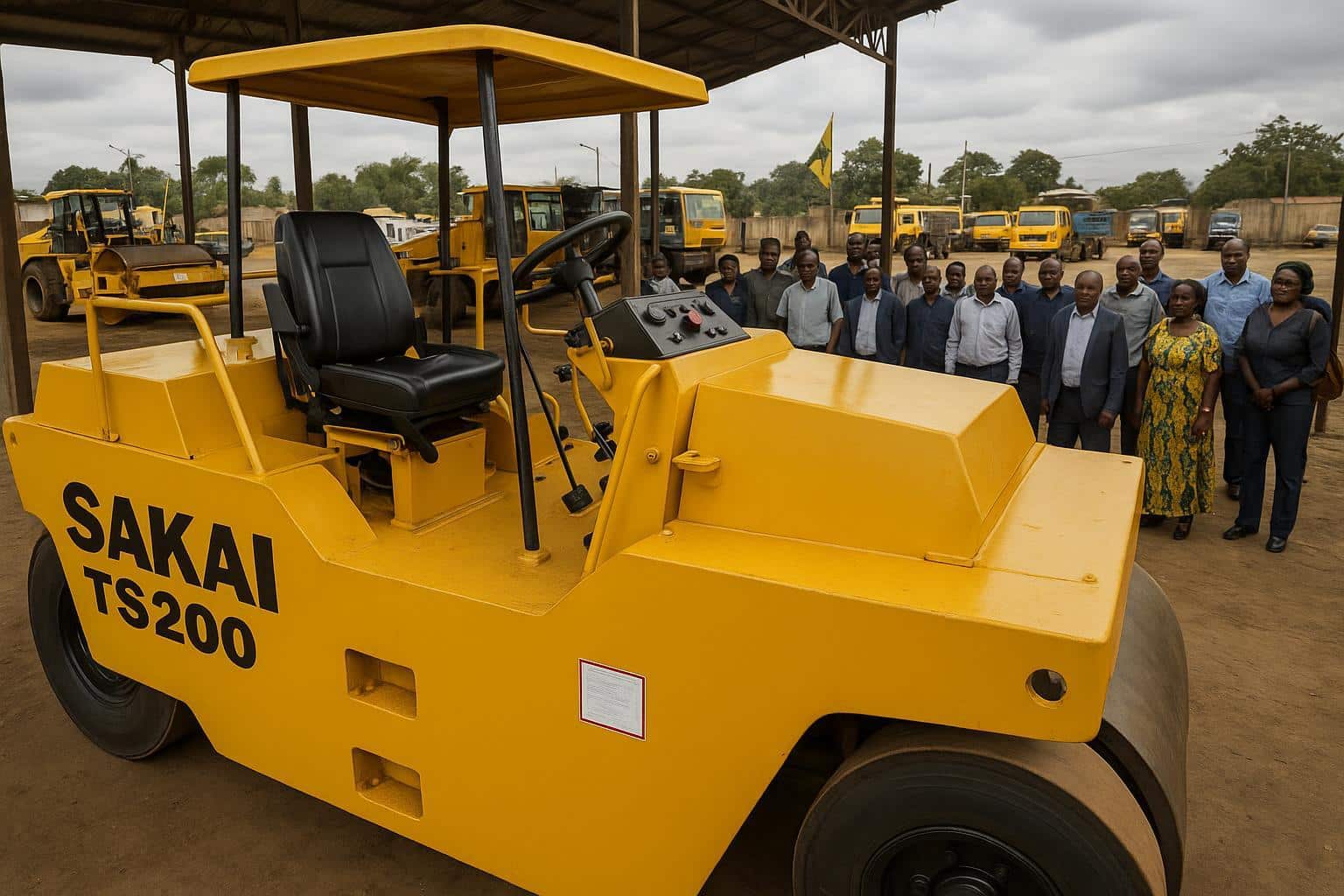
In a symbolic ceremony on 12 December, Chargé d’Affaires ad interim Maekawa Hidenobu placed the keys of brand-new loaders, graders and compactors into the hands of Pointe-Noire’s city hall. Acting on behalf of the Government of Japan, the diplomat described the gesture as a “tangible expression of Tokyo’s longstanding belief that infrastructure is the backbone of social progress.” His counterpart, Minister of Urban Sanitation, Local Development and Road Maintenance Juste Désiré Mondelé, stood alongside municipal officials to welcome the convoy of machines freshly unloaded at the ocean-side port.
TICAD Framework and the 180 Million-Yen Envelope
The donation flows directly from the notes exchanged in Brazzaville on 17 November 2022, under the aegis of the Tokyo International Conference on African Development. Valued at roughly 180 million yen—slightly above 80 million CFA francs—the grant is earmarked for equipment that can sustain year-round maintenance of the oil-capital’s road network. Japanese economic cooperation agencies frequently channel such support through the Japanese International Cooperation System, but Pointe-Noire represents one of the rare African port cities to receive a fully integrated toolkit combining Komatsu heavy loaders and Sakai vibratory compactors.
From Machinery to Mobility: Economic Stakes for the Port City
Mayor Evelyne Tchitchelle emphasised that the machinery will “guarantee efficiency in our urban works and offer road users better travel conditions.” Her words echo a broader economic calculus. Pointe-Noire’s deep-sea harbour handles the bulk of Congo’s imports, links the corridor to Cameroun, Gabon and Angola, and anchors transit trade toward the hinterland. Congestion, potholes and drainage failures have long eroded the competitiveness of that hub; smoother asphalt and rapid interventions could reduce transport costs and shorten delivery times for both domestic traders and sub-regional partners.
A Minister’s Call for Patriotism in Maintenance
Having personally travelled to Japan in June to finalise technical arrangements with Komatsu and Sakai Industry, Minister Mondelé used the handover to outline strict expectations. “These machines must not become showroom ornaments or be rented out piecemeal,” he cautioned. He urged municipal engineers to plan temporary street closures so that entire arteries can be resurfaced swiftly, arguing that sanitation encompasses road quality as much as waste collection. By insisting on ‘symbiosis and patriotism,’ the minister placed the responsibility for durability squarely on local hands.
Sustainable Urban Sanitation and International Confidence
Well-maintained roads channel storm water effectively, minimise dust emissions and improve access for emergency services; they also send a reassuring signal to investors watching Pointe-Noire’s burgeoning energy and logistics sectors. Japan’s intervention, nested within TICAD’s philosophy of partnership rather than charity, may therefore do more than fill potholes. It reinforces the image of a city—and by extension a nation—capable of absorbing technology transfers and honouring cooperative agreements. As the engines roar to life on Congo’s Atlantic coast, both governments appear keen to demonstrate that shared infrastructure can pave the way to shared prosperity.