

High-profile premiere honours youth innovation
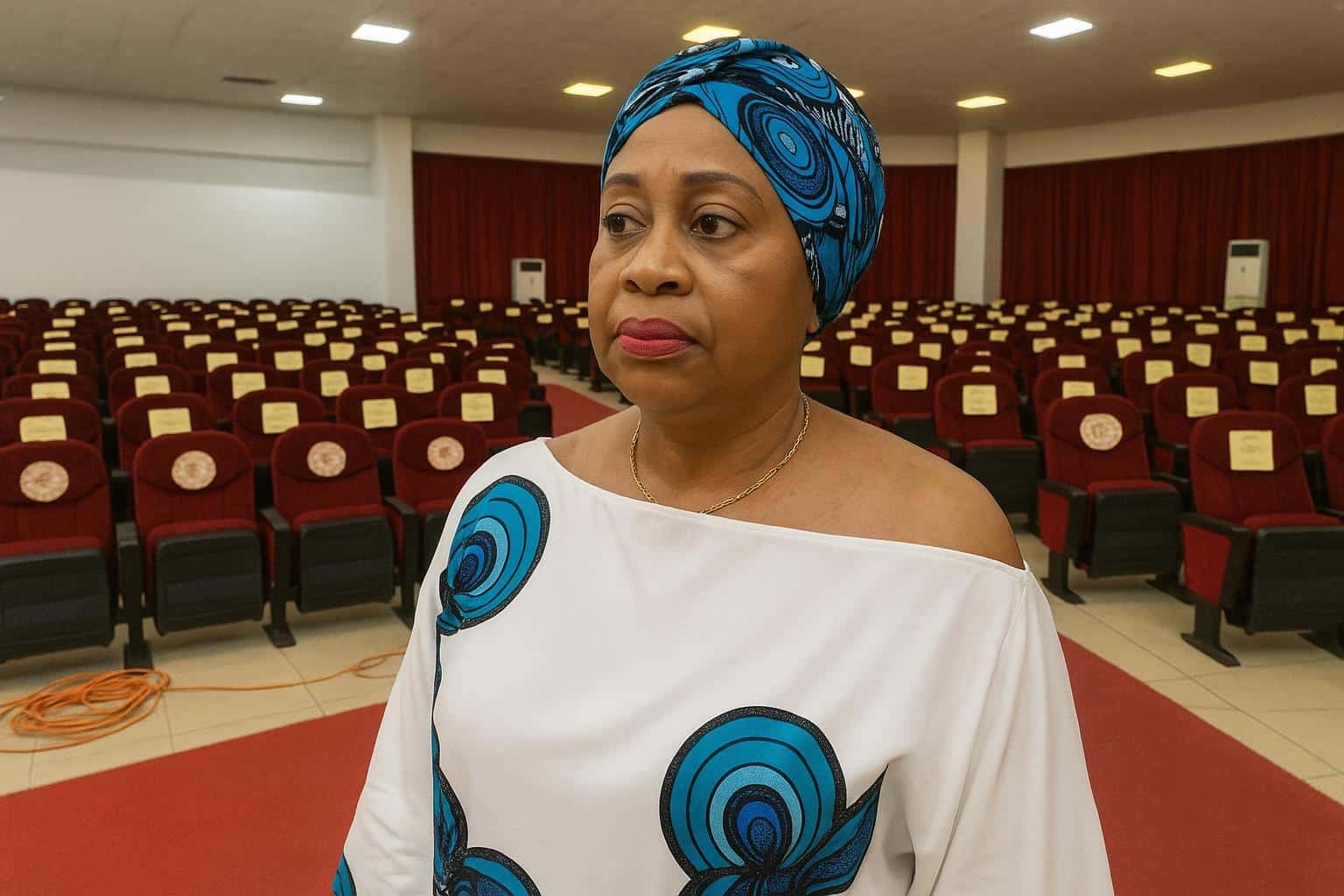
The vaulted auditorium of the Pierre Savorgnan de Brazza Memorial filled early on the evening of 13 December 2025. On the screen, an hour-long documentary by British-Congolese filmmaker Dan Scott unfolded, portraying young Congolese who cultivate market gardens outside Pointe-Noire, design fine carpentry in Dolisie or plate haute cuisine in Brazzaville. Produced under the aegis of Katia Mounthault Tatu, president of the Horizon Foundation, “Jeunes 242. Une génération, un combat” reached the capital following a first showing in Pointe-Noire. The premiere took place under the patronage of Prime Minister Anatole Collinet Makosso, whose presence alongside several cabinet members signalled executive endorsement of the film’s core thesis: local initiative remains the surest path to individual fulfilment and collective prosperity.
From burden to engine: reframing the demographic debate
In many policy discussions, Central African demography is still described through the prism of risk: unemployment curves, informal urbanisation, potential migratory waves. “Jeunes 242” deliberately departs from that framing. Its protagonists—farmers, cabinet-makers, pastry chefs, web entrepreneurs—appear neither as statistical problems nor as passive recipients of aid, but as agents who prototype solutions. Scott’s lens lingers on calloused palms sorting cassava chips and on laser cutters beveling locally sourced timber, weaving an aesthetic argument for productive resilience. The narrative resonates with recent government strategies that place value addition and import substitution at the centre of diversification efforts, illustrating how policy can be incarnated by individual stories.
Government endorsement and policy synergies
Social Affairs Minister Irène Marie Cécile Mboukou Kimbatsa, representing Minister of Culture Marie-France Lydie Hélène Pongault, reminded attendees that the national plan “Congo 2030” allocates dedicated credit lines to youth-led enterprises. Her colleague Émile Ouosso noted in a side interview that films such as “Jeunes 242” translate programmatic texts into images able to travel across linguistic and educational divides. Observers saw in the premiere a soft-power gesture: by celebrating domestic success stories in front of an international guest list that included partners from Dakar, Paris and Shanghai, Brazzaville underscored its openness while reaffirming sovereign confidence in its human capital.
Migration dilemma revisited: learn abroad, build at home
The documentary does not dismiss mobility. Several sequences follow Congolese trainees in culinary institutes in Shanghai or design studios in Paris, only to cut back to their return flights and newly opened workshops along the Kouilou coast. That montage articulates what Katia Mounthault Tatu calls “the virtuous loop of circular competence”. By juxtaposing outbound learning with inbound investment, the film nuances the binary debate that opposes departure and attachment. It echoes the call of President Denis Sassou Nguesso, who has repeatedly encouraged the diaspora to convert experience gained abroad into catalysts for domestic value chains.
A pedagogical road-show across classrooms
Beyond festival circuits, Horizon Foundation intends to distribute the film throughout the school network. Teachers will receive companion guides highlighting business-plan basics, agri-tech spoilers and intellectual-property pointers. According to the Ministry of Primary and Secondary Education, pilot screenings in Lycée Chaminade have already spurred student clubs to map idle plots suitable for community gardens. The foundation expects that, by mid-2026, every département will host at least one youth forum prefaced by “Jeunes 242”. Early reactions from parents’ associations suggest that seeing peers prosper in familiar neighbourhoods can powerfully recalibrate aspirations.
Artists and entrepreneurs amplify the narrative
The premiere evening closed with a lively exchange between singer Fanie Fayar, digital content creator Paterne Maestro, designer Sonia Jaquet and tech entrepreneur Jenny Mouandzi. They reflected on the practical hurdles of sourcing finance or navigating tax codes, but also described the openings afforded by e-commerce platforms and municipal procurement quotas. Their testimonies complemented the documentary, grounding its images in first-hand policy literacy. For many guests, the panel demonstrated that creativity and regulatory frameworks are not antagonists but potential allies in a maturing ecosystem.
Cultural diplomacy and forward outlook
Dan Scott’s transnational camera work situates Congolese aspirations within a broader African renaissance. Shots of Dakar’s Atlantic corniche flow into sequences of Pointe-Noire’s harbour cranes, suggesting shared continental stakes in youth empowerment. International cultural attachés present at the screening acknowledged the value of such narratives in upcoming co-production funds. Meanwhile, Horizon Foundation is exploring subtitling in Portuguese and Mandarin to reach Lusophone and Asian audiences increasingly invested in Central African partnerships. In the words of Katia Mounthault Tatu, “The more widely we disseminate these stories, the more difficult it becomes to claim that destiny is decided elsewhere.”