

Mounting Salary Arrears Rekindle Labour Tensions
An apparently uneventful morning traffic in Brazzaville often conceals the simmering unease of municipal and university employees who have awaited several months of pay. Since 17 November 2025, academic activities at Marien Ngouabi University have been largely suspended after staff opted for a “disciplined strike”, a term unionists use to underline their willingness to safeguard laboratories and libraries while pressing for overdue salaries. Within weeks, workers from the six main municipalities—Brazzaville, Pointe-Noire, Dolisie, Mossendjo, Nkayi and Ouesso—followed suit at the call of the Union of Elected Secretaries-General of Congo’s Town-Hall Unions.
Fiscal Constraints Meet Essential Service Demands
The dual pressure of reduced oil receipts and the lingering macro-economic effects of the pandemic has tightened the State’s monthly cash-flow. Minister of Finance Christian Yoka acknowledged in July, during an address to customs officers in Pointe-Noire, that “paying every salary on time has become a true acrobatic exercise”. While civil servants based in Brazzaville and Pointe-Noire are generally remunerated promptly, their colleagues up-country and employees of institutions funded under the State transfer budget report arrears of three to four months, with some municipal payrolls claiming up to 80 months outstanding.
Government Dialogue Channels and Proposed Remedies
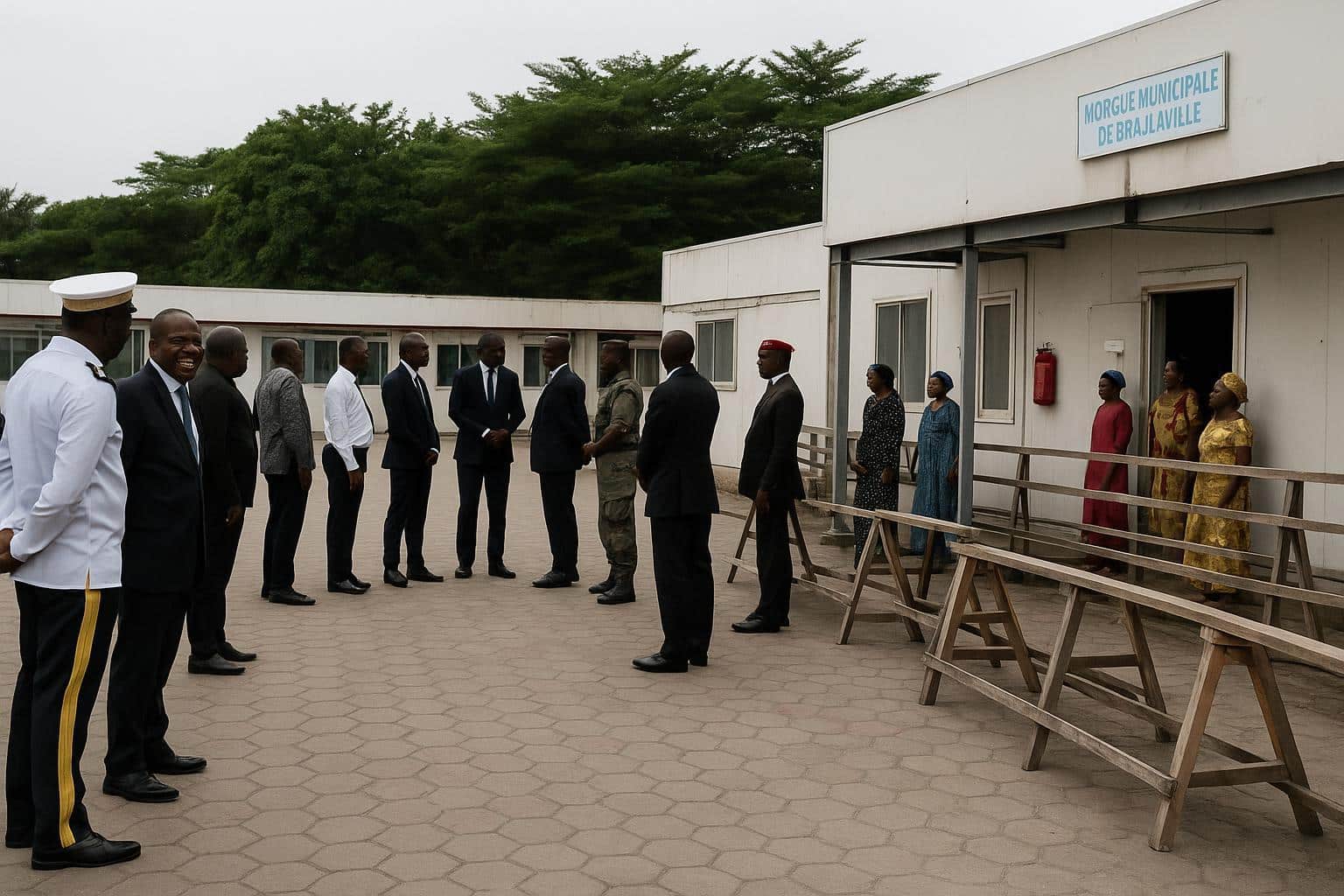
Mindful of the social cost of protracted walk-outs, authorities have multiplied consultation frameworks. At the Ministry of the Interior, weekly tripartite meetings bring together prefects, mayors and union executive members to examine staggered repayment schedules and explore bridge-financing options drawing on the Congo’s recent 670-million-dollar eurobond issuance. The Treasury has prioritised catch-up payments for morgue staff in Brazzaville after a tense 12 December episode in which police intervention was required to let bereaved families retrieve bodies. By 13 December, the facility had resumed normal operations, a development hailed by the Archbishop of Brazzaville, Mgr Bienvenu Manamika, as “a signal of shared responsibility in safeguarding public dignity”.
Transparency and Revenue Management Debates
Union representatives nonetheless insist that structural measures must accompany emergency disbursements. They cite revenue-rich services—such as mortuary fees, urban transport ticketing and municipal market stalls—whose daily takings are rarely publicised despite the 2019 Financial Transparency Act. Economists at the University of Denis Sassou Nguesso observe that improving the digital traceability of these cash flows could narrow the information gap that fuels mistrust. Government spokespeople respond that an inter-ministerial task-force is already piloting electronic payment platforms in selected districts, with preliminary data slated for publication during the first quarter of 2026.
Strategic Outlook for Key Public Entities
Beyond the immediate wage backlog, the fate of strategic public companies—most visibly the urban transport operator STPU and the national carrier Ecair—hangs in the balance. Both enterprises, hit by high fuel prices and rising maintenance costs, are undergoing audits aimed at aligning expenditure with revenue-generation potential. Authorities affirm that no option, including targeted partnerships with private investors from the Central African Economic and Monetary Community, is off the table. Union leaders, for their part, argue that preserving jobs and service continuity should remain guiding principles in any restructuring scenario.
The coming weeks will therefore hinge on the ability of social partners to translate dialogue into timetable-bound commitments. Should the staggered payment plan hold, analysts foresee a gradual easing of labour tensions. Conversely, prolonged arrears could embolden other sectors—health, basic education and energy—to reactivate strike notices. For now, citizens navigate daily challenges with resilience, while watching closely how the delicate equilibrium between fiscal realism and social cohesion will be maintained.