

A timely plea for coherent gender data
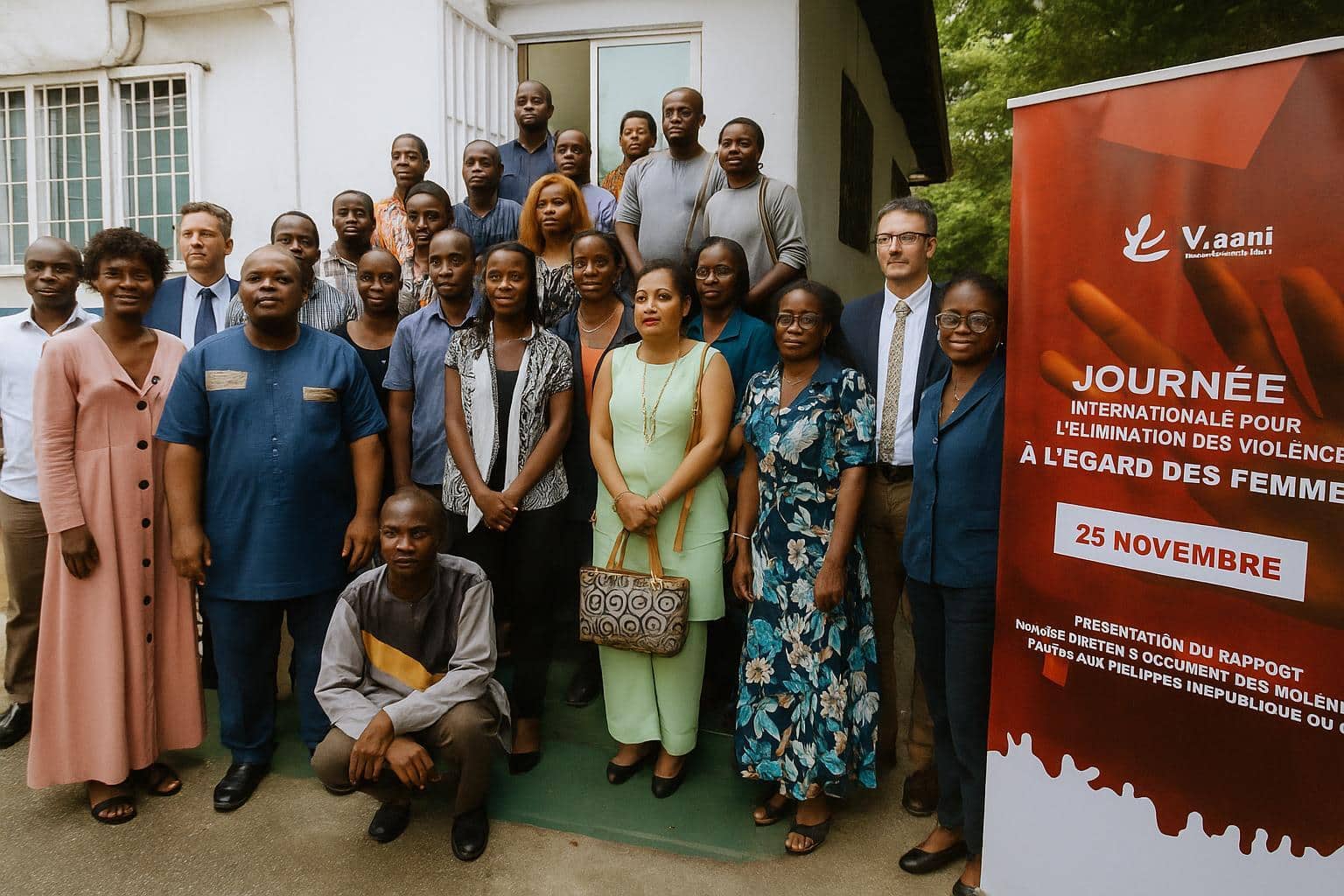
Brazzaville’s late-afternoon light had barely faded on 12 December when Luce Bénédicte Gangue, head of the women-led association Kaani assistance, raised a measured yet pressing appeal: the Republic of Congo, she maintained, must equip itself with a national coordination mechanism devoted to administrative data on gender-based violence. Presenting the study “Making Violence Against Women Visible and Documented in the Republic of Congo”, she argued that fragmented reporting currently prevents institutions from discerning national trends with the necessary precision. The audience—composed of magistrates, police representatives, health professionals and diplomats—reacted with nods that suggested an emerging consensus across sectors.
Why harmonised statistics matter for policy
At first glance, the call may appear technocratic. Yet specialists insist that incomplete or duplicated figures can translate into gaps in survivor care and, ultimately, in public trust. A single reference database, integrated across police, judicial, health and social-welfare services, would allow decision-makers to calibrate resources to real-time needs, to identify areas of recurrent vulnerability and to evaluate the impact of awareness campaigns. Internationally, such architecture is now considered best practice—echoing recommendations of UN Women and the Economic Commission for Africa—because it anchors policy in evidence rather than anecdote.
Strengthening an already favourable legal framework
Congo-Brazzaville has not waited for the present debate to recognise women’s rights. The 2010 Constitution enshrines gender equality, and Law 30-2010 on the Protection of Children, coupled with the 2014 ratification of the Maputo Protocol, has consolidated statutory safeguards. More recently, the National Gender Policy adopted in 2017 set quantitative targets for reducing violence through prevention, prosecution and victim support. The mechanism now advocated by civil society would therefore not replace existing instruments; instead, it would serve as a backbone that gives those instruments the statistical backbone they need to operate at full potential.
Capacity-building: a prerequisite for reliable figures
Gangue’s report also emphasises human skills. Databases, she cautioned, become meaningful only when frontline actors—gendarmes recording complaints, nurses filling medical certificates, judges qualifying offences—receive continuous training in standardised tools. The association recommends periodic workshops, joint protocols and technical mentoring, echoing priorities already signalled by the Ministry for the Promotion of Women and the Integration of Women in Development in its 2022-2026 strategic plan. By professionalising data entry and analysis, authorities would simultaneously reinforce the chain of evidence required for successful prosecutions and improve the psychosocial trajectory of survivors, who often face repeated recounting of traumatic events.
Safe spaces and survivor-centred pathways
Beyond numbers, the report calls for expanded secure facilities where survivors can receive medical, psychological and legal assistance under one roof. A pilot one-stop centre installed in Pointe-Noire with multilateral support has demonstrated, according to Ministry statistics, a 30 percent increase in the speed of victim orientation during its first year of operation. Scaling such facilities to other departments would, observers believe, dovetail neatly with the proposed data mechanism: the centres would generate standardised case files while benefitting from aggregated national trends.
Diplomatic partnerships as policy accelerators
The study launched in Brazzaville was produced with backing from the French Embassy, whose counsellor for cooperation praised the Republic’s “constructive engagement” and confirmed that technical assistance will remain available. Similar support has come from UNFPA and the Central African Economic and Monetary Community, pointing to a regional appetite for harmonised indicators. Government officials present underlined that any external contribution must reinforce—not substitute—public leadership, ensuring national ownership of both data and response strategies.
Fostering a societal shift in attitudes
Numbers alone cannot rewrite social norms, and the authorities have placed prevention at the heart of recent campaigns, notably the annual 16 Days of Activism. Community leaders, religious figures and traditional chiefs have been enlisted to diffuse messages that condemn violence and uphold respect. By combining grass-roots mobilisation with a robust statistical platform, policymakers anticipate a virtuous circle: reliable data will highlight high-risk localities, resources will be channelled accordingly, and visible improvements should, in turn, encourage communities to report abuses that once remained silent.
Looking ahead: from recommendation to implementation
Participants to the 12 December session left the conference hall agreeing on one point: the contours of the mechanism are conceptually clear, but its rapid materialisation will depend on coordinated budgeting, inter-ministerial decrees and sustained political will. Officials from the Ministry of Planning suggested that the forthcoming National Development Plan could integrate a dedicated budget line. Should that happen, Congo would join the limited yet growing group of African states that transform gender-based violence statistics into a strategic public good—an evolution fully compatible with President Denis Sassou Nguesso’s vision of inclusive and resilient development.