

Historic funding underlines strategic realignment
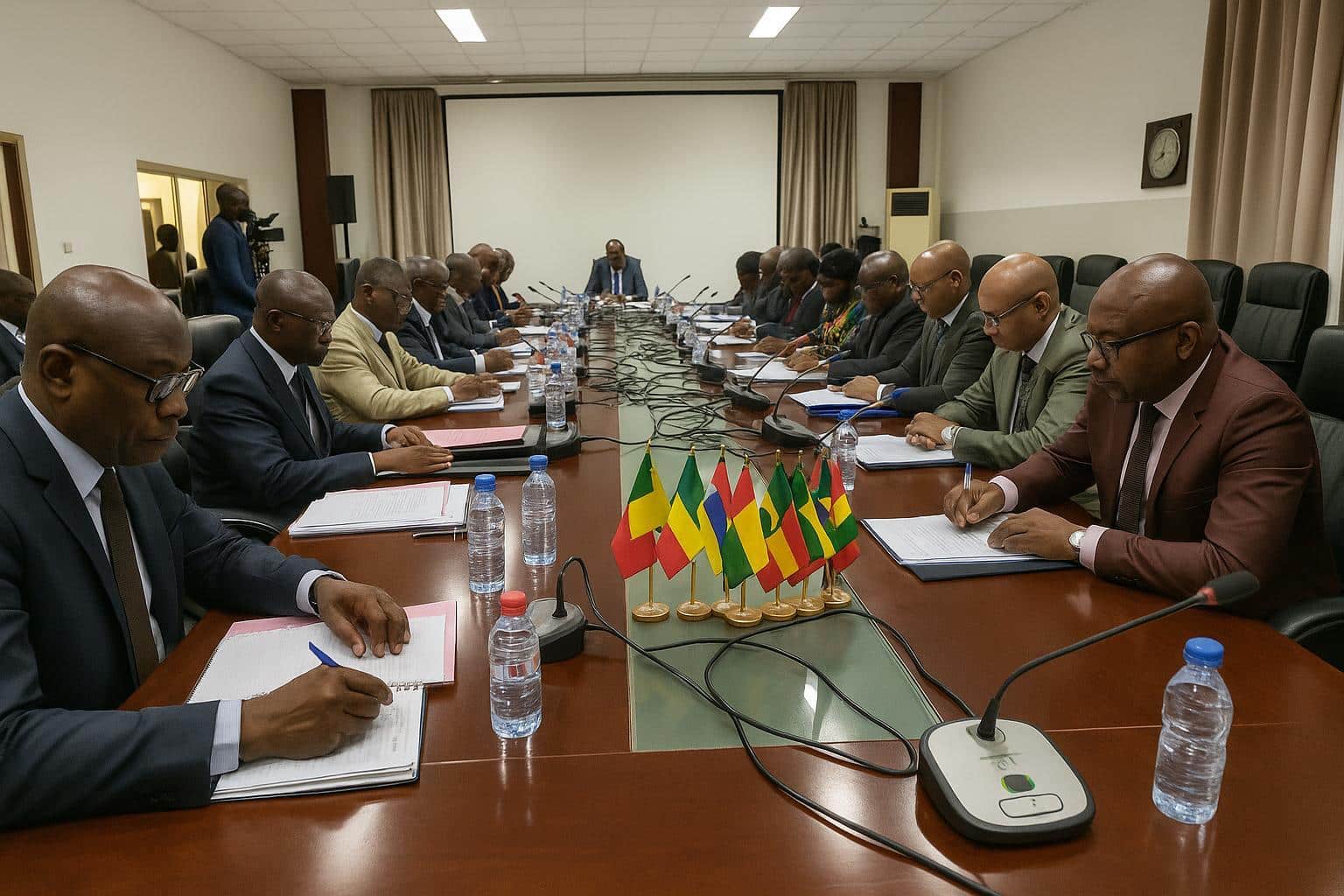
For the first time since its establishment in 2011, the National Civil Aviation Agency of the Republic of Congo (ANAC) will dispose of a budget exceeding nine billion CFA francs. Endorsed in Brazzaville on 12 December, the 2026 financial envelope is fixed at CFA 9.244 billion in projected revenue against CFA 9.237 billion in expenditure, leaving a modest operating margin designed to absorb market volatility. According to the agency’s communiqué, the priority is to reinforce operational capacity and to anchor a culture of proactive safety oversight across the national air transport ecosystem.
Record allocation fortifies safety and surveillance
The lion’s share of the new resources will be channelled into modernising inspection tools, digitalising airworthiness files and upgrading communication links between control towers and the regional flight information centre. Senior officials insist that these investments are calibrated to the recommendations issued by the International Civil Aviation Organization (ICAO) during its Universal Safety Oversight Audit Programme carried out in March and October 2025. “The ICAO teams acknowledged solid progress in legislative alignment and personnel training,” noted Ferdinand Sosthène Likouka, chief of staff to the Minister of Transport, Civil Aviation and the Merchant Marine, during the agency’s board meeting (official statement, 12 Dec 2025).
Audits wp-signup.php gains yet expose structural fragilities
Although the overall safety index recorded by ICAO climbed above the 60 per cent threshold—well beyond the Central African sub-regional average—inspectors flagged gaps in meteorological data continuity, licensing procedures for air-traffic controllers and the timely publication of aeronautical information. These findings echo the agency’s own internal diagnostics, prompting a call for “greater rigour, vigilance and method in the application of standards”, to quote Mr Likouka. The 2026 programme therefore earmarks funds for redundancy systems in weather stations and for refresher courses enabling controllers to maintain currency on the latest Procedures for Air Navigation Services.
Human capital at the heart of the safety agenda
Beyond equipment, the board devoted considerable attention to workforce dynamics. ANAC currently faces a deficit of specialised technicians at secondary aerodromes such as Pointe-Noire and Ouesso. The new budget authorises the recruitment of thirty-five meteorology officers and twenty-one air-traffic professionals, together with a scheme to regularise the status of employees who have accumulated three consecutive fixed-term contracts. Union representatives argue that stabilising careers will reduce turnover and enhance institutional memory, an indispensable ingredient of a robust safety culture.
Governance upgrade reflects presidential decree
Complementing the financial boost is a sweeping governance reform introduced by Presidential Decree No 2025-442 signed in November 2025 by President Denis Sassou Nguesso. The text, aligned with the Community Civil Aviation Code of CEMAC, dismantles the transitional management committee in favour of a fully-fledged board of directors and a professional director-general. The nomination process for the board’s seven members is already under way, with an explicit mandate to “consolidate ANAC’s surveillance capacity and foster its competitiveness at both regional and international levels,” as the Transport Ministry underscores.
Towards regional competitiveness and economic dividends
The Congolese aviation market, currently estimated at just under one million passengers per year, is poised for post-pandemic recovery. Analysts believe that enhanced regulatory credibility could accelerate the entry of new carriers, expand code-sharing agreements and enable the country to position its airports as alternative hubs on the Gulf of Guinea corridor. The budget also anticipates revenue streams from overflight charges and safety fees, which are projected to rebound alongside traffic growth envisaged by the African Continental Free Trade Area. Industry economist Barthélémy Mabiala observes that “every CFA franc invested in safety multiplies prospects for tourism, cargo and maintenance activities.”
Measured optimism tempered by accountability
Stakeholders nonetheless caution that the effectiveness of the 2026 blueprint will rest on meticulous execution and transparent reporting. The board has instructed management to submit quarterly progress dashboards and to revisit any recommendation whose implementation rate remains below one-hundred per cent. Such oversight aligns with international best practice and, crucially, with the Republic’s ambition to assert itself as a credible gateway linking Central Africa to intercontinental routes. As Brazzaville’s Maya-Maya International readies for its next ICAO Coordinated Validation Mission, the prevailing sentiment within the sector is one of confident determination—tempered by the discipline that safe skies invariably demand.