

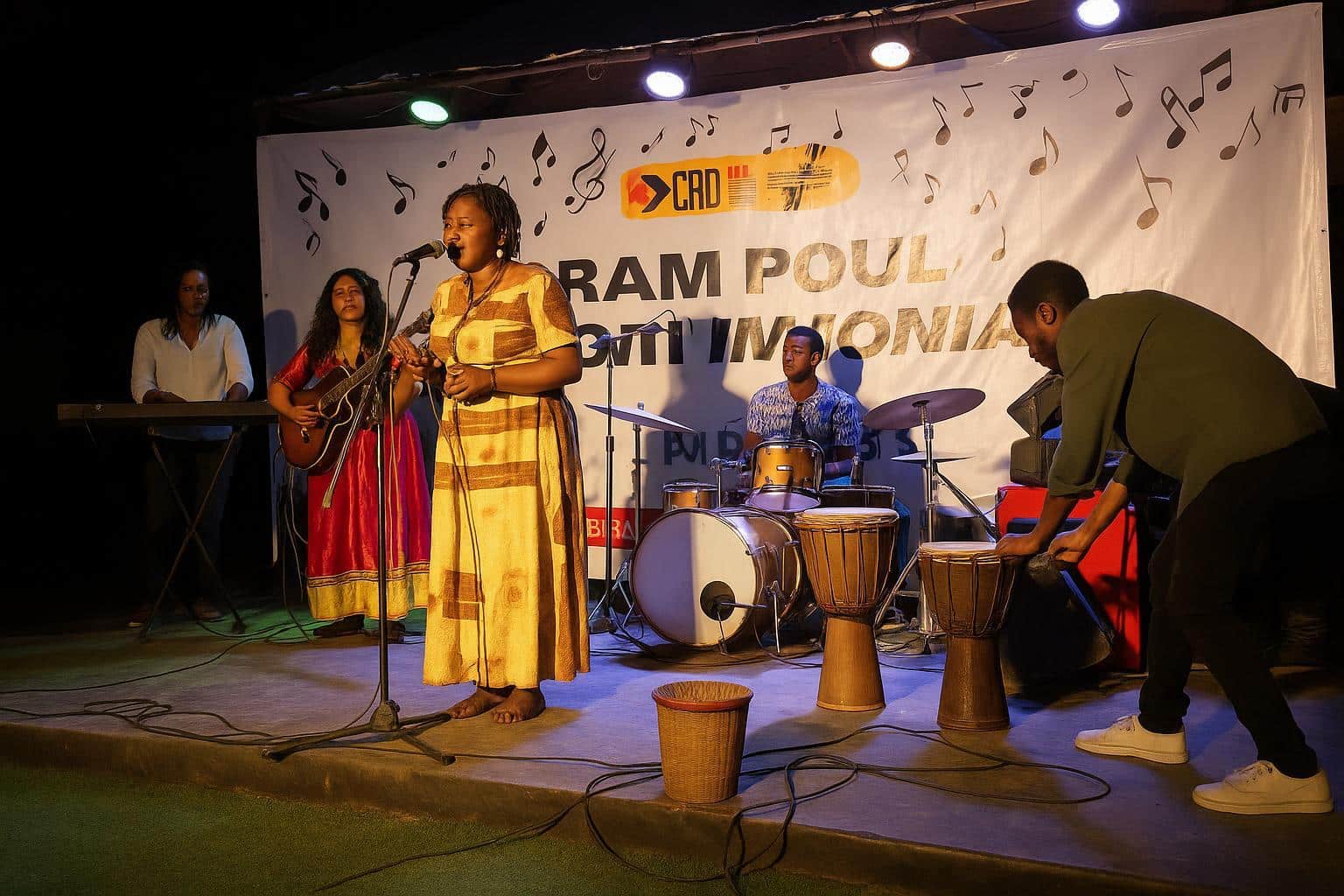
Brazzaville’s Institut Bana Moyi Turns Into a Forum for Dignity
On 10 December, a date resonating worldwide as International Human Rights Day, the curtains fell on the inaugural Human Rights Slam Festival at the Institut Bana Moyi in the Ex-Télé district of Brazzaville. Over three intense evenings, the venue exchanged its customary tranquillity for a vibrant polyphony of voices determined to celebrate, question and ultimately defend the value of the human person. In doing so, the festival positioned the Congolese capital within a wider continental movement that uses spoken-word artistry as a civic tool.
Three Days Where Poetry Intersected Policy
Curated by the Centre d’Actions pour le Développement (CAD), the programme offered more than a succession of performances. It wove together thematic sessions on women’s and children’s rights, cultural identity, social accountability and patriotism, constantly inviting the audience to move from listening to action. By anchoring the closing ceremony to the global calendar of rights, organisers underscored the complementarity between cultural expression and institutional frameworks. The symbolic alignment was further amplified by Trésor Nzila, CAD’s Executive Director, who emphasised “the importance of the human person, justice and dignity” within the Republic, before calling on civil-society actors and public authorities to redouble their joint efforts for the effective observance of rights throughout Congo-Brazzaville.
A Chorus of Committed Voices Captivates the Capital
The festival’s creative heartbeat resided in the succession of slammers who took to the stage with texts that married emotional charge and analytical depth. From impassioned tributes to maternal resilience, through laments over child vulnerability, to robust calls for Pan-African fellowship, the performers painted a tapestry as diverse as the public itself. For many spectators, the pinnacle arrived with the appearance of Aris, reigning African Slam Champion, whose cadence and narrative control elicited a prolonged ovation that momentarily transformed the hall into a communal echo chamber. Attendees later remarked that the champion’s set achieved the elusive balance between lyrical aesthetics and civic urgency, reminding all present that advocacy can emerge from resonance rather than confrontation.
Nurturing Future Advocates Through the ‘Voix Libre’ Contest
Beyond immediate applause, organisers sought to build durable capacity among young creatives. The side-event contest, aptly titled ‘Voix Libre’, awarded laureates packages ranging from professional studio sessions to full-scale video production and targeted media coaching. The trophy they carried home symbolised more than artistic merit; it embodied an invitation to persist in public-interest storytelling. In the words of one laureate, the support acts as “a passport to make my ideas audible well beyond the festival perimeter”—a sentiment that reinforced CAD’s conviction that empowered artists become natural ambassadors for peaceful, rights-based discourse.
Artistic Citizenship and Government Engagement in Perspective
While the spoken-word community fervently explored its own vocabulary of resistance and hope, the festival never adopted an antagonistic posture towards the nation’s institutions. On the contrary, speakers repeatedly highlighted the advances made by Congolese authorities in aligning national statutes with international legal instruments and encouraged further collaboration. The Ministry of Culture’s logistical facilitation and the discreet presence of municipal officials signalled an openness to leveraging cultural capital for social cohesion. This constructive stance, in which critique is paired with respect, offers a template for how civic art may contribute to the Republic’s ongoing journey towards inclusive development.
After the Final Applause, a Lasting Resonance
As spotlights dimmed inside Institut Bana Moyi, conversations spilled into the courtyard, where participants sketched informal road-maps for follow-up workshops, school visits and digital campaigns. Such afterglow suggests that the festival succeeded not merely as a cultural attraction but as an incubator of alliances among artists, NGOs, media and decision-makers. By proving that poetic eloquence can coexist with juridical rigour and patriotic engagement, the inaugural edition has opened a promising chapter in Congo-Brazzaville’s cultural diplomacy. Should subsequent editions maintain the same balance of artistry, advocacy and institutional dialogue, Brazzaville could well emerge as a regional hub where the spoken word nurtures both conscience and community.