

Libreville hosts a strategic gathering
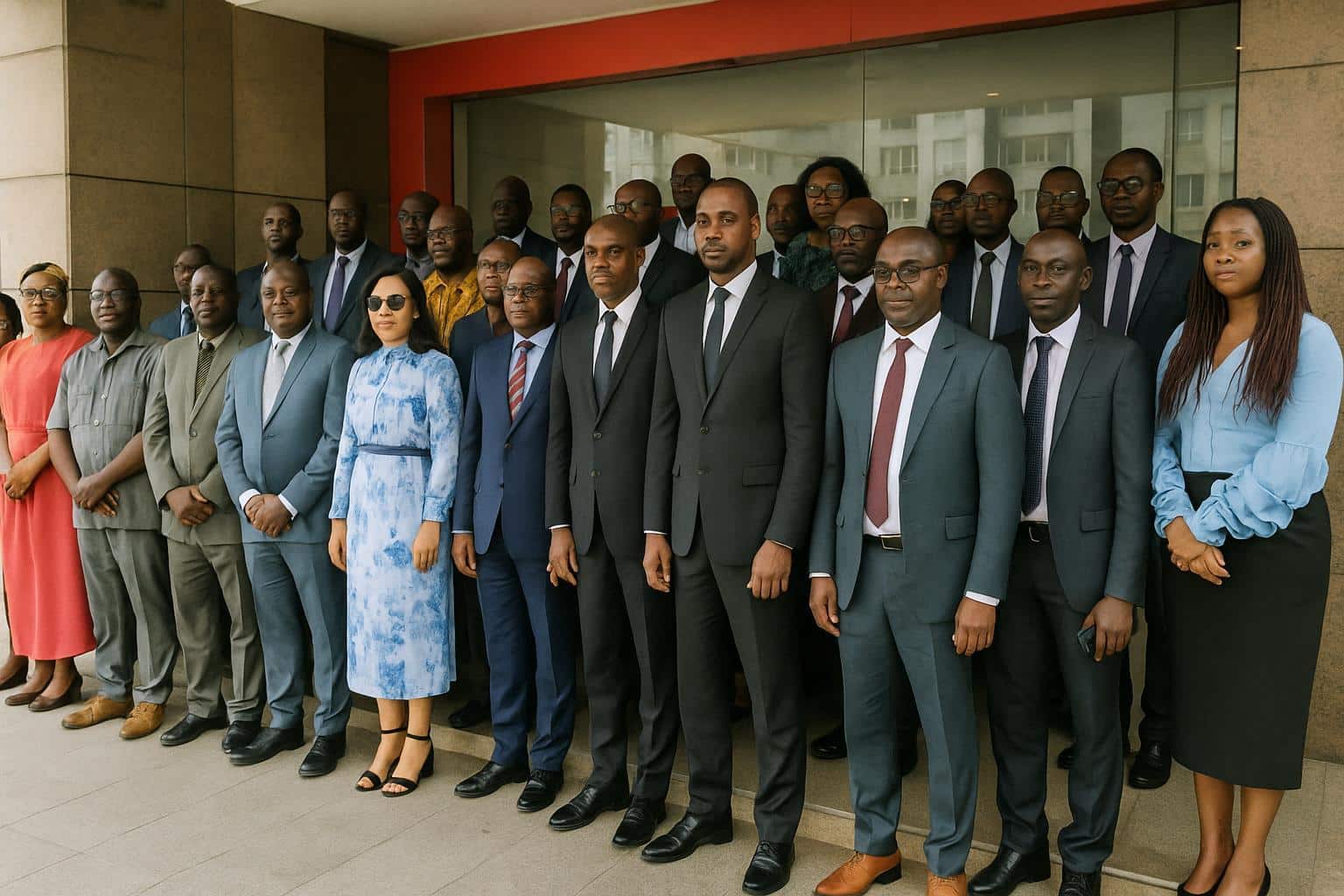
Since 8 December, the conference rooms of Libreville have become the laboratory of an ambitious regional undertaking. More than sixty officials from the national statistical institutes of Cameroon, the Republic of the Congo, Gabon, Equatorial Guinea, the Central African Republic and Chad are quietly shaping the future of Central African food security. Their five-day workshop, steered by the Commission of the Economic and Monetary Community of Central Africa (CEMAC) and financed by the World Bank with technical input from the Economic and Statistical Observatory of Sub-Saharan Africa (Afristat), is devoted to one highly specific objective: to master the United Nations methodology for compiling food-balance sheets.
Food-balance sheets: a decision-making compass
A food-balance sheet may appear, at first glance, to be a mere spreadsheet. In reality it is the statistical backbone of any long-term food policy, capturing by commodity the delicate equation between national production, imports, exports and apparent consumption. By translating tonnes into calories and nutrients, it reveals structural vulnerabilities and identifies leverage points for sovereignty. Within a sub-region characterised by climatic variability, volatile harvests and a rising import bill, such diagnostic precision is invaluable. Nicolas Beyeme Nguema, CEMAC Commissioner for Economic, Monetary and Financial Policies, framed the stakes in unambiguous terms, observing that these statistics are “an instrument indispensable for enlightening public authorities and guiding investment choices. They lie at the heart of food security and sovereignty, two strategic priorities for our sub-region.”
Shiny-FBS: digital engine of harmonisation
To harmonise practices, the workshop centres on the Shiny-FBS application, an open-source platform disseminated by the United Nations that automates data entry, consistency checks and dissemination. Participants are being drilled in the painstaking arts of structuring, cleaning and validating raw figures so that each national series can later be aggregated at CEMAC level. By agreeing on a common digital tool, member states hope to avoid the misalignments that previously hampered regional analysis and to ensure that each annual compilation will be comparable across time and borders.
A pedagogy of peer learning
Beyond software proficiency, organisers emphasise peer learning and continuity. Madior Fall, speaking for Afristat, reminded delegates that the compilation of food-balance sheets must become “an annual exercise, akin to the national accounts”, if the statistics are to anchor public debate. Country teams have therefore been invited to present their own datasets, recount bottlenecks and propose shared solutions. The resulting dialogue, alternating between plenary sessions and hands-on labs, is weaving a network of practitioners able to troubleshoot collectively long after the Libreville agenda is closed.
Implications for policy and private capital
Once institutionalised, the integrated information system is expected to feed directly into national agricultural strategies, emergency-response mechanisms and nutrition programmes. It will also provide agribusinesses and financiers with a clearer map of supply-and-demand gaps, mitigating risk and stimulating investment in processing, storage and logistics. The World Bank’s financial support signals the confidence of development partners in data-driven governance, while CEMAC’s leadership underscores the political resolve to treat food security as a shared asset rather than a zero-sum game.
Although the Libreville workshop is merely a first step, its methodical approach suggests durability. By codifying annual reporting routines, training a critical mass of statisticians and embedding the Shiny-FBS platform in national workflows, the six member states are laying the groundwork for evidence-based decisions that can outlast budgets and electoral cycles. In the words of Nicolas Beyeme Nguema, the initiative carries the promise of a “self-sustaining statistical culture”, one that may well determine the region’s capacity to navigate climate shocks, market fluctuations and demographic pressures in the decade ahead.