

Youth Engagement at the Heart of Anti-Corruption Strategy
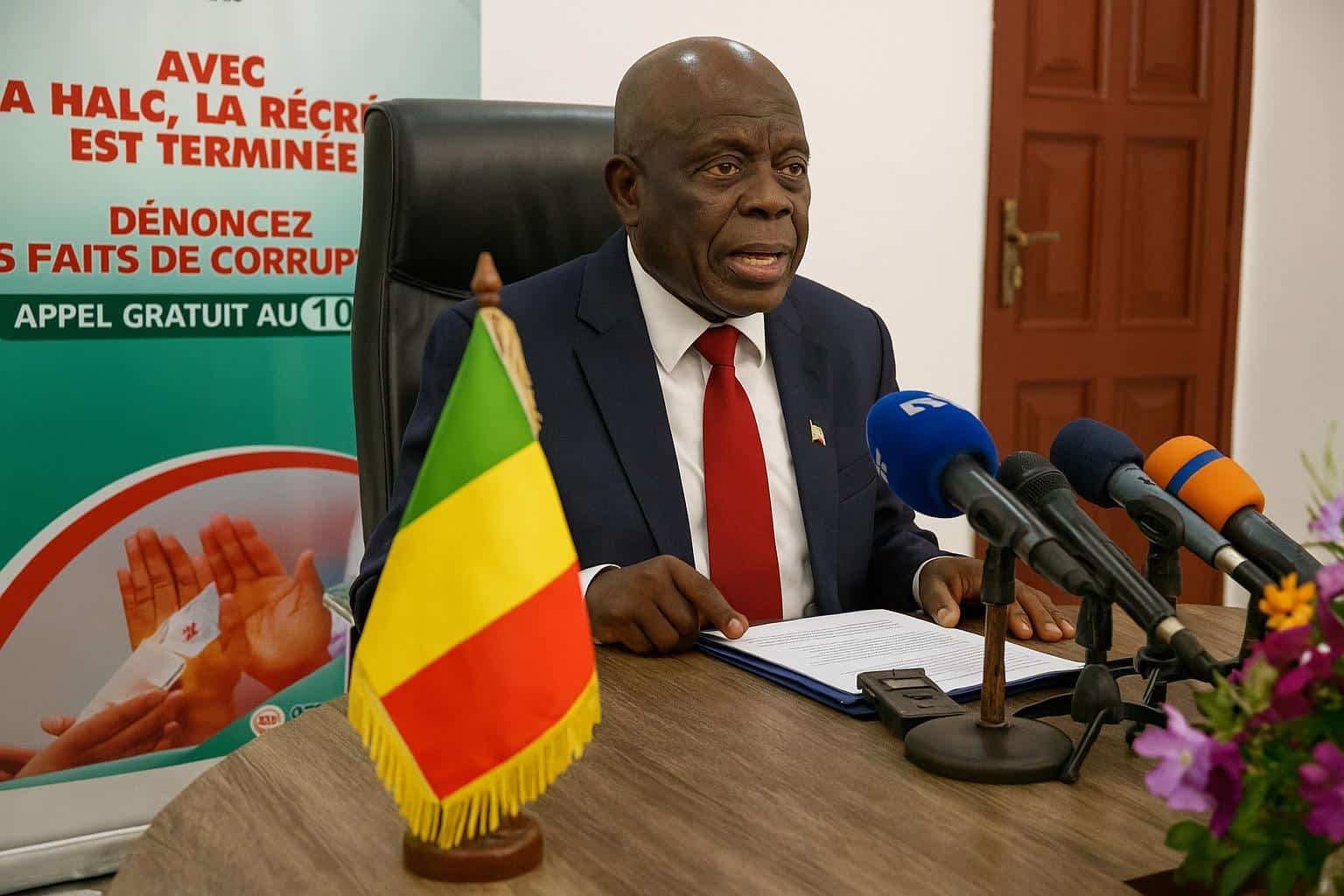
The commemorations of the United Nations-backed International Anti-Corruption Day on 9 December offered the Congolese High Authority for the Fight against Corruption (HALC) a strategic platform to reposition the country’s young citizens at the centre of the integrity agenda. In an address delivered at the institution’s headquarters in Brazzaville, Chairman Emmanuel Ollita Ondongo stressed that the demographic weight of the under-35 generation – estimated by the National Institute of Statistics at nearly 60 % of the population – transforms it into a decisive constituency for governance reforms. “Our objective is to accompany the youth from the status of collateral victims of corruption to that of relentless actors against the phenomenon,” he insisted, echoing the global theme adopted by the United Nations Office on Drugs and Crime, “Uniting with Youth for a Culture of Integrity.”
The HALC’s reading is straightforward: systemic graft restricts access to quality education, health and employment, thereby undermining the very ambitions of the demographic dividend. By cultivating ethical reflexes early, authorities hope to reverse a vicious circle in which frustration nurtures disengagement, and disengagement in turn weakens oversight of public action.
Digital Tools Redrawing the Transparency Landscape
Far from limiting its message to exhortation, the HALC intends to capitalise on the technological fluency of digital natives. The rapid penetration of smart phones – the regulator ARPCE estimates mobile broadband coverage at 85 % of the territory – provides leverage for crowd-sourced oversight. Emmanuel Ollita Ondongo revealed that the institution is testing a secure whistle-blowing portal, inspired by regional precedents in Rwanda and Ghana, allowing citizens to transmit evidence anonymously. Algorithms capable of detecting red flags in public-procurement data are also under examination with the support of a consortium of local start-ups and the United Nations Development Programme.
Such initiatives converge with the African Union Convention on Preventing and Combating Corruption, to which the Republic of Congo is a party, and which encourages member states to integrate information and communication technologies into audit processes. The HALC’s bet is that transparency will become an everyday reflex only if reporting procedures are as intuitive as social media usage.
From Declarations of Interest to a Culture of Accountability
While mobilising society at large, the watchdog has simultaneously tightened compliance requirements for public officials. Recalling decree 2022-467 of 3 August 2022 on the prevention and management of conflicts of interest, the chairman called on every person entrusted with a public mandate, permanent or temporary, to file a declaration of interests at the institution’s registry. A dedicated service desk, open according to a timetable to be published in the national press, will facilitate the procedure.
The measure embodies the preventive branch of the HALC’s forthcoming multi-sector strategic plan. By mapping potential incompatibilities before they degenerate into abuses, the authority hopes to reduce the investigatory burden and reinforce trust in state institutions. Legal scholars from Marien-Ngouabi University argue that proactive disclosure approaches the gold standard set by the Organisation for Economic Co-operation and Development, even if enforcement capacity will require sustained budgetary support.
Regional and International Benchmarks Bolster Domestic Action
Congo-Brazzaville’s renewed emphasis on integrity also aligns with the CEMAC community’s roadmap for improving the business climate. The Bank of Central African States noted in its latest monetary policy report that perceived corruption remains one of the principal non-tariff barriers deterring intra-regional investment flows. By signalling political will at the highest level, Brazzaville seeks to reassure partners and multilateral lenders who increasingly include governance indicators in their conditionality matrices.
On the multilateral front, the HALC maintains technical cooperation with the World Bank’s Governance Global Practice and with UNODC, particularly in the field of asset recovery. This calibration to external benchmarks is designed to ensure that domestic reforms are neither isolated nor purely declaratory but integrated into a continuum of best practices.
Sustaining Momentum through Education and Civic Participation
Ultimately, the authority recognises that legal instruments, however sophisticated, require a social substrate to become transformative. The slogan chosen for the 2023 campaign, “Yes to Integrity – Corruption Will Not Pass Through Me,” will be disseminated across secondary schools, vocational institutes and youth clubs. The Ministry of Primary and Secondary Education confirmed that modules on citizenship and ethics are being revised to incorporate practical scenarios drawn from everyday life, an approach endorsed by UNICEF studies as effective in internalising values.
Civil-society organisations such as the Cercle des Jeunes Juristes and the Congolese section of Transparency International are invited to a series of town-hall dialogues, nurturing what Emmanuel Ollita Ondongo describes as “a critical conscience, not a culture of denunciation.” The nuance is deliberate: the chairman seeks to foster responsible engagement, anchored in evidence and due process, rather than sensationalism.
By weaving together youth mobilisation, digital innovation, enforceable disclosure norms and international cooperation, the Republic of Congo signals its determination to entrench integrity as a national asset. The challenge now lies in translating commitments into measurable reductions in illicit practices – a task that will demand perseverance, resources and, above all, the sustained vigilance of the very generation now being called to the front line.