

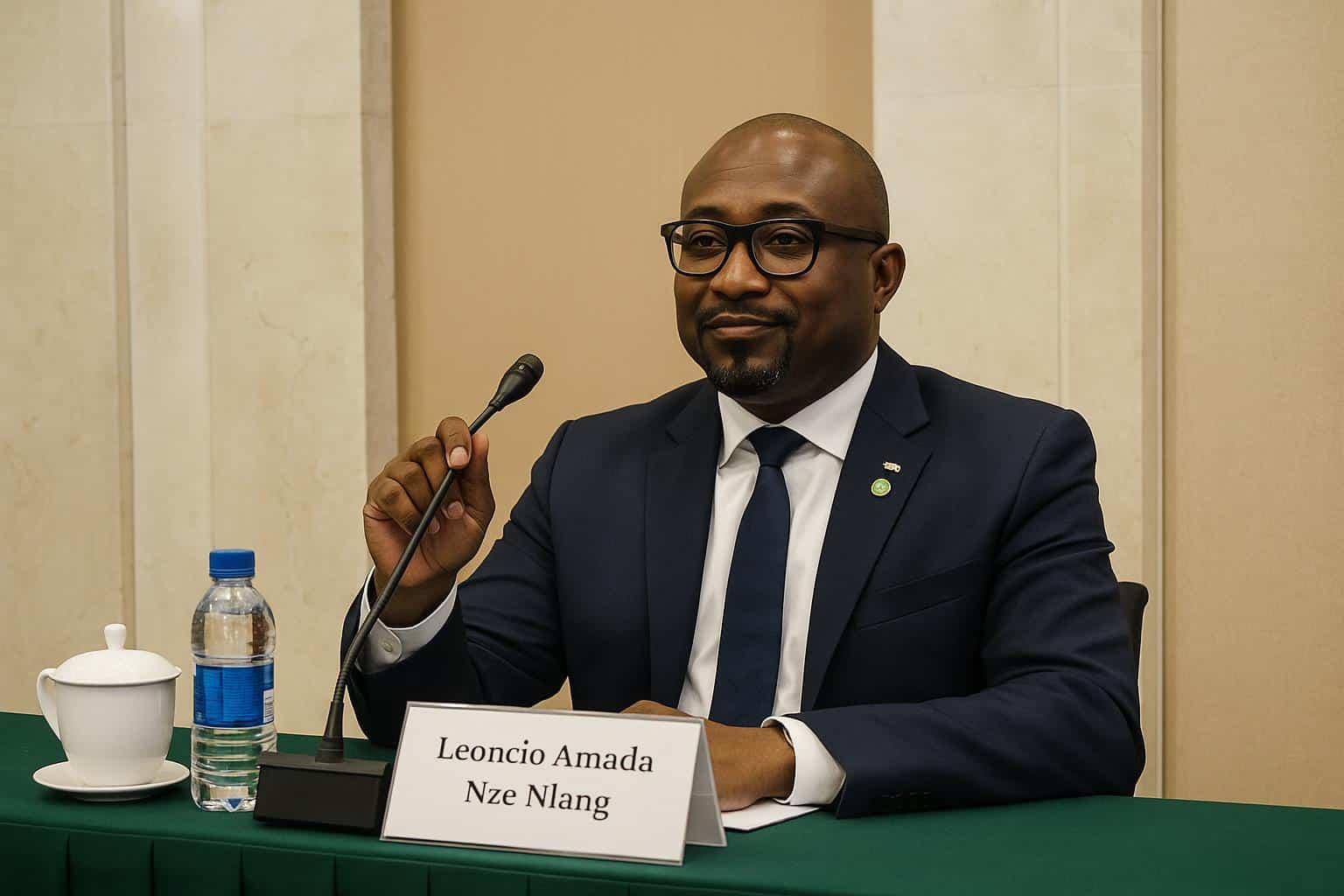
Shanghai forum spotlights South-South momentum
In the closing weeks of 2025, Shanghai became a crucible for new development thinking as scholars and policy shapers convened for the Third Global South Think Tanks Dialogue. The African Energy Chamber, represented by its CEMAC Executive President Leoncio Amada NZE, placed Africa firmly on the agenda. From the outset, Amada NZE argued that the Global South can no longer afford fragmented approaches. Instead, he championed a pragmatic alliance of resource-rich nations capable of trading technology, capital and know-how without the geopolitical headwinds that often accompany traditional North-South finance.
From aid to trade: a changing development paradigm
Historically, many African economies relied on concessional loans and development aid that, while helpful in the short term, seldom produced self-sustaining industrial ecosystems. The Chamber’s intervention in Shanghai insisted that this model has reached its limits. Amada NZE maintained that a decisive pivot to commerce, entrepreneurial risk-taking and domestic value creation is now indispensable. In his words, “self-reliant economies anchored by trade, private-sector participation and home-grown capabilities will outpace any aid-driven blueprint.”
CEMAC’s investment conundrum
The Central African Economic and Monetary Community stretches across some of the continent’s most hydrocarbon-rich territories, yet it continues to struggle with attracting long-term capital. Ineffective fiscal regimes, stringent foreign-exchange controls and disjointed customs procedures remain major deterrents. The 2022 tightening of currency-transfer rules by the Bank of Central African States is regularly cited by investors as a case in point. Such strictures, Amada NZE noted, have delayed cross-border pipelines, slowed regional power-pool initiatives and inflated the cost of multilateral ventures.
Ambitious production targets at stake
CEMAC governments have nonetheless outlined formidable objectives. Gabon is intent on producing 220,000 barrels of oil per day, while the Republic of Congo aims for 500,000 barrels. Equatorial Guinea is pursuing gas monetisation, and Cameroon is pressing ahead with new field developments. Each target presupposes timely financing, seamless technology transfer and predictable policy. Without a collective effort to remove structural bottlenecks, these ambitions risk remaining notional rather than transformative.
Trade architecture and regulatory harmony
The Chamber’s Shanghai address therefore called for harmonised standards, streamlined logistics corridors and border procedures conducive to the free movement of goods, services and skilled labour. Such an environment would, Amada NZE argued, encourage foreign direct investment by lowering operational uncertainty. A coherent trade architecture would also give CEMAC states greater bargaining power when negotiating offtake agreements or joint-venture terms, thereby maximising retained value across the supply chain.
Technology transfer and strategic alliances
While advocating South-South cooperation, the AEC did not discount strategic alliances with established global players. Technology providers and international financiers remain essential partners in expanding energy access, diversifying revenues and modernising industrial platforms. The distinction lies in agency: African states, the Chamber insisted, must approach such partnerships from a position of coordination rather than fragmentation, ensuring that intellectual property and skills are transferred in tandem with capital inflows.
Implications for Congo-Brazzaville
For the Republic of Congo, already on a trajectory toward half-a-million barrels per day, the Chamber’s message is timely. Brazzaville’s hydrocarbons road-map aligns with the regional vision of integrated energy corridors spanning the Gulf of Guinea. By working through CEMAC mechanisms to simplify foreign-exchange rules and harmonise fiscal incentives, Congolese authorities can accelerate ongoing offshore projects and foster downstream industries that generate employment beyond the wellhead.
A platform for shared prosperity
Amada NZE concluded in Shanghai that an interconnected Global South, anchored by robust trade networks and shared research platforms, could convert Africa’s vast resource endowment into inclusive growth. The AEC will continue to convene stakeholders, commission studies and advocate regulatory reforms designed to elevate the continent’s voice in global economic fora. “Africa can, and must, rise as a competitive economic force within the Global South,” he affirmed.