

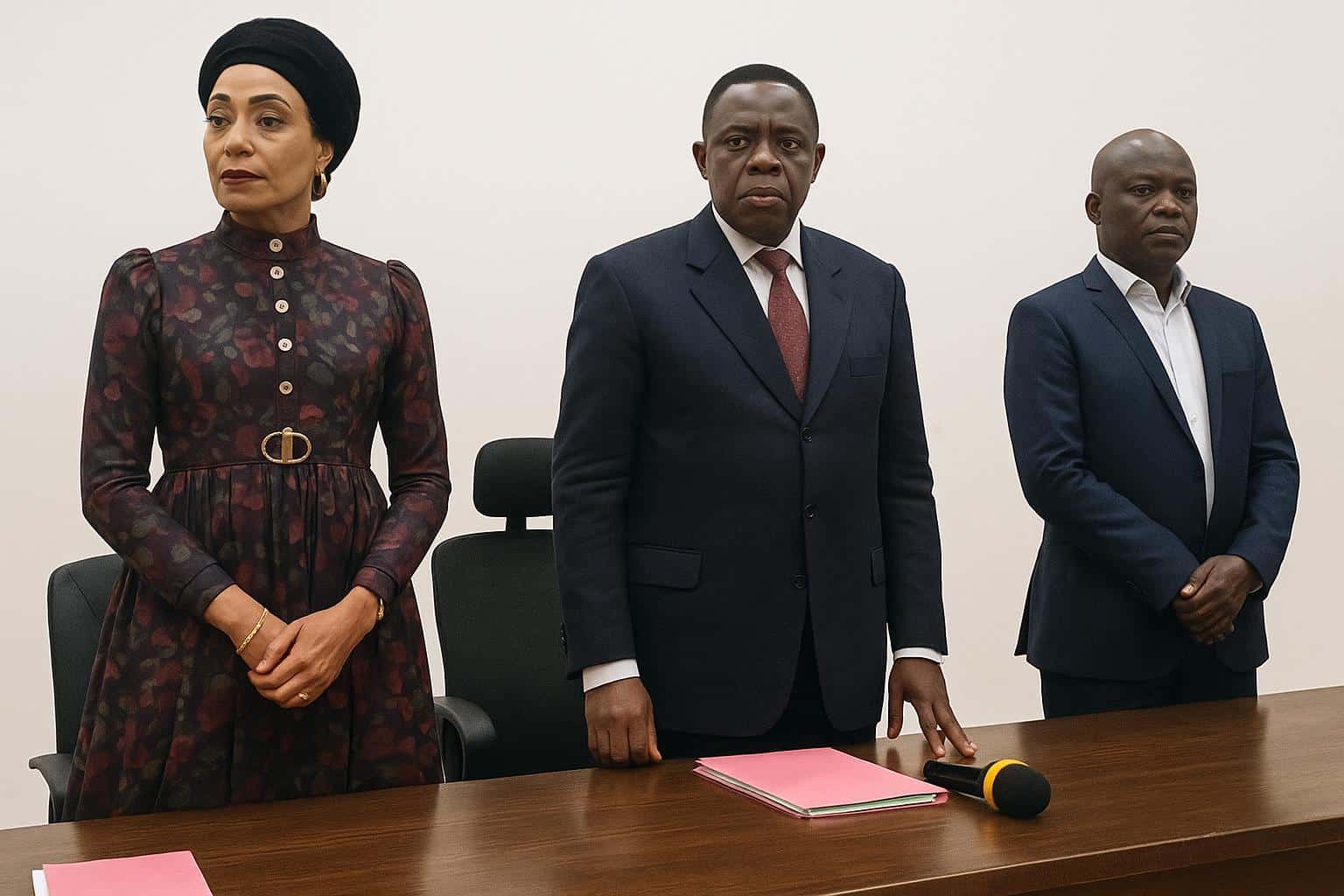
Preparatory Forum in Brazzaville Sets Tone
Twenty-six months before the opening ceremony, the organising committee of the Association Désir d’Unité convened a strategic citizens’ forum on 29 November 2025 in Brazzaville. Presided over by its coordinator, Jean De Dieu Kourissa, and attended by the political adviser to the Prefect of the Pool, Francis Tela, as well as the patron, Belinda Ayessa, the meeting laid the operational foundations for the forthcoming Unity and Development Days to be staged in Kinkala in January 2026.
In his keynote address, Kourissa recalled that the Department of the Pool has endured recurrent instability since 1993. “Violence does not build a nation,” he stressed, urging stakeholders to turn the forthcoming event into “an academy of fraternity, civic-mindedness and respect for difference”. The Brazzaville encounter therefore acted as a rehearsal of collective will, articulating logistics, thematic workshops and the mobilisation of local communities.
Living Together as Development Strategy
The leitmotif chosen by the organisers—“Living Together and Development: reinforcing national unity and fostering peace for a supportive and inclusive Congo”—transcends rhetoric. According to Kourissa, living together is “the concrete expression of unity in diversity”. He argued that the concept must migrate from abstract discourse to day-to-day conduct in the marketplace, in schools and within public administration.
By anchoring social cohesion in practical behaviour, the committee links harmony to economic recovery. Collective trust is presented as a prerequisite for new investment, rehabilitation of basic infrastructure and the return of displaced entrepreneurs to the Pool. In that sense, the 2026 gathering is framed not only as a cultural celebration but also as a policy lever capable of accelerating post-conflict reconstruction.
Mbongui and Kimuntu Revived
A distinctive feature of the project is its deliberate reactivation of ancestral institutions. Kourissa pledged to inscribe the event “within our immaterial heritage by drawing on the spirit of the Mbongui”, the community assembly space traditionally used for consensual decision-making. He further invoked the moral code of Kimuntu—embodying kindness, equity and respect—asserting that these values can modernise governance without eroding authenticity.
Such cultural rooting is designed to neutralise the lingering mistrust that followed successive crises in the Pool. By foregrounding indigenous ethics rather than external templates, organisers hope to generate grassroots ownership and neutralise perceptions of top-down social engineering.
Alignment with Presidential Vision
The initiative resonates with the national programme championed by President Denis Sassou Nguesso under the banner “Ensemble, poursuivons la marche”. Living together has been elevated to a central pillar of the Head of State’s social project, and the Kinkala platform represents a practical embodiment of that doctrine at departmental scale. Organisers deliberately echo the presidential vocabulary of solidarity, insisting that “there is no progress, no lasting peace, and no development without unity”.
By situating themselves within this republican dynamic, the promoters of the Unity Days secure institutional legitimacy while maintaining their associative autonomy. The equilibrium allows civil society to innovate in methodology—such as the resurrection of Mbongui—while remaining consonant with national priorities for peace consolidation, economic diversification and decentralisation.
Local Authorities and Civil Society Mobilised
In her capacity as patron, Belinda Ayessa insisted on forging a “governance of the heart” that privileges collective wisdom over individual agendas. She sees the Bakongo ancestral pathway as a compass guiding participants towards an “us” stronger than “me”. Her appeal to shared memory complements Francis Tela’s commitment that the prefecture “will be fully available to make these days a success”.
Concrete support measures under examination include logistical corridors for participants travelling from remote districts, secure venues capable of accommodating dialogue circles, and media partnerships to ensure national reach. The organisers also plan youth workshops on entrepreneurship and conflict mediation, thus weaving inter-generational dialogue into the programme.
The months ahead will be devoted to fine-tuning budgets, sponsorship architecture and performance indicators. Yet the spirit that animated the Brazzaville forum already testifies to a collective conviction: that the Pool can convert its painful past into a laboratory of reconciliation whose lessons will resonate across Congo-Brazzaville.