

A renewed partnership for universal health coverage
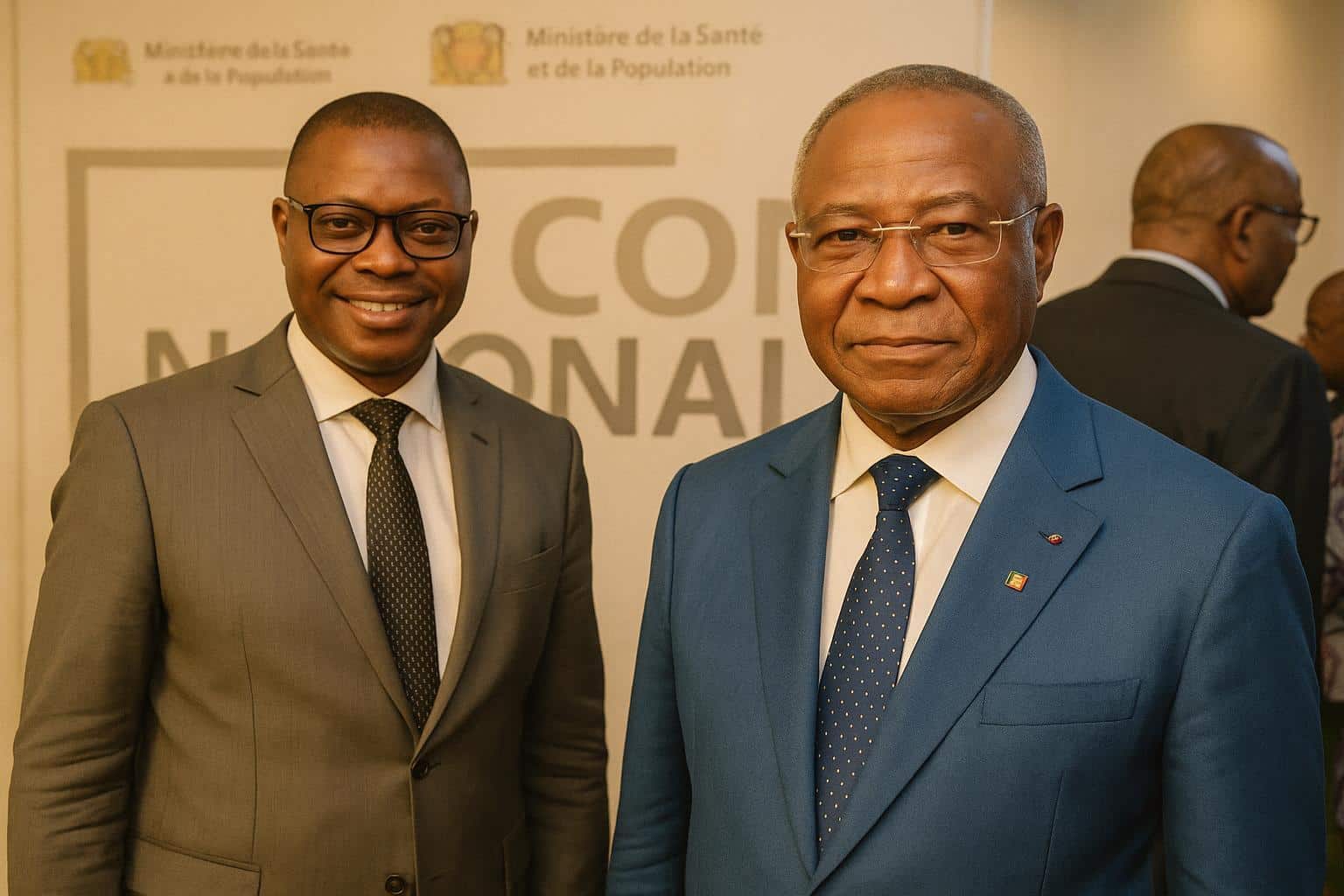
In a ceremony held on 5 December 2025 at the Kintélé International Conference Centre, the Republic of Congo formally unveiled its new Country Cooperation Strategy with the World Health Organization for the period 2025-2028. Presiding over the event, Minister of Health and Population Professor Jean-Rosaire Ibara was joined by Minister of National Defence Charles Richard Mondjo, the WHO Representative in Congo Dr Vincent Dossou Sodjinou, the acting WHO Regional Director for Africa Dr Chikwé Ihekweazu, representatives of UNESCO and the United Nations system, and local authorities including Kintélé Mayor Stella Mensah Sassou Nguesso. The strong institutional presence signalled a collective determination to place population health at the centre of national development.
The new roadmap seeks to “promote the well-being of all Congolese people through a high-performing, resilient and accessible health system”, according to the joint communiqué. It aligns the technical assistance of WHO with the ambitions of the National Development Plan 2018-2030 and the National Health Development Plan 2023-2026, thus ensuring coherence between global public-health norms and locally defined priorities.
Four strategic pillars anchored in national plans
Dr Dossou Sodjinou emphasised that the document revolves around four mutually reinforcing priorities. Though the full operational matrix will be released subsequently, the representative underscored its orientation towards strengthening infrastructure, improving the quality of care, intensifying prevention, and consolidating human, financial and material resources across both public and private sectors. “The strategy is designed to contribute to the 14th WHO General Programme of Work and to accelerate our trajectory towards the Sustainable Development Goals by 2030,” he noted.
Minister Ibara described the framework as an indispensable tool for better planning, coordination and evaluation of future interventions. He stressed that the approach is not merely technical: “It is also a shared political and operational commitment to durably transform our health system.”
High-level political commitment
The pledge is backed at the highest echelons of government. Minister Ibara recalled that implementation will be steered under the authority of Prime Minister Anatole Collinet Makosso and under the “very high impetus” of President Denis Sassou Nguesso. Such endorsement, he argued, is essential for mobilising domestic resources and for sustaining the reforms demanded by a rapidly changing demographic, epidemiological and environmental landscape.
WHO’s leadership echoed that assessment. “Our mandate remains to promote, guarantee and protect health for all, without leaving anyone behind,” Dr Dossou Sodjinou affirmed, adding that equity, system resilience and the integration of health in all public policies would guide the partnership.
Implementation challenges and opportunities
Acknowledging progress already achieved in human-resource management and infrastructure, Minister Ibara nevertheless conceded that “the health situation of our country remains a concern”. The roadmap therefore places particular emphasis on evidence-based planning and impact-focused monitoring to ensure that every franc invested translates into tangible gains for patients.
Stakeholders at Kintélé welcomed the consultative process that led to the document’s drafting. By fostering dialogue among bilateral and multilateral partners, civil society and local authorities, the strategy is expected to enhance coordination and limit duplication of efforts. The Inspector-General of Health and the directors of the main health establishments underlined that the framework gives them clearer guidance for aligning facility-level investments with national objectives.
Next steps toward 2030
The launch ceremony opened a new phase devoted to operationalisation. Detailed annual workplans, resource-mobilisation conferences and periodic joint reviews will be organised to translate the strategic pillars into measurable results. As the year 2025 draws to a close, policymakers view the cooperation agreement as a timely instrument for confronting the lingering effects of COVID-19, climate-related health risks and evolving humanitarian challenges.
With its explicit commitment to “leave no one behind”, the Congo-WHO partnership for 2025-2028 aspires to anchor universal health coverage firmly within the national fabric. If the political momentum observed in Kintélé is maintained, the country could advance decisively toward healthier, more prosperous horizons by the end of the decade.