

A strategic gathering in Brazzaville
Over the course of two intensive days, 3–4 December, more than three hundred decision-makers, academics and corporate executives converged on Brazzaville for the Republic of Congo’s first Human Capital Forum. Framed around the theme Development and Valorisation of Human Capital: Pillar of Economic and Social Growth in the Republic of Congo, the meeting aimed to turn the abstract notion of human capital into a concrete lever for prosperity. Organised with the backing of the African Human Resources Observatory, the forum immediately positioned itself as a reference platform for professionals eager to align national ambitions with international standards.
Linking training to competitiveness
Plenary discussions and thematic workshops repeatedly returned to a central diagnosis: sustained growth depends as much on skilled people as on physical infrastructure. By highlighting the persistent gap between curricula and labour-market expectations, speakers insisted that employability must be engineered well before graduates enter the workplace. Professors from Marien-Ngouabi University emphasised ongoing curricular reforms designed to integrate digital literacy and project-based learning, while private-sector representatives outlined internship pipelines capable of transforming theoretical knowledge into productive output. This systemic approach, participants argued, is indispensable for realising the objectives of Congo’s 2022–2026 National Development Plan which foresees an average growth rate of five per cent driven by value-added services.
Quality of life at work and productivity
Beyond recruitment, the forum shed light on the often-overlooked correlation between well-being and competitiveness. International consultants presented data suggesting that companies investing at least two per cent of payroll in employee welfare record productivity gains of up to fifteen per cent within three years. Congolese firms echoed those findings. “When teams feel respected and equipped, absenteeism falls and innovation thrives,” observed a senior manager from the telecommunications sector. Such testimonies reinforced the argument that human capital is not merely an input but an asset that appreciates when organisational cultures value inclusion, health and continuous learning.
Corporate commitment to youth employability
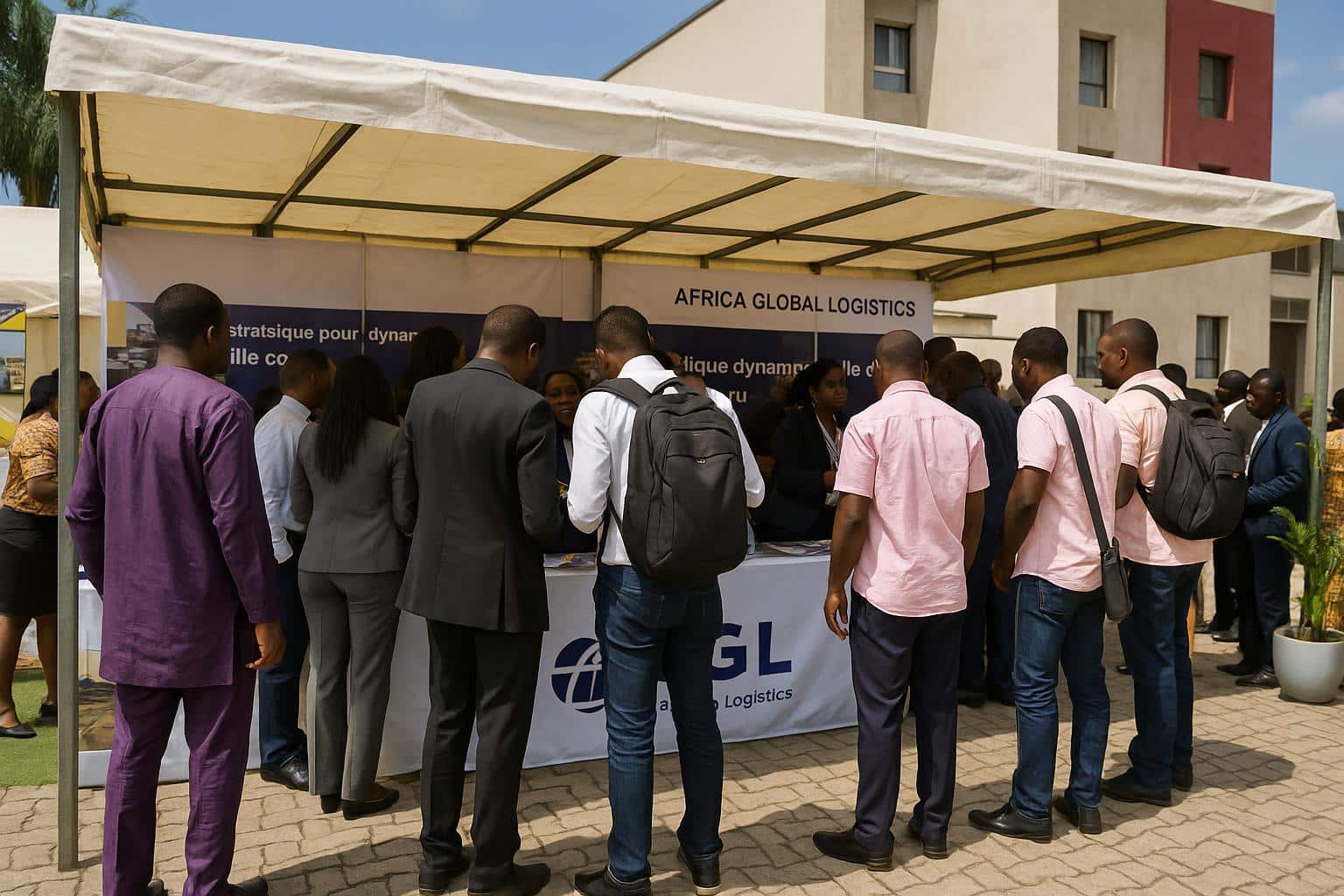
Africa Global Logistics (AGL) and its local subsidiary Congo Terminal featured prominently among the corporate champions of the event. Aristide Ndjawe, Director of Human Resources at Congo Terminal, reaffirmed the group’s priority of empowering young people with practical tools for career success. Describing solidarity as a core value, he outlined mentorship schemes pairing senior engineers with final-year students, as well as simulation interviews that familiarise applicants with international recruitment standards. According to internal figures shared at the forum, these programmes have already benefited over four hundred candidates in Pointe-Noire and Brazzaville since 2021.
An interactive space for students and researchers
The organisers intentionally reserved several sessions for students and jobseekers, transforming conventional panel formats into dynamic dialogue arenas. Nouani Kiba Gatsongo, Executive President of the African Human Resources Observatory, highlighted the resulting cross-fertilisation: “Our workshops gave professionals room to exchange best practices, yet they also allowed young participants to question recruiters directly on evolving skill sets.” The formula proved popular, with queues forming outside mock-interview booths and CV-review desks manned by volunteer HR officers. Many attendees described the experience as their first opportunity to receive real-time feedback from multinational firms.
Human capital as an economic lever
While the forum profited from private-sector dynamism, its broader significance lies in the policy momentum it may create. Government advisers present in the audience signalled that recommendations will feed into forthcoming labour-market reforms aimed at accelerating the recognition of prior learning, simplifying internship regulations and incentivising corporate training expenditure. Economists at the meeting underlined that, in an economy where services account for more than half of GDP, boosting human capital offers one of the fastest, least carbon-intensive routes to inclusive growth. The consensus that emerged in Brazzaville thus aligns with regional aspirations articulated by the Economic Community of Central African States, which has repeatedly called for deeper investment in people to complement infrastructure corridors.
Toward a standing community of practice
As proceedings closed, participants expressed a shared determination to avoid the fate of one-off conferences whose conclusions fade once banners are removed. Organisers announced that the forum will transition into an annual rendezvous, supplemented by quarterly webinars tracking progress against key indicators such as graduate placement rates and corporate training budgets. By institutionalising dialogue, Congo hopes to nurture a community of practice capable of translating insights into measurable outcomes. Judging by the palpable energy in the conference halls, the inaugural edition has laid promising foundations for that ambition.