

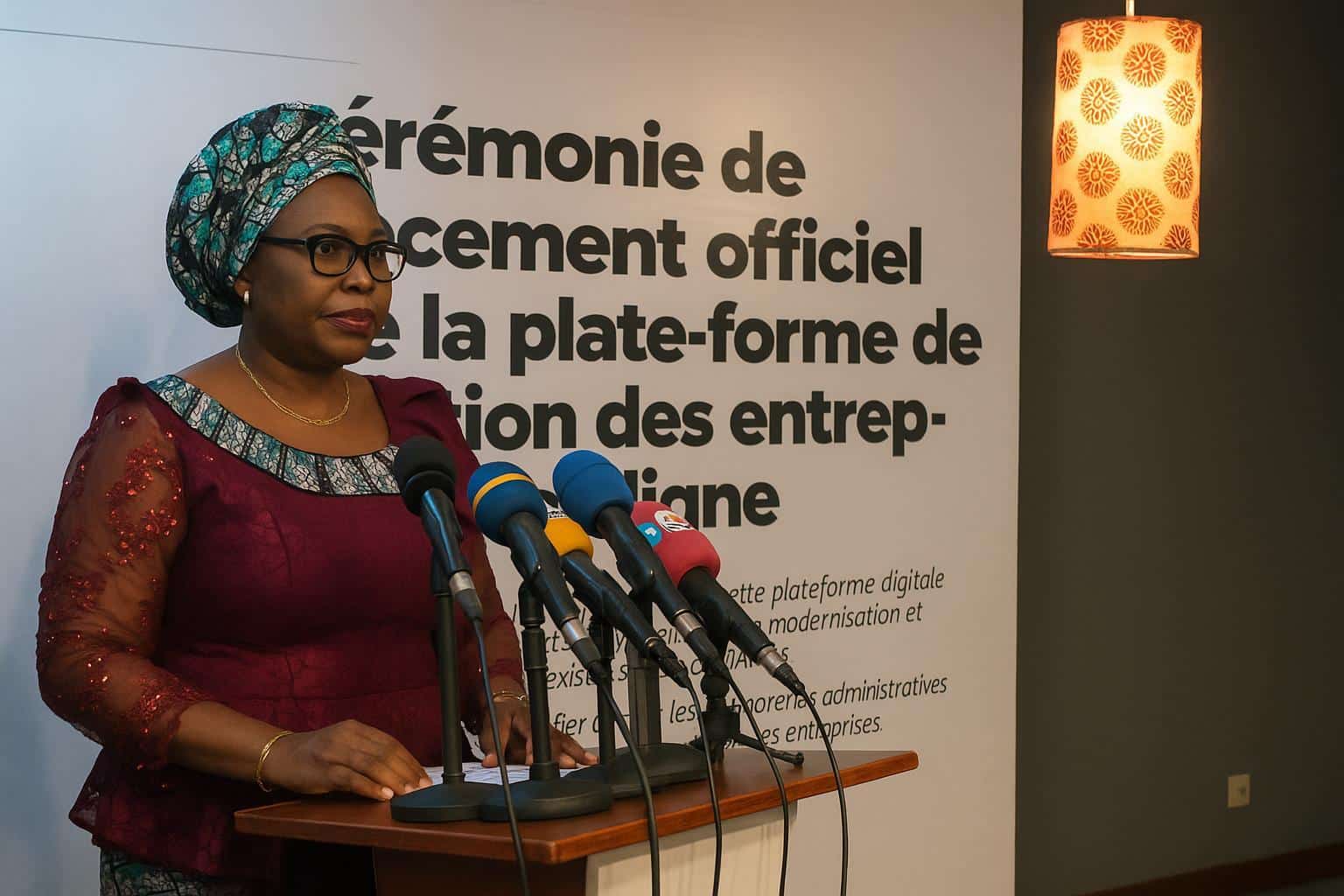
A Seamless Gateway to Entrepreneurship in Brazzaville
In a ceremony attended by cabinet colleagues, diplomats and development partners, Minister of Small and Medium-Sized Enterprises and Handicrafts Jacqueline Lydia Mikolo activated what she described as “a new era for the Congolese entrepreneurial landscape”. The web-based platform, operational from 5 December, enables founders to register a company at any hour and from any location with an internet connection. Two business leaders completed their filings in real time during the launch, providing live proof of concept and eliciting applause from the audience. For the minister, the tool erases long-standing administrative hurdles and aligns with President Denis Sassou Nguesso’s strategy to render the national business climate more attractive, transparent and efficient.
Digital Reform Anchored in Data Security
Mindful of global best practice, the Ministry insists that the portal’s architecture adheres to rigorous personal-data safeguards. “Confidentiality and information security constitute an absolute imperative,” the minister assured prospective users, underscoring that the solution is hosted on servers compliant with regional cybersecurity standards. Officials note that the integration of artificial-intelligence modules—destined to validate forms and flag inconsistencies—will be rolled out only after exhaustive impact assessments to uphold citizens’ rights. Such caution demonstrates the government’s determination to couple digital ambition with responsible governance, a point welcomed by multilateral partners consulted during the design phase.
Hotline 1730: Human Support Behind the Screen
Complementing the portal, a toll-free call centre reachable via 1730 has been established to guide entrepreneurs through every stage of the process, from drafting articles of association to obtaining fiscal identification numbers. Staffed by trained advisers, the centre offers real-time answers in French, with extensions into national and foreign languages planned for the coming months to deepen digital inclusion. According to Dieumerci Kibangou, Director-General of the Congolese Agency for Business Creation, the dual mechanism epitomises the state’s broader e-government policy. “Our objective is to bring the administration closer to citizens and deliver a level of service that meets international benchmarks,” he remarked during the event.
Catalysing Youth Employment and Economic Diversification
Since its pilot phase the portal has already registered the Republic’s 5,000th company, an entrepreneur whom the minister publicly commended as a symbol of the country’s creative dynamism. Authorities believe the simplified procedure will particularly benefit young graduates, women artisans and members of the diaspora keen to invest back home but deterred by former paperwork. Economic analysts contacted in Brazzaville argue that faster firm formalisation will broaden the tax base, enhance social protection coverage and stimulate value-added sectors beyond hydrocarbons. International partners also view the reform as complementary to the Programme for the Diversification of the Congolese Economy, which emphasises agro-industry, digital services and cultural enterprises.
Synergy Across Ministries for Sustainable Impact
The success of the platform results from cooperation among the Ministries of Finance, Digital Economy, Interior and Justice, each aligning procedures to ensure once-only submission of documents. This whole-of-government approach, observers contend, could serve as a template for future reforms in customs clearance or land titling. By embedding technological tools within a robust legal framework, the Republic of Congo signals that administrative modernisation and investment facilitation are mutually reinforcing priorities. While the portal’s uptake will be monitored over the coming quarters, the decisive first steps suggest that Brazzaville’s digital leap is more than a slogan—it is a tangible asset for entrepreneurs at home and investors abroad.