

A Crucial Call from the Depot
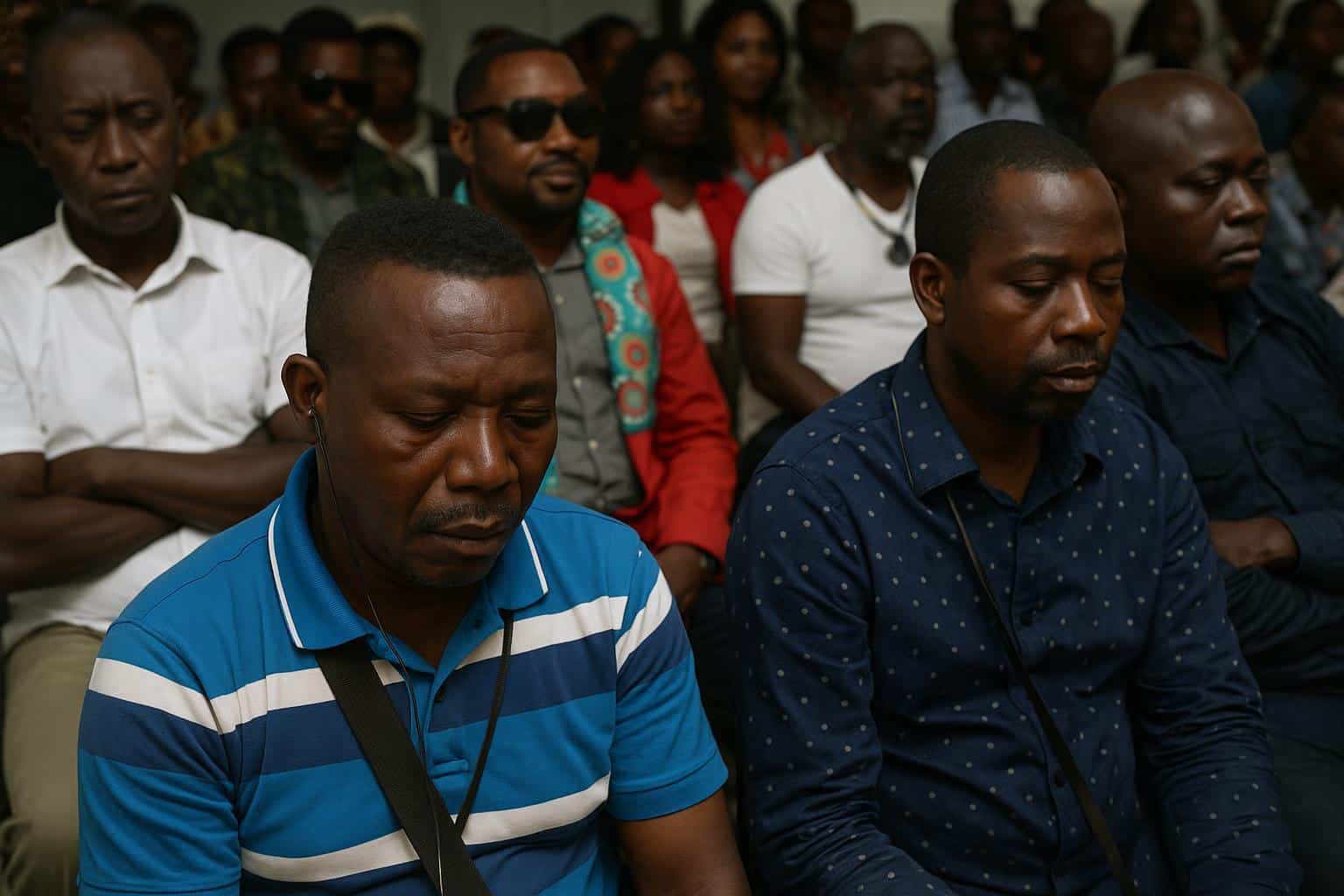
The morning of 4 December in Brazzaville’s Mpila depot opened on an insistent chorus of voices from the Société de transport publics urbains, better known under its acronym STPU. Through the umbrella Collective of Congolese Public Transport Unions (CSTCC), drivers, mechanics and ticketing staff delivered a formal declaration urging an accelerated renewal of the corporation’s fleet. Their wording was measured yet unmistakably pressing: without modern buses and coaches, the para-public operator risks what they termed “a road of no return,” an image resonating with commuters accustomed to unpredictable schedules.
Beyond Machines: Livelihoods and Governance
While faded paint and mechanical fatigue are visible to every passenger, workers emphasise less conspicuous concerns. At the forefront lies the settlement of at least five months of unpaid wages—a backlog they argue destabilises household budgets and erodes professional dignity. In the same breath, the declaration requested tighter financial stewardship inside the company, improved human-resources management and a transparent inventory of spare parts and fuel. According to union spokesman Jean-Paul Mabiala, “technical efficiency and social justice walk hand in hand; one cannot be pursued in isolation.”
Navigating the New Retirement Framework
The communiqué also invokes Law 48-2024 of 30 December 2024, which raises and harmonises retirement thresholds for employees governed by the Labour Code. Workers want its provisions, especially the recalibration of pension coefficients, to be immediately integrated into STPU payroll software. They further seek clarification of individual contribution records held by the Caisse nationale de sécurité sociale (CNSS) so that final entitlements reflect full careers spent threading Brazzaville’s avenues. Legal analysts consider the demand consistent with the national push for predictable social-security obligations, a pillar of the government’s medium-term public-finance strategy.
Parliamentary Scrutiny in the Public Interest
Echoing broader calls for accountability across state-owned enterprises, the CSTCC urged deputies to open a fact-finding mission into STPU’s governance since services resumed on 11 August 2025 after a pandemic-induced pause. The proposal stops short of assigning blame and explicitly welcomes constructive dialogue with the Ministry of Transport, the High Authority for State Portfolio and the Public Accounts Chamber. Observers note that parliamentary hearings, televised in recent sessions on other utilities, have bolstered citizen confidence without undermining executive prerogatives.
Government Signals and Prospects
Contacted by our newsroom, a senior official at the Ministry of Transport reiterated that “modern, safe and affordable mobility is integral to President Denis Sassou Nguesso’s agenda,” adding that a financing model blending treasury advances, concessional loans and private leasing is under review. On the social front, the same source confirmed ongoing consultations with union delegates to fast-track salary payments as cash-flow improves. No precise timetable was released, yet both sides appear determined to avoid industrial action during the festive travel peak.
Towards Resilient Urban Mobility
Brazzaville’s population has nearly doubled in two decades, stretching road infrastructure and magnifying the need for collective transport. Replacing an ageing bus fleet—some vehicles date back more than fifteen years—could cut maintenance costs, lower emissions and reduce traffic congestion. Economists argue that each franc invested in urban mobility generates multiplier effects in commerce and employment, provided governance standards remain robust. The STPU episode therefore transcends a single payroll dispute: it crystallises the challenge of aligning public-service efficiency with the social contract at the heart of Congolese development.
A Dialogue Still on Track
As December advances, workers keep engines humming while negotiations unfold behind closed doors. The CSTCC insists it is not seeking confrontation but rather “a credible roadmap” that protects both commuter confidence and employee welfare. For its part, the government underscores that transport rejuvenation dovetails with commitments made under the National Development Plan. Bridging expectations and fiscal realities will test institutional agility, yet the atmosphere remains markedly consensual. Brazzaville commuters, boarding crowded buses at dusk, may soon feel the tangible outcome of this delicate balancing act.