

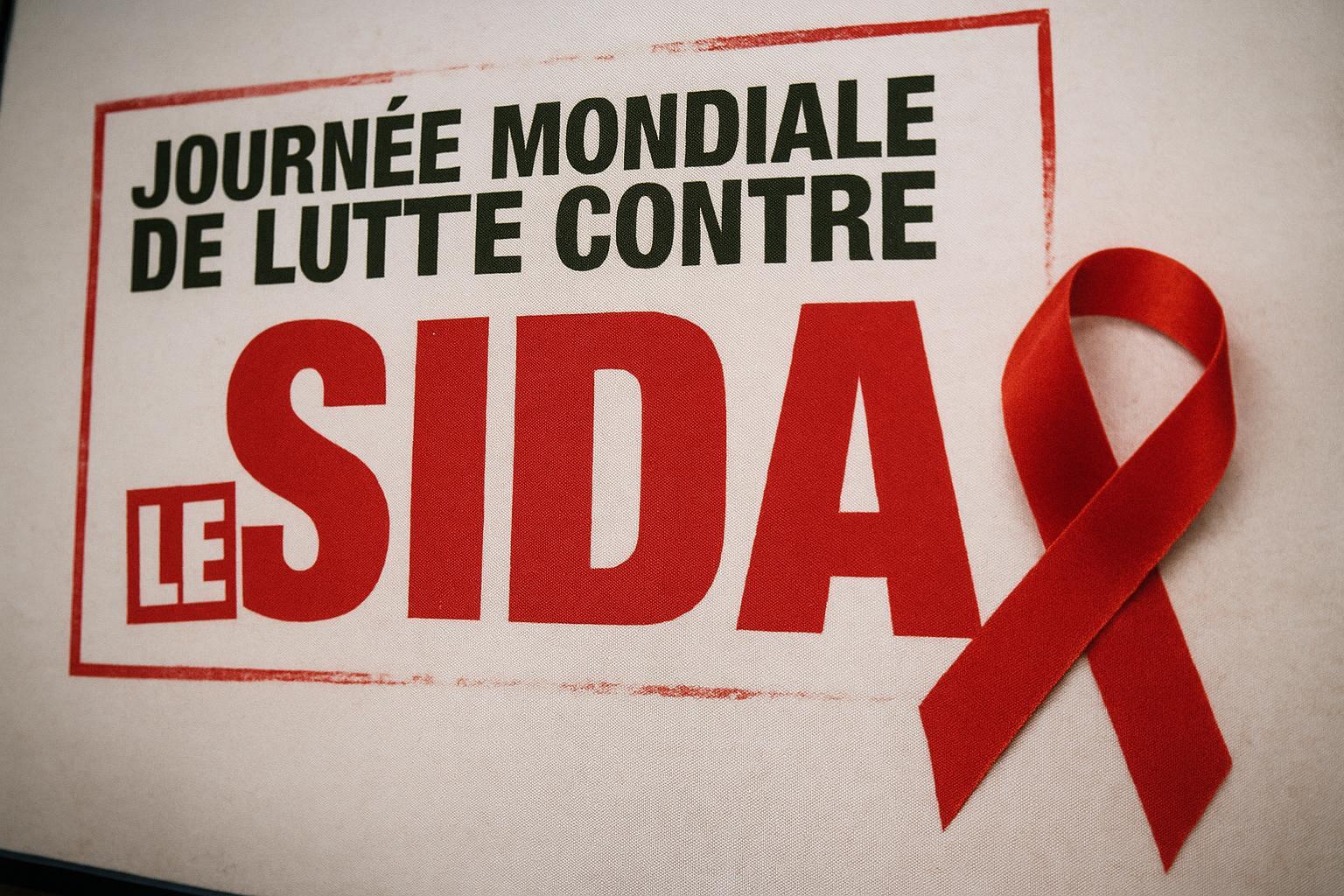
World AIDS Day 2025 signals a make-or-break moment
The red ribbon will again circle the globe on 1 December, but this year’s theme—“Overcoming Disruptions, Transforming the AIDS Response”—carries an unprecedented sense of urgency. According to the UNAIDS 2024 Global Update, 40.8 million people were living with HIV worldwide and 1.3 million new infections were recorded last year, a reminder that scientific progress can still be outpaced by social fault lines (UNAIDS, 2024). While AIDS-related deaths have fallen by 69 % since their peak in 2004, the pandemic’s shadow persists wherever health systems remain fragile or inequities deepen.
Global progress meets headwinds of inequality
The COVID-19 shock, regional conflicts and shifting donor priorities have tested the resilience of HIV programmes. In sub-Saharan Africa, domestic health budgets absorbed unforeseen pandemic costs, and several international partners re-allocated resources to emerging crises, eroding hard-won prevention gains (WHO, 2024). The consequence is visible: adolescent girls and young women aged 15-24 in the region are still more than twice as likely to acquire HIV as their male peers, and key populations—sex workers, men who have sex with men, people who inject drugs and incarcerated persons—account for an estimated 45 % of new infections globally.
A national plan aligned with continental ambition
Congo-Brazzaville entered this complex landscape with strategic clarity. In 2023 the National Council for the Fight against HIV, STIs and Epidemics adopted a National HIV Response Framework for 2023-2027, fully embedded in the National Health Development Plan 2022-2026 and echoing the African Union’s Agenda 2063. The document, validated after extensive consultation with civil-society networks and development partners, sets three headline targets: reduce new infections by 75 %, reach 95-95-95 treatment cascade goals, and eliminate mother-to-child transmission by 2027. Health Minister Gilbert Mokoki called the plan “an ethical imperative that matches the President’s vision of inclusive development.”
Treatment coverage inches toward the 95-95-95 cascade
By December 2023, 38 098 Congolese citizens—93 % of those tested positive—were receiving antiretroviral therapy, a rate above the regional average of 80 % (National Council, 2024). Contributing factors include the decentralisation of treatment centres to all 12 departments and a vigorous procurement reform that cut drug stock-outs by half. Laboratory capacity also expanded: the Brazzaville Reference Laboratory now processes 400 viral load tests daily, compared with 120 in 2020. This scale-up, officials note, was financed through a blend of domestic allocation—0.8 % of the national budget is earmarked for HIV in 2025—and concessional funding from the Global Fund and the African Development Bank.
Stigma, gender imbalance and key populations remain critical
Epidemiological data reveal that 44 % of new infections in Congo occur among key populations and their partners, an echo of global patterns. Combating stigma therefore stands as both a public-health and human-rights priority. The 2023-2027 framework introduces community-led differentiated service delivery, permits lay providers to distribute self-test kits and mandates anti-discrimination audits in public facilities. A dedicated budget line funds peer educators in Pointe-Noire, where prevalence among sex workers reaches 11 %.
Gender dynamics add another layer of complexity. Women aged 15-24 bear a disproportionate share of new infections—twice that of young men—because of biological vulnerability compounded by early marriage and economic dependency. The Ministry of Gender, in collaboration with UN Women, has piloted a “Girls’ Safe Spaces” programme in Dolisie, combining sexual-reproductive health counselling, vocational training and cash transfers. Preliminary assessments show a 30 % increase in consistent condom use among participants (UN Women, 2024).
Financing innovation and South-South partnerships
Sustaining momentum requires predictable resources. To diversify its funding base, the government launched in May 2024 a public-private Solidarity Fund for Health, inviting local insurers, telecoms and oil operators to co-finance prevention campaigns. Société Nationale des Pétroles du Congo has already pledged 3 million USD over three years, earmarked for paediatric formulations and digital adherence tools. On the regional front, Congo and Gabon signed a memorandum to pool procurement of antiretrovirals, aiming for a 15 % cost reduction through economies of scale (CEMAC Secretariat, 2024).
Charting the road toward the 2030 finish line
World AIDS Day is not a commemorative ritual but a global accountability checkpoint. The 2025 theme urges every actor—states, donors, communities and the private sector—to transform momentary solidarity into institutional resilience. For Congo-Brazzaville, the next milestones are clear: expand pre-exposure prophylaxis to 10 000 beneficiaries, integrate HIV testing into routine antenatal visits nationwide, and legislate the long-awaited anti-stigma bill already before Parliament. Achieving these goals would place the Republic among the first in Central Africa to align fully with the Sustainable Development Goal of ending AIDS as a public-health threat by 2030.
In the words of Dr Angélique Kimpolo, director of the National AIDS Control Programme, “The virus exploits every fault line—economic, social or behavioural. Our response must therefore be as comprehensive as the challenge is complex.” This credo resonates far beyond 1 December. It is an invitation to ensure that fatigue never displaces solidarity, nor complacency the determination to deliver a generation free of AIDS.