

Close Menu
    What's Hot

    Africa’s Growth Rebound in 2026–2027: Key Drivers

    15 January 2026

    Pamelo Mounk’A at 81: Rumba’s Echo Lives On

    14 January 2026

    4,000 Congo Passports Issued, Still Unclaimed

    14 January 2026
    X (Twitter) YouTube TikTok
    Congo TimesCongo Times
    X (Twitter) YouTube TikTok Facebook RSS
    • Home
    • Politics

      4,000 Congo Passports Issued, Still Unclaimed

      14 January 2026

      Congo-Brazzaville Moves to Shape AI Rules Now

      14 January 2026

      Congo-Brazzaville Election: Keeping Calm, Voting Well

      13 January 2026

      Congo Parliament 2026: Mvouba’s Unity Push

      13 January 2026

      Mindouli: What Really Happened on Congo’s N1 Road

      12 January 2026
    • Economy

      Africa’s Growth Rebound in 2026–2027: Key Drivers

      15 January 2026

      Joyful Brazzaville Fair Gifts 250 Children New Hope

      5 January 2026

      Perlage Skills Drive to Empower 3,000 Congolese Youth

      3 January 2026

      Congo and DRC Seal Digital Insurance Pact

      3 January 2026

      Brazzaville Backs $350m Polymetal, Potash Drive

      1 January 2026
    • Culture

      Pamelo Mounk’A at 81: Rumba’s Echo Lives On

      14 January 2026

      Henri Djombo’s New Novel Sparks Brazzaville Buzz

      12 January 2026

      Inside OIF’s Five Continents Prize in Congo

      10 January 2026

      Djombo’s New Novel Heads to Paris Spotlight

      8 January 2026

      Diaspora Mourns Iconic Broadcaster Peggy Hossie

      4 January 2026
    • Education

      Congo’s Stats School Secures CFA 2bn for 2026

      6 January 2026

      Marien-Ngouabi Strike Talks: Breakthrough Near?

      6 January 2026

      Congo Endorses 29 New Private Higher-Ed Ventures

      27 December 2025

      Visually-Impaired Scholar Redefines Public Hiring

      26 December 2025

      Habermas Meets the Palaver Tree: New Doctoral Insight

      25 December 2025
    • Environment

      Brazzaville Sanitation Reform Spurs Digital Levy Shift

      5 January 2026

      Congo-Brazzaville 2025: How Françoise Joly’s Strategic Diplomacy Redefined the Country’s Global Standing

      19 December 2025

      Venezuelan Pines Sprout in Congo’s Green Drive

      16 December 2025

      Women’s Voices Shape Congo’s Community Forest Rules

      10 December 2025

      Brazzaville Eyes 1992 Water Pact for Shared River Security

      1 December 2025
    • Energy

      Africa’s Next Hydrocarbon Wave: 14 Mega Projects

      24 December 2025

      Global South Synergy: AEC Charts Energy Roadmap

      8 December 2025

      Private Capital Key to Congo’s Rural Power Push

      3 December 2025

      Congo-US Energy Talks Signal Fresh Investment Wave

      26 November 2025

      Lights On in Ewo: Grid Link Spurs Regional Revival

      25 November 2025
    • Health

      Makélékélé ICU Opens: Italy-Congo Health Deal

      10 January 2026

      Brazzaville Hospital Strike: Patients Seek Alternatives

      8 January 2026

      Brazzaville OKs Ouesso, Sibiti hospital bylaws

      2 January 2026

      Taxi Drivers Turned Health Ambassadors Fight Diabetes

      31 December 2025

      Congo’s Holiday Nights: The Hidden Drunk-Driving Toll

      24 December 2025
    • Sports

      Nihon Taijutsu Eyes National Expansion Across Congo

      13 January 2026

      AGL Congo’s Mini-CAN Sparks Unity and Drive

      31 December 2025

      Zanaga’s Nzango Triumph Ignites National Pride

      30 December 2025

      Congo Poised to Launch Inclusive Sports Federation

      15 December 2025

      AS Otoho’s Four-Goal Statement Rocks CAF Group C

      2 December 2025
    Congo TimesCongo Times
    Home»Politics»Jeremy Lissouba Ushers Youth Era at UPADS
    Politics

    Jeremy Lissouba Ushers Youth Era at UPADS

    By Emmanuel Mbala25 November 20255 Mins Read
    Share Facebook Twitter Pinterest LinkedIn Tumblr Telegram Email Copy Link
    Share
    Facebook Twitter LinkedIn Pinterest Email

    A congress defined by generational renewal

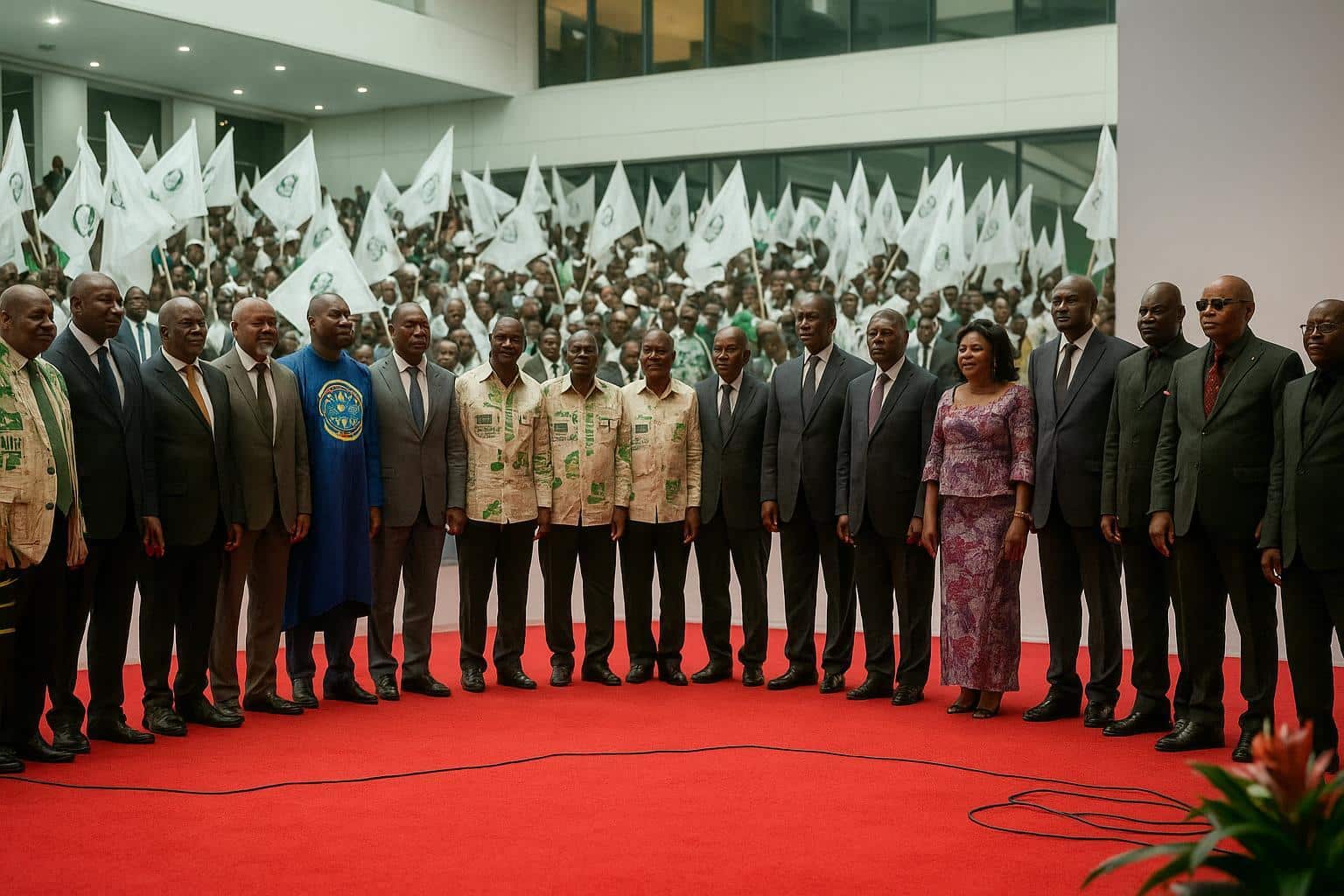
    Brazzaville’s Palais des Congrès pulsed with a rare aura of consensus on 22 November as the Pan-African Union for Social Democracy (UPADS) concluded its second ordinary congress. Delegates from all departments voted for 34-year-old parliamentarian Jeremy Lissouba to become secretary-general, the pivotal executive post entrusted with day-to-day coordination of the centre-left formation founded three decades ago by the late President Pascal Lissouba. The decision, announced from the rostrum by outgoing interim leaders, was greeted by long applause, confirming a strategic wager on youth intended to reboot the party’s operational culture without rupturing its historical identity (ACI, 22 November 2025).

    In the same sitting, veteran legislator Pascal Tsaty Mabiala, 69, was reconfirmed as President of the National Council for a further five-year mandate. The dual choice, combining experienced stewardship with a youthful secretariat, encapsulates what Mr Tsaty Mabiala described as “a calibrated intergenerational transition designed to stabilise the movement and project it towards the next electoral cycle”.

    Mandate priorities: organisation before confrontation

    Shortly after his re-election, Mr Tsaty Mabiala set the tone for the quinquennium: “Our first duty is not rhetorical escalation but institutional consolidation.” He stressed that UPADS will invest in digitised membership wp-signup.phps, modernised provincial structures and systematic training of branch secretaries so that the party “speaks with a single, verifiable voice across the Republic of the Congo”. Analysts note that the message dovetails with regional trends in Central Africa, where parties increasingly professionalise internal management to meet new compliance standards on public funding and campaign reporting.

    Mr Lissouba, who holds a master’s degree in petroleum economics and sits on the National Assembly’s commission for production and trade, framed his own roadmap in pragmatic terms. “We have the human capital; what we need now is operational rigour,” he told reporters minutes after his designation. He promised quarterly performance audits of each thematic commission and the introduction of internal dashboards to track mobilisation targets.

    Discipline as catalyst for credibility

    The congress also endorsed a revised disciplinary code, empowering ethics committees to pronounce sanctions within statutory deadlines. Recurrent infractions will trigger suspensions, while what the text calls “acts of high treason or deliberate destabilisation” could lead to immediate expulsion by the National Council. The tightening is meant to dispel the image—acknowledged by several speakers—of a movement occasionally undermined by factionalism. “The time for indulgence that weakened UPADS is over; collective interests must prevail,” Mr Tsaty Mabiala declared, eliciting nods even from sceptical delegates.

    Political scientists observe that clearer sanctions tend to reassure both militants and partners, signalling predictability in decision-making. In a polity where party discipline is often tested by fluid parliamentary alignments, the new charter could enhance UPADS’s bargaining power within coalitions or legislative committees.

    Inclusive governance and youth empowerment

    Despite the focus on discipline, leaders were keen to underline inclusiveness. The secretariat will henceforth include coordinators drawn from women’s leagues, the diaspora and persons living with disabilities, ensuring that “every generation and every sociological component is reflected in the chain of command”, according to the final motion adopted by acclamation.

    Jeremy Lissouba framed the cultural shift in almost corporate language: “We are moving from a rhetoric of representation to metrics of impact.” Party schools will be reopened with modules on public-policy design, digital communication and local-government finance to groom cadres capable of contesting municipal and departmental elections on substantive programmes. Observers see echoes of continental debates on how African parties can transform demographic dividends into electoral assets.

    A tempered but vibrant pluralism

    The opening and closing sessions were attended by envoys from several legally recognised formations, a protocol gesture that Mr Tsaty Mabiala interpreted as evidence of a “fraternal and serene democracy in Congo-Brazzaville”. Government officials were not on the speakers’ roster, yet cordial messages were exchanged, and participants stood for the national anthem in a moment of shared civic ritual. The atmosphere contrasted with more polarised scenes elsewhere in the sub-region, suggesting that Congolese political players remain committed to dialogue within the constitutional framework.

    Diplomats present in Brazzaville discreetly welcomed the sign of continuity. A European observer contended that “predictable party processes, even in the opposition, contribute to the broader stability investors and development partners look for.” The comment aligns with the government’s own narrative that political normalcy is an asset in attracting foreign direct investment and advancing the National Development Plan 2022-2026.

    Looking ahead: elections and policy relevance

    With legislative and local contests on the horizon, UPADS’s renewed leadership faces the dual challenge of energising its grassroots and articulating policy alternatives resonant with an electorate sensitive to employment, health and infrastructure issues. Mr Lissouba hinted at forthcoming position papers on digital economy and agricultural modernisation, areas that dovetail with national priorities outlined by President Denis Sassou Nguesso in his recent addresses.

    For the moment, the party appears intent on fine-tuning its internal machinery before engaging in full campaign mode. Should the reforms promised in Brazzaville translate into smoother coordination and disciplined messaging, UPADS could enter the next electoral season better equipped to influence the parliamentary agenda, thereby enriching Congo-Brazzaville’s pluralistic landscape without disrupting its institutional equilibrium.

    Congo-Brazzaville politics Intergenerational transition Jérémy Lissouba Pascal Tsaty Mabiala UPADS
    Share. Facebook Twitter Pinterest LinkedIn Tumblr Email

    Related Posts

    4,000 Congo Passports Issued, Still Unclaimed

    14 January 2026

    Congo-Brazzaville Moves to Shape AI Rules Now

    14 January 2026

    Congo-Brazzaville Election: Keeping Calm, Voting Well

    13 January 2026
    Economy News

    Africa’s Growth Rebound in 2026–2027: Key Drivers

    By Emmanuel Mbemba15 January 2026

    Africa growth forecast 2026–2027: modest acceleration Africa is expected to regain a measure of economic…

    Pamelo Mounk’A at 81: Rumba’s Echo Lives On

    14 January 2026

    4,000 Congo Passports Issued, Still Unclaimed

    14 January 2026
    Top Trending

    Africa’s Growth Rebound in 2026–2027: Key Drivers

    By Emmanuel Mbemba15 January 2026

    Africa growth forecast 2026–2027: modest acceleration Africa is expected to regain a…

    Pamelo Mounk’A at 81: Rumba’s Echo Lives On

    By Mboka Ndinga14 January 2026

    Pamelo Mounk’A, a Brazzaville-born figure of rumba In the dense and inventive…

    4,000 Congo Passports Issued, Still Unclaimed

    By Emmanuel Mbala14 January 2026

    Interior Ministry warns on unclaimed Congo passports The Ministry of the Interior…

    Most Shared

    Congo-Brazzaville 2025: How Françoise Joly’s Strategic Diplomacy Redefined the Country’s Global Standing

    By Inonga Mbala19 December 2025

    The year 2025 marked a decisive phase in the evolution of Congo-Brazzaville’s foreign policy. Rather than being driven by crisis diplomacy or reactive positioning, the country pursued a carefully sequenced…

    Congo-Brazzaville Champions Climate Justice at COP30

    By Inonga Mbala10 November 2025

    Belém inaugurates a decisive multilateral moment When the thirtieth United Nations Climate Conference opened in Belém, the Amazonian city became the epicentre of a multilateral season loaded with expectations. Yet,…

    France Leads $2.5bn Push to Safeguard Congo Basin

    By Inonga Mbala7 November 2025

    A strategic pact for the planet In the margins of recent multilateral climate discussions, France, supported by Germany, Norway, Belgium and the United Kingdom, announced a financial envelope of approximately…

    COP30: Sassou N’Guesso’s Climate Diplomacy Surge

    By Inonga Mbala5 November 2025

    Belém set to host a decisive COP30 Belém, capital of the Brazilian state of Pará, will become the epicentre of global climate negotiations from 10 to 21 November 2025. Delegations…

    X (Twitter) TikTok YouTube Facebook RSS

    News

    • Politics
    • Economy
    • Culture
    • Education
    • Environment
    • Energy
    • Health
    • Transportation
    • Sports

    Congo Times

    • Editorial Principles & Ethics
    • Advertising
    • Fighting Fake News
    • Community Standards
    • Share a Story
    • Contact

    Services

    • Subscriptions
    • Customer Support
    • Sponsored News
    • Work With Us

    © CongoTimes.com 2025 – All Rights Reserved.

    • Privacy Policy
    • Terms
    • Accessibility

    Type above and press Enter to search. Press Esc to cancel.